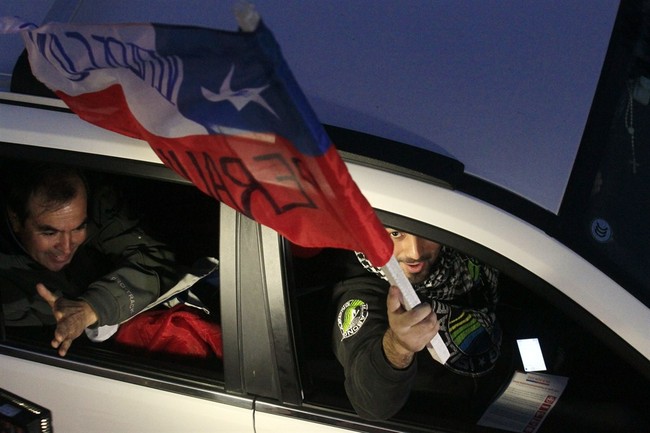
Chile has chosen José Antonio Kast in a vote that centers law and order, tougher immigration controls, and a shift toward conservative governance.
Chile on Sunday elected José Antonio Kast, a right-wing former lawmaker who ran a Trump-style campaign focused on restoring public order and tightening the country’s borders. His victory marks a decisive turn toward hardline security and immigration policies after years of rising concerns about crime and transnational gangs.
Kast is a 59-year-old father born to a German family in Santiago and he served 16 years in Chile’s Congress before seeking the presidency three times. He ran in 2017 and 2021 and returned to win this year, securing victory with 58 percent of the votes. His steady rise reflects a base of voters demanding sharper responses to public safety and migration.
BREAKING:
José Antonio Kast, the Right-Wing candidate, just won the Chilean Presidential election.
He is known as the "Trump" candidate in Chile.
Kast is promosing:
-Mass deportations.
-Sending military to high crime areas.
-Cutting government size.
-Putting "Chileans First." pic.twitter.com/BcvmIXlZ8u— Evan Kilgore 🇺🇸 (@EvanAKilgore) December 14, 2025
On the campaign trail Kast promised mass deportations of undocumented migrants, expanded policing, and even the use of the military to combat drug trafficking and organized crime. He argues that rising homicides and cartel violence require extraordinary measures and that conventional approaches have failed to protect families. Those policies echo a broader international trend toward prioritizing security over permissive migration policies.
His opponent, Jeannette Jara, campaigned on expanding social programs, boosting workers’ rights, and raising taxes on high earners to fund public benefits. Jara also pushed a more permissive immigration stance and emphasized protections for women and LGBTQ+ Chileans. Her platform appealed to voters worried about social inequality and public services, but it lost traction against the prevailing security narrative.
In his victory speech Kast declared, “Here, no individual won, no party won, Chile won, and hope won,” Kast said in his victory speech. “The hope of living without fear. That fear that torments families.” He used that moment to frame the win as a mandate for immediate action on crime and disorder.
On enforcement he warned directly to migrants: “When we tell an irregular migrant that they are breaking the law and must leave our country if they ever want the chance to return, we mean it … We must show great firmness against crime, organised crime, impunity and disorder.” That language signals a shift to stringent removal policies and tougher border controls under his administration.
Secretary of State Marco Rubio praised the victory, saying: “Under his leadership, we are confident Chile will advance shared priorities to include strengthening public security, ending illegal immigration and revitalizing our commercial relationship.” International conservatives see Kast’s win as a partner-friendly development for trade and security cooperation.
Chile has long been regarded as one of Latin America’s safer countries, but in recent years its homicide rate climbed sharply amid the growth of transnational gangs and drug trafficking networks. Public security became the top issue for many voters who felt local authorities had lost control of streets and neighborhoods. That sense of insecurity created fertile ground for a candidate promising decisive, enforceable solutions.
Kast’s victory, combined with Javier Milei’s rise in Argentina, points to a wider realignment across parts of South America toward right-leaning, security-first governments. Observers expect more coordinated pressure on migration and criminal networks, and a pushback against policies seen as lax on crime. The regional bloc these leaders form could reshape trade and diplomatic priorities across the continent.
Now Kast faces the hard work of turning campaign rhetoric into workable policy while managing legal and institutional limits at home. He will need to translate voter impatience into effective policing, border enforcement, and judicial cooperation without destabilizing democratic norms. The first months of his term will test whether his pledges can deliver safer streets and more secure borders.