A former Compton city councilman admitted in federal court that he paid $70,000 in bribes to influence marijuana permit votes and concealed more than $560,000 in income, leading to guilty pleas on bribery and tax-evasion charges and a scheduled sentencing in 2026.
The former official, Isaac Jacob Galvan, pleaded guilty to one count of bribery concerning programs receiving federal funds and one count of evasion of tax assessment. He remains free on a $10,000 bond and has agreed to pay $323,557 in restitution to the IRS. The case centers on payoffs tied to marijuana permitting in Baldwin Park and deliberate efforts to hide income from tax authorities.
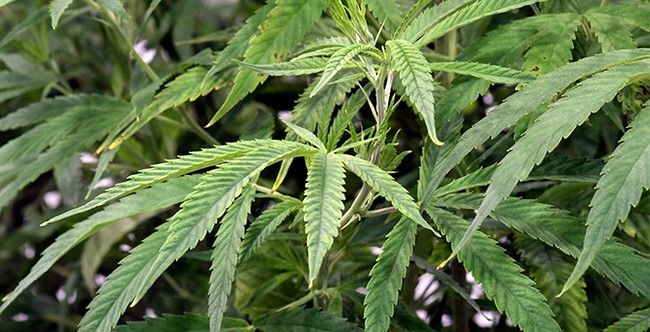
The timeline begins after Baldwin Park lifted restrictions in June 2017 to allow marijuana cultivation, manufacturing, and distribution within city limits. Court documents describe how then-Baldwin Park City Councilman Ricardo Pacheco solicited and accepted payments from businesses seeking development agreements and related permits. In return for those payments, Pacheco used his official position to back permit applications, including casting decisive votes.
Galvan, who served on the Compton City Council from 2013 to 2022, offered consulting services to W and F International Corp., a Diamond Bar import-export business, which wanted a marijuana permit in Baldwin Park. After taking W and F as a client, Galvan facilitated $70,000 in payments to Pacheco from company owner Yichang Bai. Bai has pleaded not guilty to related federal charges and is scheduled for trial in February 2026.
According to the plea agreement, Pacheco voted in favor of W and F’s permit applications in June and July of 2018 and later supported the company’s bid to relocate operations that same year. The payments were structured to conceal the true source and purpose: checks were collected from third parties and handed to Galvan with blank payee lines, allowing Galvan to deliver them to Pacheco without a clear paper trail.
The court papers describe additional payoffs after the relocation votes, when Pacheco requested money for a legal defense fundraiser. Galvan communicated a requested amount of $25,000 to Bai, who insisted on contributing $20,000 instead. Bai then provided seven checks drawn on accounts not registered to him or W and F, which Galvan routed to Pacheco as further payment in exchange for continued political support.
Galvan also admitted he failed to file federal individual tax returns for 2017 through 2020 and took multiple steps to evade tax assessment. He concealed ownership and control of I and I LLC, a shell company he used to solicit and channel bribe payments, and he arranged for checks with blank payee lines to be converted into income for himself. He also directed others to accept payments on his behalf and to cover personal living expenses, including rent.
In aggregate, Galvan failed to report approximately $560,525 in income for the 2017–2020 tax years, resulting in a calculated loss to the U.S. Treasury of $115,816. The plea agreement sets a sentencing hearing for June 8, 2026, where Galvan faces a statutory maximum of 10 years on the bribery count and up to five years on the tax count. Restitution and other penalties will be determined at that hearing.
Ricardo Pacheco previously pleaded guilty in June 2020 to one count of bribery for accepting tens of thousands of dollars, including $20,000 in cash, from a Baldwin Park Police officer working under FBI direction. Pacheco’s sentencing hearing is scheduled for March 30, 2026, and he has agreed to cooperate with the ongoing federal investigation, according to court filings.
The matter is being investigated by the FBI and IRS Criminal Investigation, and the case is being prosecuted by Assistant United States Attorneys Thomas F. Rybarczyk, Michael J. Morse, and Kedar S. Bhatia of the Public Corruption and Civil Rights Section. The filings outline a case built on financial records, transaction patterns, and the coordination of payments to public officials to secure favorable votes.
Public corruption prosecutions like this one hinge on financial trails and cooperation from participants, and this case illustrates how municipal permitting processes can be manipulated through pay-to-play schemes. The legal process will continue through the scheduled appearances in 2026, and sentencing will address both the bribery and tax-evasion counts as charged by federal prosecutors.