The LAPD presser after the deaths of Rob Reiner and Michele Singer left more questions than answers, with conflicting public statements, stalled information flow, and a palpable sense of frustration from observers who expected clearer communication from law enforcement.
Why can’t authorities seem to get the basics right in moments like this? In Providence, Rhode Island, confusion over a shooting at Brown University left the public with shifting details about victims and suspects, and that same fog of uncertainty now seems to hang over Los Angeles. When serious incidents happen, people expect facts fast and straight answers from officials handling the scene.
The Los Angeles case involves the unexpected deaths of Rob Reiner, 78, and his wife Michele Singer, 68, who were reportedly stabbed to death at their Brentwood home. Early reports tied a family member, Nick Reiner, to the inquiry as a rumored person of interest, and those rumors have only intensified public interest and speculation. High-profile names and gruesome circumstances make it even more essential that agencies communicate clearly and responsibly.
A report from last night included this:
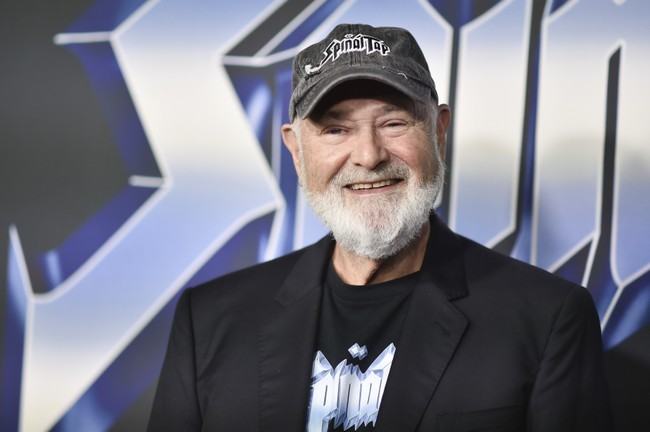
Actor, screenwriter, and director Rob Reiner, 78, and his wife Michele Singer Reiner, 68 have both died. Their bodies were found earlier this evening at their Brentwood home and Los Angeles police are treating the deaths as homicides.
Here’s more:
Rob Reiner, who segued from starring in “All in the Family” to directing movies including “This Is Spinal Tap,” “A Few Good Men” and “When Harry Met Sally…” was found dead Sunday afternoon in his Brentwood home alongside his wife Michele Singer. He was 78.
The deaths are being investigated as a homicide, according to TMZ. The couple was reported to have been stabbed to death.
The LAPD presser that followed felt like a textbook case of caution tipping into obfuscation. Reporters asked straightforward questions and were met with a refusal to confirm who was found inside the house, even though the Reiner family had confirmed the identities and Governor Gavin Newsom had also spoken publicly. That dissonance between what family and elected leaders were saying and what police would acknowledge simply widened the credibility gap.
FULL REINER PRESSER SUMMARY: LAPD Deputy Chief Alan Hamilton's preliminary update on the deaths of Rob Reiner and his wife Michele:
– Officially classified as a 'death investigation' (not yet confirmed as homicide publicly).
– Nearly 6 hours after discovery, no full search of… pic.twitter.com/nZcoNXmU5p— E X X ➠A L E R T S (@ExxAlerts) December 15, 2025
Law enforcement has legitimate reasons to withhold certain details while evidence is fresh and investigations are active, but that does not excuse appearing aloof or evasive on basic facts. When official spokespeople insist they “know nothing” while the picture outside the press room is clearer, the public reads that as incompetence or secrecy. Both are damaging to trust at a time when clear information can calm the community and prevent harmful speculation.
There is a delicate balance between protecting an active investigation and meeting the public’s need for transparency, but the balance seemed off here. The sequence of denials and confirmations from different quarters created a broadcast of uncertainty that made it harder to separate verified facts from rumor. That matters not just for accuracy, but for families coping with a public tragedy and for journalists trying to report responsibly.
Media outlets and social platforms immediately seeded a lot of conjecture about motives and suspects, which can be corrosive when it targets private people before facts are established. Speculation about Nick Reiner being a person of interest has circulated widely, and while that kind of detail may emerge in time, repeating unverified claims does real harm. Responsible reporting should emphasize what is confirmed and avoid amplifying gossip dressed up as news.
Police communications teams need to remember that withholding information without offering context invites a vacuum that others will fill. Clear, consistent messaging that explains why certain information cannot be released yet would have been far more effective than a flat refusal to confirm obvious details. In high-profile incidents like this, every pause and non-answer gets interpreted, and usually not kindly.
At the core of the public’s anger is a simple expectation: do the job and be straight about it. Officials can protect an investigation and still show professional competence in public briefings. With two lives lost and an investigation underway, anything less looks — and feels — like a failure to meet basic responsibility.