House Republicans split as a three-year extension of Temporary Protected Status for roughly 350,000 Haitians passed the House 224 to 204, with ten GOP members siding with Democrats.
The vote sealed a controversial move to keep protections in place for Haitian migrants already living in the United States, a policy shift that many conservative voters see as flagrantly at odds with the 2024 mandate to secure the border. This legislation would extend TPS for three years for an estimated 350,000 people, and it drew sharp criticism from grassroots conservatives who view the move as an end run around immigration enforcement. The split among House Republicans exposed a growing rift between leadership, district-specific concerns, and the base that demanded tougher immigration controls.
Ten House Republicans broke with their conference and supported the final passage, a list that will be pointed to by critics and voters alike. Those ten Republicans are Rep. Maria Salazar (R-FL), Rep. Don Bacon (R-NE), Rep. Brian Fitzpatrick (R-PA), Rep. Carlos Gimenez (R-FL), Rep. Nicole Malliotakis (R-NY), Rep. Mario Diaz Balart (R-FL), Rep. Mike Lawler (R-NY), Rep. Mike Turner (R-OH), Rep. Rich McCormick (R-GA), and Rep. Mike Carey (R-OH). Their votes are likely to be framed as an embrace of temporary protections that opponents call permanent backdoor amnesty.
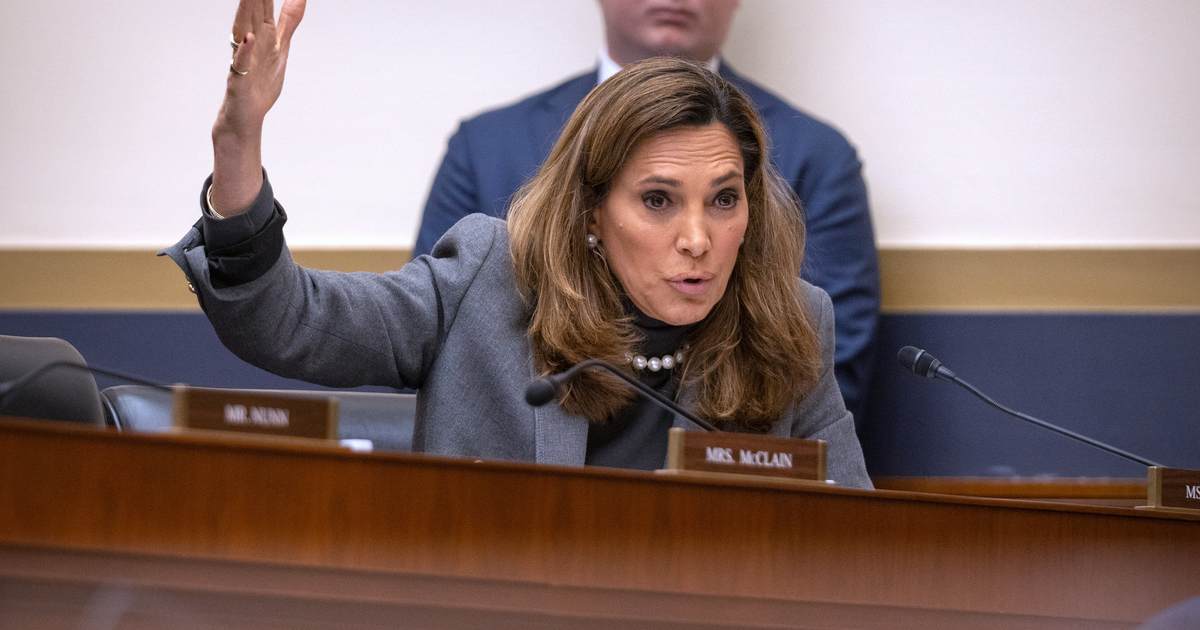
Rep. Maria Salazar has been an advocate for broader immigration relief, publicly promoting legislation known as the “Dignity Act,” language that critics say would amount to amnesty for millions. Her posture reflects a faction of Republicans who argue that targeted legal relief can be reconciled with conservative governance, but it also hands Democrats a talking point about cooperation and bipartisanship. For many activists and voters, however, any expansion of legal status without stronger border controls is unacceptable.
BREAKING: The House just voted 224 to 204 to PASS a 3 year extension of Temporary Protected Status (TPS) for 350,000 Haitians living in the U.S.
10 House Republicans + 1 independent voted w/ Dems to pass it.
Rep. Maria Salazar (R-FL)
Rep. Don Bacon (R-NE)
Rep. Brian…— Bill Melugin (@BillMelugin_) April 16, 2026
When asked to explain her vote, Rep. Nicole Malliotakis cited staffing and public safety concerns tied to her district, and she argued the extension was necessary for health care continuity.
“Look, I have a lot of health care workers in my district that are of Haitian descent, that are on TPS and my nursing homes,” she said. “My health care facilities have said that they’re going to lose skilled staff at a time when there is a shortage. And so it’s the right thing to do for my district, for the health care facilities Irepresent. And plus, you’re going to send these individuals back to a country where it’s still in peril. it doesn’t make any sense. I think that there needs to be a thoughtful approach. And if these individuals are here paying taxes, working, contributing to our economy for filling a health care need, then their status should be extended.”
Her explanation will resonate in districts dependent on health care workers, but it will not satisfy conservatives who see TPS extensions as permanent legal status by another name. Voters who backed a strict immigration agenda in 2024 are watching for how Republicans defend their priorities in practice, especially when votes like this undercut enforcement rhetoric. For those voters, tactical empathy for districts should not translate into policy that weakens national immigration standards.
The timing of the vote inflamed passions. A week earlier, federal releases of migrants had been linked in public commentary to a violent homicide in Florida, a line of attack used by opponents of the TPS extension to argue the policy has real public safety consequences. Many conservatives highlighted that incident as evidence the administration’s release policies are dangerously lax, and they argued the country should focus on secure, deportation-oriented enforcement rather than protective extensions.
After the House vote, some Republican lawmakers urged the Senate to reject the measure and send a clear signal that nationwide immigration policy must align with the 2024 mandate. That appeal reflects a broader strategy among conservatives to keep pressure on the upper chamber to block what they call piecemeal amnesty. Even within the GOP conference, there is mounting frustration that ad hoc measures undercut larger reform goals.
Republican critics also pointed to economic and welfare statistics raised on the floor by members like Rep. Brandon Gill of Texas, noting that many non-citizen households qualify for public benefits under current programs. Those figures feed the argument that extended protections shift costs onto taxpayers and create incentive problems that undercut long-term immigration control. For budget-conscious Republicans, the trade-offs are political as well as fiscal.
Supporters counter that many Haitians arrived years ago after a catastrophic earthquake and have been integrated into communities and workforces, a history back to the Obama-era relief that defenders cite as precedent. GOP critics respond that precedent does not equal good policy, and that repeatedly extending TPS for multiple nationalities sets a dangerous pattern Washington will keep repeating. That tension—between humanitarian concern and a commitment to secure borders—drives the current intra-party clash.
And it’s not only Haiti that has received repeat TPS extensions, a practice conservatives say must end to restore consistent immigration rules. The policy debate now centers on whether targeted exceptions become endless pauses on enforcement, and whether Republican lawmakers will align with voters demanding deportation and border control over expanded legal protections. The anger over this vote is unlikely to fade quickly among the right-of-center electorate.