The political left has spent decades softening its language around Islamist violence, and that shift now looks like a strategy to silence critics rather than confront real threats. This piece traces how euphemisms like “anti-Muslim hostility” are replacing “Islamophobia” even as terror attacks and social disruptions linked to radical Islam mount. It argues that changing the words won’t fix the underlying problems many Western citizens are naming.
For roughly 25 years a powerful strand of Western politics has leaned toward appeasement when it comes to radical Islam, and that posture hardened after the September 11 terror attacks. Many leaders, including George W. Bush, pushed narratives meant to separate terrorists from the religion and endorsed the idea to “fight them over there, not over here.” That approach aimed to avoid stigmatizing entire communities, but it also blurred important distinctions and consequences.
Over time, that policy mix morphed into large-scale migration and resettlement decisions that brought people from Afghanistan and other conflict zones into Western countries. As incidents multiplied, the public started to notice cultural clashes and security failures in plain view. In response, political elites often doubled down on language policing rather than fixing the policies that created those risks.
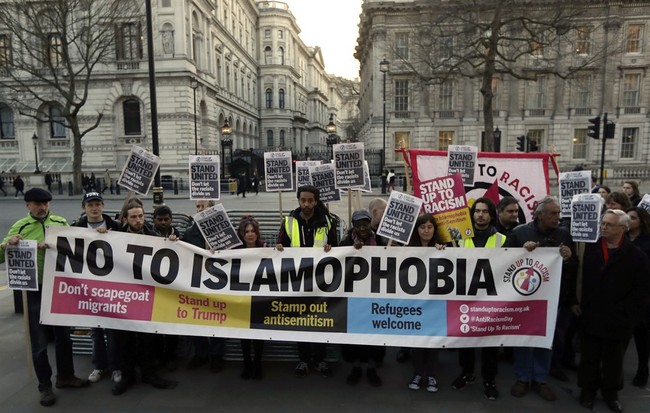
European cities felt the consequences: Christmas and New Year’s celebrations were curtailed in Paris after threats, German Christmas markets have seen closures, and authorities arrested five Islamists planning to target another market. Those are concrete disruptions to public life tied to Islamist extremism. When citizens raised alarms, the first reaction from many politicians was to label critics “Islamophobic” and shut down debate.
The pushback to that dynamic has led to new terminology. Instead of defending free speech by allowing criticism of an ideology, some advocates for the status quo now prefer the phrase “anti-Muslim hostility.” That shift is meant to sound less accusatory while still delegitimizing critics who point to patterns of violence and intolerance they associate with radicalized interpretations of Islam.
The government is considering a draft definition of anti-Muslim hatred which does not include the term “Islamophobia”.
The Government has finally produced its official “Islamophobia” definition – rebranded as “anti-Muslim hostility”.
It’s even worse than feared. 🧵 https://t.co/f8WzDiiVMI pic.twitter.com/djR0U0EXBm
— Nick Timothy MP (@NJ_Timothy) December 15, 2025
The BBC has seen the form of words from the Islamophobia/Anti-Muslim hatred working group, which the government has taken to stakeholders for consultation.
Free speech campaigners have expressed concerns that protections for “Islamophobia” would mean it would not be possible to criticise the religion itself.
Members of the working group argue the definition protects individuals while avoiding overreach.
A working group was established in February to provide the government with a working definition of anti-Muslim hatred/Islamophobia.
They submitted their proposal to the government in October.
The definition will be non-statutory, meaning it is not set in law or legally binding, but will provide a form of words public bodies can adopt.
It provides guidance to the government and other bodies on what constitutes unacceptable treatment of Muslims, aiming to help them better understand and quantify prejudice and hate crimes against this group.
Then came another bloody example that underlines why people refuse to be silenced: on Sunday, Islamists inspired by ISIS opened fire on a Hanukkah celebration in Bondi Beach, Sydney, killing at least 15 and injuring 40 more, including children and Holocaust survivors. Tragedies like that make polite euphemisms feel detached from reality to ordinary voters. Labeling criticism as bigotry when citizens are mourning relatives or fearing for public holidays looks, to many, like a political decision to protect an ideology rather than to protect people.
This is the literal definition of insanity. Guns aren’t the problem, and neither are markets or celebrations when the root cause is violent ideology. Islam is the problem.
Afterward, government working groups and well-meaning bureaucrats moved quickly to craft language meant to balance protection for individuals with limits on criticism of religion. Those drafting choices are significant because words shape policy: a definition that prioritizes group protections can chill debate, criminalize dissent, and make law enforcement responses more complicated. Citizens who ask tough questions about immigration and integration risk being sidelined by new labels instead of seeing their concerns addressed.
Across the media and policy bubbles there is an inclination to substitute new terms for old controversies rather than tackle the hard trade-offs. That creates a two-tiered conversation: elites debate wording while voters live with the security and cultural consequences. The effect is predictable — frustration, polarization, and growing distrust of institutions that put political correctness ahead of public safety.
When a government prioritizes tolerance as an absolute over clear-eyed security and honest debate, it ends up policing speech and marginalizing those who question mass resettlement or ideological compatibility. Citizens will keep asking whether importing elements of radical belief systems really serves liberal democratic values, and changing phrasing will not stop that conversation. Public policy needs clarity, not euphemism, and a willingness to confront uncomfortable truths.