A single reporter is forcing answers about alleged COVID aid theft in Minnesota while state leaders largely stay silent.
Nick Shirley has taken a boots-on-the-ground approach, knocking on doors and digging into companies that received pandemic-era funds to see whether promised services were actually delivered. His reporting focuses on a sprawling pattern of alleged abuse tied to programs that funneled billions in taxpayer money. As questions mount, state officials have offered minimal accountability, leaving voters and taxpayers in the dark.
Shirley’s work centers on tracing money and verifying services, not taking official statements at face value. He’s tracked payments and then showed up at addresses to confirm whether programs were operational and whether children or families actually received help. That kind of journalism fills the gap when government agencies are slow to investigate or unwilling to press the issue.
The investigation has touched a network that spans 14 social programs across Minnesota and includes groups like Feeding Our Future, which reportedly opened more than 250 sites between March 2020 and January 2022. Feeding Our Future claimed to have served 125 million meals, a figure that strains credulity given local realities and business records. Those numbers deserve far more scrutiny than the quiet responses from state leadership so far.
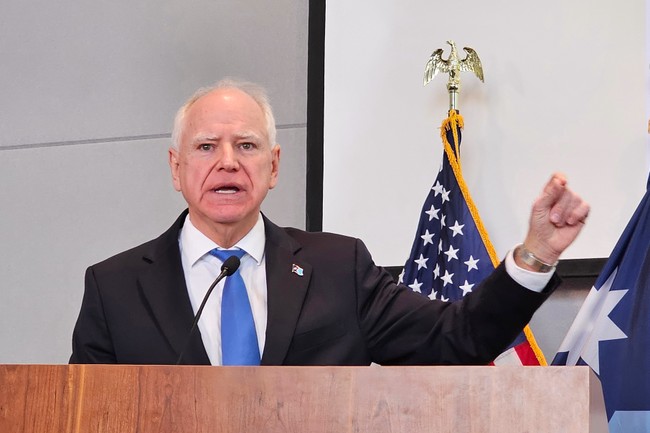
Gov. Tim Walz has publicly downplayed the scope of the scandal and shifted some blame toward federal officials, and Attorney General Keith Ellison claimed the state “shut down” scammers. That statement referred to a roughly $4 million settlement, not the multibillion-dollar estimates being discussed, which leaves a lot of unresolved questions about scale and enforcement. Saying something has been handled when evidence points to much larger gaps does not satisfy taxpayers who want real answers.
Court filings paint a disturbing picture: alleged fraudsters submitted attendance rosters listing as many as 2,040 children for a single afterschool sponsor, a figure investigators say did not match reality. Those falsified records were used to justify government payments, effectively turning paperwork into a revenue stream for bad actors. When program payouts hinge on inflated rosters, the system becomes a pay-to-play arrangement that betrays vulnerable communities.
FBI investigators flagged one site that claimed to serve between 2,000 and 3,000 meals every day, seven days a week, from a restaurant that previously had only a handful of patrons and roughly $500 to $600 in daily sales. Those contradictions were so stark that federal agents treated them as red flags for organized abuse of relief programs. When a business’s pre-pandemic operations and its claimed pandemic output diverge by orders of magnitude, fraud investigators rightly take notice.
Taxpayers should expect state governments to minimize fraud and follow through with audits, prosecutions, and clawbacks where appropriate. That means timely, transparent investigations and clear public accounting of where money went and who benefited. Republicans and conservatives pushing for accountability are not anti-help; they are pro-integrity, insisting that aid reach the intended recipients rather than lining the pockets of schemers.
Independent reporting like Shirley’s matters because it forces institutions to respond and creates pressure for oversight reforms that actually work. More journalists willing to verify claims in the field and more elected officials demanding independent audits will reduce opportunity for abuse. The alternative is to let vague assurances and small settlements stand in for real remedies while billions remain unaccounted for.
Minnesota voters deserve to know the full story about these programs and the billions at stake, and officials who claim success based on token settlements should be asked harder questions. If government-funded relief programs are going to remain a tool for public good, we must ensure they are not also a vector for large-scale theft. Until authorities produce a full accounting, journalists like Shirley are doing the job the state should have done from the start.
Again. One guy doing more to investigate fraud than the entire Walz administration. https://t.co/NPB1lnlnWv
— Walter Hudson (@WalterHudson) December 26, 2025