The town of Mullins, South Carolina, saw a local committee keep a Nativity scene in a public market area after Mayor Miko Pickett ordered its removal, sparking debate over separation of church and state, community values, and how public holiday displays are handled.
The dispute began when Mayor Miko Pickett asked that a small Nativity scene be removed from public parking space in Mullins, saying she was concerned about residents of different faiths. Locals who had decorated the market for the first Christmas season pushed back, arguing the display was part of a broader holiday setup paid for by volunteers. Tensions rose quickly because this is a town where faith plays a visible role in daily life, and many residents felt the mayor’s action was out of step with their traditions.
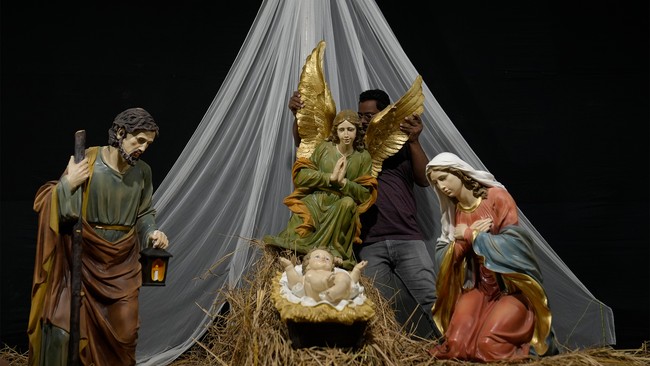
The Mullins Beautification Committee spent about two weeks installing decorations they funded themselves, including lights, a snowman, wreaths, Santa, and a 3-by-4-foot Nativity. Kimberly Byrd, who heads the committee, said she received a text from the mayor asking that the Nativity be removed. Byrd and supportive council members decided to keep the scene where it was, turning the matter into a stand over who gets to define public celebrations in a close-knit community.
Local reaction was swift and largely unsympathetic to the mayor’s position, with people pointing out legal precedent and common practice. One commenter cited the 1984 Supreme Court ruling in Lynch v Donnelly to argue that a nativity can sit on public property when part of a larger holiday display. Others asked whether any actual complaints had triggered the move, or if the decision came from the mayor’s personal preference, and those questions hardened the public’s resistance.
South Carolina town committee keeps Nativity scene up in defiance of mayor: ‘Christmas is not about Santa’ https://t.co/tsaEaTGGx8 pic.twitter.com/0anjtLKWzj
— New York Post (@nypost) December 21, 2025
A small South Carolina town committee refused to remove a Nativity scene from a market parking lot after the mayor ordered it taken down from public property.
Around Thanksgiving, Kimberly Byrd, head of the Mullins Beautification Committee in Mullins, South Carolina, said her small team decided to decorate the city’s new marketplace area for its first Christmas season “like a Hallmark movie,” hoping to draw more customers to the downtown area.
The group spent about two weeks placing decorations they paid for out of their own pockets, including a snowman, wreaths, lights, Santa Claus and a small 3-by-4-foot Nativity scene. Byrd said she later received a text from Mayor Miko Pickett asking her to remove the Nativity scene, citing concerns about residents of other faiths and beliefs in the community.
…
Byrd said she received support from some city council members to keep the display in place and decided to take a stand by vowing to keep the Nativity scene where it was.
“Our small town, we have a church on every corner,” Byrd told the media. “It’s a faith-based community in the Bible Belt. I’ve been here 53 years of my life and never heard of anything like this happening here.” Those words captured why many people felt blindsided: they see Christmas as an expression of their faith and civic life, not an exclusionary act. For them, removing a nativity from a broader display felt like erasing an essential part of the holiday the town was trying to celebrate.
Mayor Pickett explained the request in a Facebook post, framing it as a concern for separation of church and state when symbols occupy municipal property. The mayor’s statement emphasized the need to treat public spaces neutrally because the town is “composed of various ethnicities and religious beliefs.” That rationale did not satisfy many residents who believed a small, volunteer-backed display did not amount to government endorsement of religion.
I would like to clarify my reported comment about the nativity scene. I requested that the nativity scene be removed solely from the PUBLIC parking area. The reason for this is the separation of Church and State applies to muncipalities as well, regarding religous symbols on public property and parks.
We are a community composed of various ethnicities and religious beliefs. Both my family and I are deeply rooted in our own beliefs.I want to emphasize that I have never stated that nativity scenes should be prohibited in Mullins.
The Becket Fund’s tongue-in-cheek reaction underscored the public drama: they awarded Pickett an Ebenezer Award and gave Byrd a Tiny Tim Toast for defending religious expression. For many conservatives, this incident is another example of the double standard they see from Democrats and cultural institutions. The charge is that calls for inclusivity become selective, protecting some traditions while sidelining the Christian roots of widely celebrated holidays.
Byrd warned she would remove all Christmas decorations if the city forced the Nativity out, asking a simple question about how to explain hiding one’s beliefs from children. “How are we supposed to explain to our kids that we have to hide our religion, hide our beliefs, and hide what Christmas is about?” she said. That comment crystallized the local stakes: this isn’t just about a display, it’s about whether a community can visibly observe the faith that shapes its identity.
The showdown in Mullins is small in scale but big in symbolism, touching on legal precedent, local control, and cultural respect. Officials and citizens will keep arguing over where the line is between public neutrality and community tradition. What matters to the people on the ground is clear: they want to celebrate their season without being told their expression must be removed from the public square.