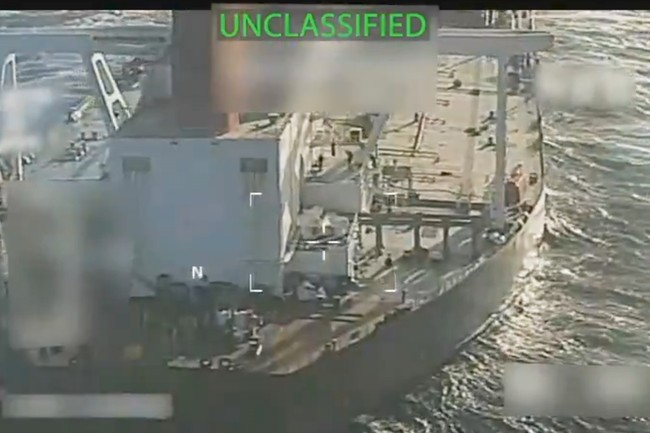
Venezuelan naval vessels have begun escorting oil and oil-products shipments toward Asia after President Trump ordered a blockade on certain tankers, raising the odds of a confrontation at sea and forcing Washington to weigh its next move.
Venezuela’s president ordered navy escorts for ships leaving Venezuelan ports in direct response to the Trump administration’s move to block and seize tankers suspected of aiding sanctioned regimes. This is not a minor escalation: it puts naval forces into the same waters where U.S. assets and policies are now operating to cut off Maduro’s oil revenue. The scene is tense and straightforward—Washington wants to choke the cash flow that props up a corrupt regime, and Caracas is answering with a military posture.
The administration has publicly described the operation as part of a broader push to stop drug smuggling and punish illicit networks that profit from Venezuela’s oil. U.S. forces recently seized a tanker accused of carrying petroleum to sanctioned destinations, and the White House has signaled it is ready to respond to naval escorts if necessary. That posture reflects a Republican view that pressure, including strict enforcement actions, is the right tool to weaken Maduro and protect American interests.
Officials report that ships left the Port of José on Venezuela’s Caribbean coast with naval protection, and U.S. authorities are closely watching those movements. The tankers mentioned in reporting were not listed among sanctioned vessels maintained by Treasury, which complicates the legal and tactical picture for Washington. Still, the administration argues that cutting off oil revenue and seizing shipments tied to bad actors are sensible measures to force change.
From The New York Times:
Several ships sailed from Venezuela toward Asia with a Venezuelan naval escort between Tuesday evening and Wednesday morning, said three people familiar with the transits. None of the commercial vessels are on the list of sanctioned tankers the United States is threatening to target.
But the recent cascade of events, set off by the Trump administration’s seizure of a tanker last week and then by the president’s order of a partial “blockade” on Tuesday, increased the likelihood of a violent conflict.
In the months since Mr. Trump began carrying out a pressure campaign against Venezuela, which includes lethal boat strikes that are widely deemed illegal by law experts, Mr. Maduro has refrained from answering with force. But that is being tested as Mr. Trump aims to drain the country’s oil revenues, the lifeblood of Venezuela’s economy, by cutting off some tanker traffic and seizing the oil.
Mr. Trump has talked repeatedly over the years about taking oil from Venezuela and the Middle East, and one of his envoys pushed Mr. Maduro to give greater access to American oil companies in secret negotiations this year. Venezuelan oil has become a focus of Mr. Trump’s pressure campaign aimed at ousting Mr. Maduro, though publicly the administration frames it as a counternarcotics effort
The three ships that left the Port of José on the Caribbean coast of Venezuela carried urea, petroleum coke and other oil-based products, said two of the people familiar with the transits, who spoke on the condition of anonymity because of the sensitivities. The third person familiar with the matter, a U.S. official, said Washington was aware of the escorts and was considering various courses of action.
The vessels leaving the port were not on a list of sanctioned vessels maintained by the Treasury Department, according to a review by The New York Times.
🚨 MADURO CALLS TRUMP’S BLUFF
Maduro will IGNORE Trump’s threats and the Venezuelan Navy will now escort the oil tankers in and out of Venezuelan waters.
Will Trump now murder innocent people and start a war to get his fat grubby fingers on oil?
pic.twitter.com/PRQKz5zeJV— ADAM (@AdameMedia) December 18, 2025
The White House has publicly acknowledged Maduro’s orders and is reportedly weighing options for a proportionate response while avoiding an unnecessary clash. Any U.S. engagement with Venezuelan escorts could trigger a broader maritime incident, and that risk is now factored into military and diplomatic planning. Republicans in Washington generally favor a firm approach that denies Maduro the income he uses to prop up his regime and rewards his abuses.
Caracas insists the blockade breaches international law and frames the escorts as a defensive step, while the administration stresses counternarcotics and national security grounds for its actions. The U.S. has conducted strikes against vessels suspected of ferrying narcotics toward American shores, and reporting indicates those strikes have been deadly. The administration says those measures are aimed at protecting citizens from cartel-style trafficking tied to the Venezuelan state.
Reporting notes that at least 95 people have been killed in airstrikes the administration carried out against boats suspected of carrying narcotics to the U.S. That count underscores how kinetic the pressure campaign has become and explains why Maduro is trying to shield shipments and revenue. The stakes are not abstract: oil money funds Maduro’s security apparatus and keeps him in power.
Beyond the immediate confrontations at sea, the dispute is about leverage and outcome. Republicans argue that applying pressure to choke off cash is one of the few levers that actually moves authoritarian actors, and they see the blockade and enforcement measures as instruments to force political change in Caracas. The risk of a seaborne clash is real, but for those who back the administration, it is an acceptable danger compared with leaving Maduro’s revenue streams intact.
As ships continue to move and diplomats spar over legalities, the situation will be a test of resolve and strategy on both sides. Washington’s choices now will shape whether the standoff stays contained or escalates into a broader confrontation. For Republicans watching this unfold, firmness and decisive enforcement are the clear policy preference.