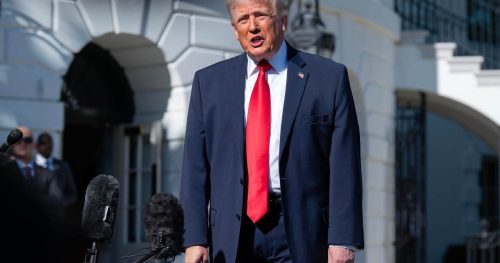
President Trump erupted over the Senate’s blue slip custom after Democrats used it to stall his judicial and U.S. attorney picks, sparking a fight with Senate leaders about whether to keep a practice that effectively gives individual senators veto power over certain nominees.
President Donald Trump fired off a blunt message on Truth Social, arguing the blue slip tradition is blocking qualified Republican nominees from getting confirmed. He wrote, “‘Blue Slips’ are making it impossible to get great Republican Judges and U.S. Attorneys approved to serve in any state where there is even a single Democrat Senator.” That post framed the issue as a partisan roadblock with real consequences for staffing courts and U.S. attorney offices.
Trump didn’t stop there, warning of the practical fallout when a single senator objects. “If they say no, then it is OVER for that very well qualified Republican candidate,” he said, adding, “Only a really far left Democrat can be approved. It is shocking that Republicans, under Senator Chuck G, allow this scam to continue. So unfair to Republicans, and not Constitutional.”
He then put pressure on Senate leadership, calling on Senate Majority Leader John Thune “to get something done, ideally the termination of Blue Slips.” That demand puts Thune in a tough spot—caught between a GOP base that wants action and the institutional instincts of senators who value traditions that protect their influence over local judicial picks.
When the issue came up on Fox News, Senator Thune defended the committee’s pace of confirmations while expressing reluctance to abolish the blue slip. “We have moved his nomination through the process at a record rate,” Thune said, then added, “We will, by the end of this year, have a record number of his nominations approved to the executive branch. Got his cabinet confirmed at the fastest rate possible.” His remarks stress accomplishments but stop short of changing the rules.
Thune explained why senators on both sides have protected the tradition: it “has been in place for a long time” and “both Republicans and Democrats support” it because “it gives them some input, particularly in those judges, the judicial appointments that are made in their individual states.” That defense frames blue slips as a safeguard for local oversight, not merely a partisan club.
The blue slip tradition itself is an informal Senate custom where the Judiciary Committee asks the two senators from the state where a district judicial nominee or U.S. attorney would serve to weigh in on the nominee. Senators return a blue piece of paper indicating approval or disapproval, and historically that input has carried heavy weight, sometimes stopping a nomination dead in its tracks. The practice is not codified in formal Senate rules, yet it has functioned like a veto in many cases.
That veto power has been used by Democrats in recent fights, including actions by New Jersey Senators Cory Booker and Andy Kim, who blocked former interim U.S. Attorney Alina Habba from advancing. Because Habba’s appointment was temporary, courts later ruled she had been unlawfully kept in the role, and she announced her resignation as a result. These events are exactly the kind of messy fallout Trump warns about when a single senator can stall a nominee.
🚨President Trump asks Senate Majority Leader John Thune to terminate “Blue Slips”
Senator John Thune tells President Trump NO. Then tries to gaslight everyone by saying how quickly they are moving to confirm Trump’s nominations.
"We've moved his nominees at a record rate….” pic.twitter.com/SC6AA6t7NM
— Derrick Evans (@DerrickEvans4WV) December 11, 2025
Senate Minority Leader Chuck Schumer also used the tool against Jay Clayton, who had been nominated for U.S. attorney for the Southern District of New York. Those moves underscore how the blue slip can be wielded across party lines when a senator wants to assert influence or block a pick they find objectionable. Republicans argue this produces uneven justice: qualified nominees get sidelined for political reasons while vacancies persist.
Republicans pushing for confirmations see the blue slip as an outdated get-out-of-office-free card for a single senator, especially when it prevents filling crucial posts. Advocates for keeping it point to tradition and local input, saying senators should have a say over nominees who will work in their states. That tension—between national priorities and senatorial prerogative—lies at the heart of the current clash.
Lawmakers now face a clear choice: preserve a protective custom that can also be weaponized, or reform committee practice so nominees face a fairer, more predictable path to confirmation. With both the White House and Senate GOP eager to install judges and attorneys who will interpret the law differently than recent administrations, this debate is about more than procedure—it’s about who gets to shape the judiciary for years to come.