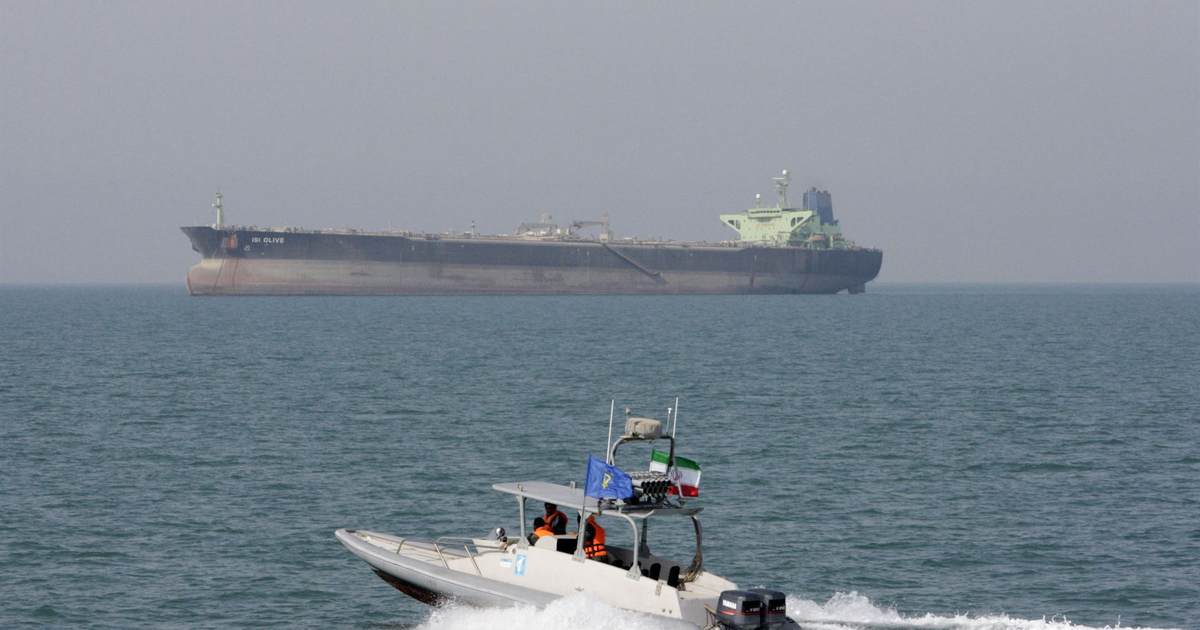
A newly surfaced audio recording captures radio exchanges during an Iranian Revolutionary Guard Corps attack on an Indian oil tanker in the Strait of Hormuz, revealing frantic pleas from the ship’s captain and a broader Iranian broadcast telling vessels they were not allowed to transit the waterway.
Social media investigators pulled the audio from the Indian tanker that was struck while passing through the Strait of Hormuz, and the sound is raw and unsettling. The recording includes the ship’s captain trying to reason with the attackers as shots were directed at his vessel. That audio has become a central piece of evidence in international outrage over the incident.
The captain’s voice can be heard pleading with the Iranians to stop firing and reminding them that the ship had received clearance to transit the strait. Officials in New Delhi responded quickly and summoned Iran’s ambassador to India, Mohammad Fathali, to demand answers about why an approved vessel was attacked. This diplomatic step signals that India will not ignore strikes against its shipping, especially when its crews and commerce are at risk.
Audio of the Indian oil tanker Sanmar Herald pleading with Iranian forces to stop shooting at it in the Strait of Hormuz this morning. pic.twitter.com/7Y5n7Jb7o0
— OSINTtechnical (@Osinttechnical) April 18, 2026
Beyond the direct engagement, another message from Iranian forces was reportedly broadcast to all ships in the area, warning that they were not permitted to pass through the Strait of Hormuz. That kind of blanket prohibition on a vital international waterway is a major escalation and a violation of long-established maritime norms. When a state actor starts broadcasting transit bans, it creates immediate danger for commercial traffic and global energy markets.
Thankfully, crew members aboard the targeted tanker were unharmed in this instance, but the stakes could have been much higher. A successful hit on an oil tanker can produce catastrophic fires, environmental damage, and loss of life. The close call should make clear that deterrence has weakened in the region and that allowing such behavior to go unanswered risks inviting worse attacks.
This incident sits in a pattern of provocative behavior by the IRGC that threatens freedom of navigation in a choke point responsible for a substantial share of the world’s oil shipments. It is not an accident when a military force trains weapons on civilian shipping lanes, and it is not defensible to treat these events as isolated misfires. Clear, forceful policy responses are required to protect allies and commercial traffic.
From a Republican viewpoint, patience with Tehran’s provocations has limits, and that line was tested again in the Strait of Hormuz. Diplomacy must be backed by credible consequences so that state actors know there is a price for targeting neutral commercial vessels. India’s quick diplomatic move to summon Mohammad Fathali is the right kind of response, but it should be matched by broader international pressure and concrete measures to secure shipping lanes.
There are practical steps that can be taken without wandering into needless escalation, such as joint naval patrols, increased surveillance, and coalition escorts for at-risk tankers. These actions protect commerce and send a clear message to Iran that the international community will not accept arbitrary bans on passage. Strength in defense and cohesion among maritime partners will discourage future brinkmanship.
Investigators and analysts will study the radio exchanges closely to establish timelines and responsibilities, and that audio will likely play a role in any legal or political proceedings that follow. Evidence like this recording makes it harder for Iran to deny involvement or to claim misidentification. When clear proof exists of hostile action, it undercuts any attempt to portray the incident as a misunderstanding.
Accountability cannot be limited to words of condemnation. Governments that value free commerce and safe seas need to coordinate responses that combine diplomacy, sanctions, and defensive measures. Leaving maritime security to chance invites disruption of global energy supplies and undermines the rules that keep trade flowing. The world watched when this tanker was fired upon, and the message must be that such behavior yields tangible consequences.
The audio, the diplomatic response from New Delhi, and the broader regional context together expose a clear pattern that demands a firm reply. The Strait of Hormuz cannot be turned into a bargaining chip for hostile regimes. Protecting seafarers, preserving international law, and maintaining a secure energy supply are practical priorities that should guide the next steps taken by responsible nations.