Minnesota faces a political storm after a massive fraud scheme drained roughly $1 billion, and Governor Tim Walz’s response has set off sharp criticism from lawmakers and national figures.
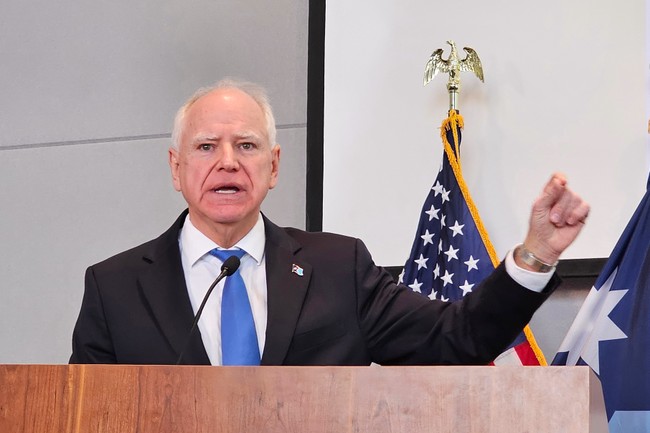
Lawmakers have pressed hard after reports that nearly $1 billion in pandemic relief ended up in the hands of organized fraud rings, with many accusing state leaders of looking the other way. At a news conference, critics say Governor Tim Walz minimized the scale and scope of what happened and even shifted part of the blame in unexpected directions. The matter touches on criminal networks, administrative lapses, and deep political frustration across the state.
Walz sought to put the episode in context, arguing that the rush of emergency spending during COVID created conditions ripe for abuse and that other governors faced similar challenges. Walz played down the massive fraud scandal, saying that every governor deals with the problem. He insisted the priority at the time was moving money quickly to prevent hunger, homelessness, and to support vaccinations.
Tim Walz is asked about the rampant Somali fraud under his watch: "We should hold white men accountable." pic.twitter.com/SWAlxWz4XI
— Benny Johnson (@bennyjohnson) December 12, 2025
“COVID moved a lot of money very, very, quickly, and our goal was to move that money to make sure that people ate, that they were housed, that they had vaccines,” Walz said. “But it also opened up the door to relax the guardrails and to have fraud be committed.” Those words echoed the administration’s defense but did little to satisfy lawmakers demanding accountability and answers.
Several state legislators accused Walz of underplaying the role of specific communities tied to the fraud and said the public deserves a full accounting of how funds were diverted. During the news conference, Walz refused to admit that Somalians stole millions of dollars from taxpayers. Critics contend the governor’s phrasing obscured who organized and benefited from the schemes and left victims feeling ignored.
“We are a state that chooses not to let people go hungry or homeless or uneducated,” Walz said. “However, that generosity has been taken advantage of by an organized group of fraudsters and criminals.” Those remarks acknowledged criminality while also framing the issue as a byproduct of generous public policy, a stance that drew scorn from political opponents.
Minnesota lawmakers have not been quiet about their displeasure, calling for hearings and tighter oversight of emergency assistance programs. Some members of the state legislature want immediate audits of benefit disbursements and criminal referrals where evidence points to organized fraud. President Donald Trump has slammed Walz and Minnesota lawmaker Ilhan Omar for letting the widespread fraud happen.
Republican voices in particular have used the episode to argue that lax controls and permissive policies invite abuse and create perverse incentives for criminal enterprises. Investigators describe schemes that took advantage of relaxed identity checks and bulk applications, funneling relief dollars through networks that then laundered the proceeds. That pattern, critics argue, underscores the need for mechanisms that balance speed with verification.
Evidence presented in hearings and briefings paints a picture of coordinated operations that exploited deadline-driven programs, using falsified claims and synthetic identities to capture funds meant for struggling households and small businesses. Lawmakers want to know how many transactions slipped past automated safeguards and why manual review procedures failed to catch suspicious clusters. The focus is now on strengthening systems so generosity cannot be weaponized by criminals.
Beyond audits and prosecutions, the episode has fed larger political debates about immigration, community accountability, and public spending. Critics who point to specific groups in these schemes say the response should include community outreach, targeted enforcement, and clearer statutory penalties for organized fraud rings. Supporters of more generous safety nets counter that programs should not be shuttered because a minority of actors exploit them.
As investigations proceed, Minnesota politicians from both sides are jockeying to shape the public record and the policy fixes that follow. Legislative committees are lining up witnesses, and prosecutors are pursuing cases where evidence meets the standard for criminal charges. With the issue now national in scope, the state’s handling of relief programs will be closely watched as an example of what can go wrong and what reforms might follow.
Expect continued hearings, sharper political language, and a push for clearer accountability measures in the weeks ahead as lawmakers press for transparent records and concrete steps to prevent future fraud. The fallout will play into broader conversations about how best to deliver public aid without opening the door to organized abuse, and Minnesota’s next moves will be scrutinized by constituents and political opponents alike.