Washington state’s recent House vote on a narrow fix to the new permit-to-purchase regime shows a rare bit of bipartisan cooperation, but it doesn’t change the bigger problem: the underlying law is still a bad idea.
Washington used to be more gun-friendly, but the political landscape shifted and the state now leans anti-gun. A recent House vote gave a small, practical correction to the new permit-to-purchase system, and conservatives should both note the improvement and point out how insufficient it is.
The House approved the change overwhelmingly, 95—1, on a bill that limits public access to records tied to the permit process. That vote came from a pairing between Rep. Jim Walsh, a Republican, and Rep. Liz Berry, a Democrat, which is the sort of odd coalition that gets attention precisely because it is so uncommon in Olympia.
In a state where gun debates often split cleanly along party lines, a bill backed by a Republican gun-rights advocate and a Democrat widely known for supporting stricter firearm regulations sailed through the House of Representatives.
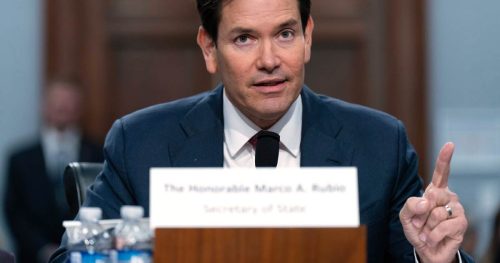
On Friday, the House passed House Bill 2235 on a 95—1 vote. The measure, sponsored by Rep. Jim Walsh, R-Aberdeen, would exempt records tied to Washington’s recently passed permit-to-purchase law from public disclosure.
In 2025, the Legislature passed the gun permit bill, and it goes into effect on May 1, 2027.
Walsh worked with Democrats, including Rep. Liz Berry, D-Seattle — a lawmaker with a record of vigorously advocating for stricter gun regulations, on his latest proposal. The pairing may seem unlikely. But these two framed the bill not as a shift in gun policy, but as what Walsh called a “mechanical fix” — a way to “close a gap” in the state’s Public Records Act before the new permit-to-purchase system takes effect.
“I don’t like PRA carveouts, and I don’t like permit-to-purchase,” Walsh said. “But this bill uses a PRA carveout to patch a policy hole. So to me, it was two negatives equaling a positive.”
Under the new framework, applicants must submit personally identifying information, including training certificates and background check materials, in order to obtain a gun permit. Walsh said he became concerned that, without a specific exemption, those records could be accessed through public records requests.
That block of language captures the technical nature of the change: it’s not loosening restrictions, it’s trying to keep private information private. Protecting personal data for gun owners—training certificates, background check materials, and similar documents—matters because public disclosure could invite harassment or misuse.
Still, this is not a victory for Second Amendment principles so much as a bandaid on a policy that should not exist. Permit-to-purchase systems require citizens to prove they’ve completed training before exercising a constitutional right, and that remains a troubling precedent.
Think about it: a state now plans to require documentation proving training to buy a firearm, then forces disclosure of that documentation unless lawmakers begrudgingly carve out an exception. For anyone who values individual liberty, that setup is backward. It treats a protected right like a privilege granted only after bureaucratic proof of worthiness.
There’s a political angle too. The bipartisan aspect here is noteworthy because it shows pragmatism can still happen, even in a state dominated by one party. Republican lawmakers who defend gun rights should point to reforms like this and insist on pushing further: rollbacks of permit-to-purchase frameworks, protections for lawful owners, and clearer constitutional respect.
Real change would strip away the requirement that citizens subject themselves to administrative hurdles to exercise a fundamental right. Short of that, trimming the worst privacy exposures is sensible and should be applauded as a practical improvement—even if it is a small one.
For now, the House’s 95—1 vote is an odd little bright spot: a cooperative tweak that shields private information without altering who can buy a gun. It’s evidence that even in hostile political climates, common-sense fixes can pass, and conservatives who care about both privacy and rights should keep pressing for bigger reforms.