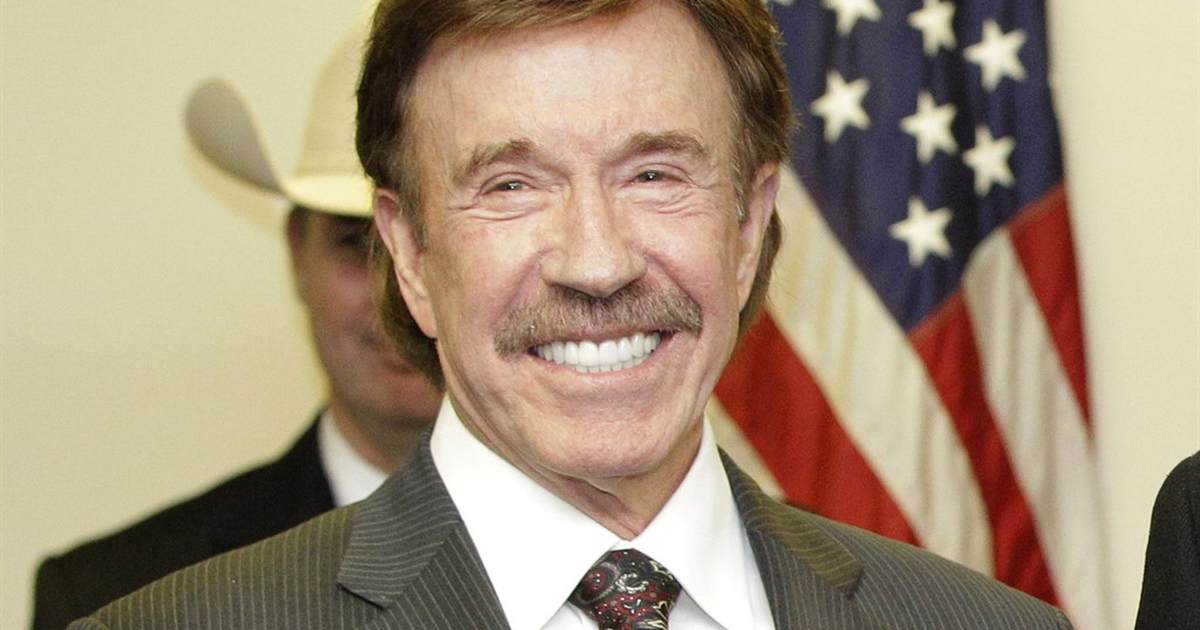
Chuck Norris, the martial artist and actor who became an American legend, has died at 86; this piece traces his life from humble beginnings through military service, competitive karate, film stardom, and decades of cultural impact.
Chuck Norris, born Carlos Ray Norris in 1940 in Oklahoma, has died at 86 after a medical emergency in Hawaii. Family members confirmed his passing and said he was surrounded by loved ones and at peace.
He died Thursday morning in Hawaii, according to the family, who said, “It is with heavy hearts that our family shares the sudden passing of our beloved Chuck Norris yesterday [Thursday] morning. While we would like to keep the circumstances private, please know that he was surrounded by his family and was at peace.”
🕊️ Chuck Norris has died at 86. https://t.co/iEc9C997Ik pic.twitter.com/h3FrMFOogo
— TMZ (@TMZ) March 20, 2026
The post reads … “He lived life with faith, purpose, and an unwavering commitment to the people he loved.”
Carlos Ray Norris grew up in a modest family as the oldest of three brothers, born to Wilma Lee and Ray Norris and named after his father’s minister, Carlos Berry. After his parents divorced when he was 16, he moved with his mother and siblings to Prairie Village, Kansas, and later to Torrance, California.
Tragedy touched the family when his younger brother Wieland died in 1970 while serving in Vietnam. Those early hardships helped shape a young man who found discipline and focus in martial arts and military service.
In 1958 Norris joined the United States Air Force as an Air Policeman and was assigned to Osan Air Base in South Korea, where he picked up the nickname “Chuck” and began formal training in Tang Soo Do. That period set the foundation for a career that would blend combat skill with showmanship.
After returning to the U.S., he served at March Air Force Base and was discharged in 1962 with the rank of Airman First Class. While waiting to join the Torrance police, he opened a martial arts studio and started competing in local tournaments.
He stumbled at first—losing his first two competitions—but by 1967 he was winning major events, claiming a title at S. Henry Cho’s All-American Karate Championship at Madison Square Garden. Those wins helped him build a chain of schools and a reputation that attracted celebrity students.
Over the next decade Norris turned his martial arts profile into a foothold in film, first gaining attention as Bruce Lee’s opponent in the 1972 film “Way of the Dragon.” Small parts and steady work led to starring roles by the late 1970s, and a steady string of action pictures turned him into a recognizable face in American cinema.
Between 1979 and 1983 he headlined films like “A Force of One,” “The Octagon,” “An Eye for an Eye,” “Silent Rage,” and “Lone Wolf McQuade,” the latter of which would later inspire his most famous television role. Those movies cemented his image as a tough, determined action star.
Television amplified his reach when “Walker, Texas Ranger” brought Norris into homes across the country and made him a fixture of 1990s cable and network programming. He also kept a hand in film, appearing in projects as varied as “DodgeBall: A True Underdog Story” in 2004.
Beyond screens, Norris pursued innovations in martial arts promotion, founding the World Combat League in 2005 to showcase full-contact, team-based competition. He also built organizations aimed at youth development and martial arts education.
On the personal side, Norris married Dianne Holecheck in 1958; they had two sons, Mike and Eric, before divorcing in 1989. He later married Gena O’Kelley in 1998 and had fraternal twins, Dakota and Danilee, and he is also the father of a daughter, Dina, born while he was stationed in California in the 1960s.
Norris was open about his faith and politics, identifying as a Christian and holding conservative views, and he supported several causes through philanthropy. He founded Kickstart Kids and the United Fighting Arts Federation, focusing on character development and leadership through martial arts training.
Over time Chuck Norris moved beyond the roles he played on screen and the titles he won; he became a cultural touchstone, the subject of jokes and folklore that treated him as an almost mythical figure. Even at the news of his hospitalization, the public response mixed concern with the kind of wry humor that had long celebrated his tough-guy persona.
He leaves behind a family, grandchildren, and a wide circle of fans who remember him as an athlete, actor, and advocate for youth and martial arts. His life spanned military service, competitive sport, entertainment, and civic work, creating a legacy that touched many corners of American culture.