A Fitchburg man admitted to running a long-running identity theft and benefits fraud operation that funneled government food and unemployment aid into a restaurant supply chain and international wire transfers.
Federal prosecutors say Raul Fernandez Vicioso, 37, pleaded guilty this week in Worcester to leading a scheme that used more than 100 stolen identities to collect roughly $440,000 in Supplemental Nutrition Assistance Program benefits across Massachusetts and Rhode Island. Investigators also linked the operation to more than $700,000 in fraudulent Pandemic Unemployment Assistance claims across multiple states. Sentencing is scheduled for July 9, 2026.
The criminal case names several alleged co-conspirators, including Joel Vicioso Fernandez, 42, Roman Vequiz Fernandez, 32, and Coralba Albarracin Siniva, 24, who were charged by criminal complaint after the initial indictment. Authorities traced dozens of fake applications and forged supporting documents to two single-family apartments in Providence, Rhode Island, where the scheme listed 24 separate households. More than 100 real people’s stolen personal information was used to prop up those fabricated households.
According to the filings, stolen identities from states including Connecticut, Florida, Kentucky, New Jersey, New York, Pennsylvania and Puerto Rico were funneled into SNAP applications filed in Massachusetts and Rhode Island. Raul Fernandez Vicioso allegedly used his own identifying information in some applications, and investigators found that those accounts were commingled with victim identities. The defendants submitted counterfeit passports and passport cards as supporting evidence, and metadata on those images indicated they were taken inside or very near El Primo Restaurant in Leominster, Massachusetts.
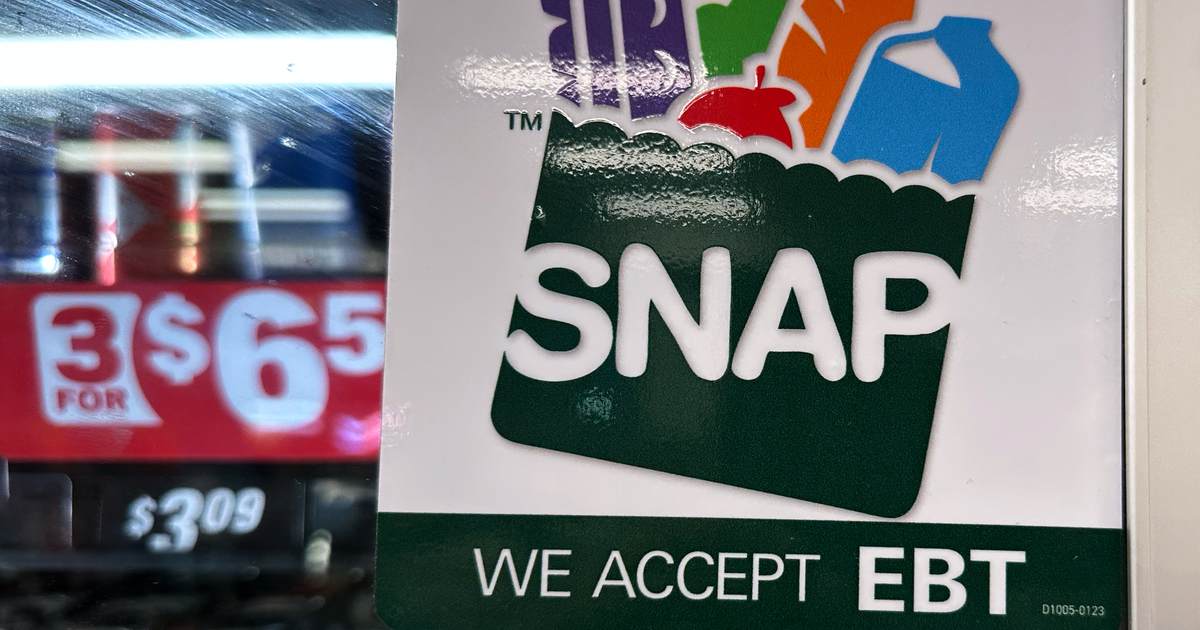
Prosecutors describe a straightforward profit model: fraudulently obtained SNAP EBT cards were used to buy large, bulk quantities of meat and other costly food items from local wholesalers and markets. Those goods stocked El Primo Restaurant at little or no cost, and the business sold menu items while the defendants kept the proceeds. Some of the profits were wired abroad to individuals in Venezuela and the Dominican Republic, according to the charging documents.
The scheme’s unemployment fraud ran on a similar pattern. Between April 2020 and December 2021, the defendants and associates submitted fraudulent Pandemic Unemployment Assistance claims in Massachusetts, New York, Pennsylvania, Ohio, Washington and Nevada. At least 29 different identities were used to file PUA claims in those states, and many of the applications listed the restaurant’s address as the applicant’s residential address.
Bank records produced during the investigation show roughly $276,021 in fraudulent PUA deposits were made into accounts tied to El Primo Restaurant, Raul Fernandez Vicioso, and alleged co-conspirators. Other benefits were allegedly routed onto prepaid cards issued in victim identities, with disbursement details matching addresses and phone numbers associated with the suspects. When agents searched the restaurant and Vicioso’s residence, they recovered fraudulently obtained EBT cards, paperwork bearing the Providence address used in the scheme, printed ledgers, and handwritten lists naming more than 100 identities.
The legal exposure is significant. The charge of Conspiracy to Commit SNAP Fraud carries up to five years in prison, three years of supervised release, and a fine of $250,000. Conspiracy to Commit Wire Fraud carries a potential sentence of up to 20 years, three years of supervised release, and a fine of $250,000. Illegal acquisition or use of SNAP benefits also carries up to five years, three years supervised release, and a $250,000 fine. Money laundering charges are punishable by up to 20 years behind bars, three years supervised release, and a fine of $500,000 or twice the amount involved, whichever is greater.
Those penalties are guidelines; a federal district court judge will set an actual sentence using the U.S. Sentencing Guidelines and applicable statutes. The announcement of the guilty plea was made by United States Attorney Leah B. Foley; Charmeka Parker, Special Agent in Charge of the U.S. Department of Agriculture – Office of Inspector General, Northeast Region; Anthony P. D’Esposito, Inspector General, Department of Labor, Office of Inspector General; Thomas Demeo, Special Agent in Charge of the Internal Revenue Service, Criminal Investigation, Boston Field Office; and Michael J. Krol, Special Agent in Charge of Homeland Security Investigations in New England.
Investigators encourage reporting fraud, waste, or abuse to the Council of the Inspectors General for Integrity and Efficiency. The case illustrates how identity theft can be repurposed into coordinated, multi-state schemes that prey on safety-net programs and convert public funds into private revenue streams. With sentencing set for mid‑2026, the court will determine the penalties that follow the guilty plea and the evidence laid out in the charging documents.