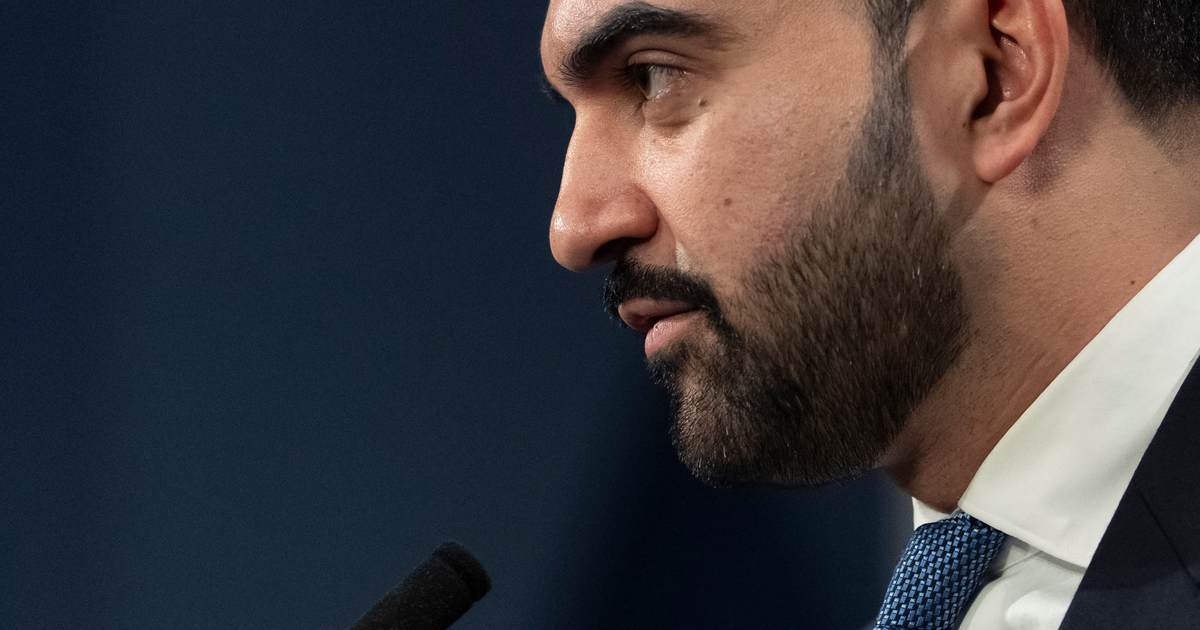
New York Mayor Zohran Mamdani lit up Harlem with “Eid Mubarak” lights, touching off a debate about selective outrage over public faith displays and the city’s priorities under his leadership.
The Left routinely cries “separation of church and state” when Christian symbols appear in public spaces, and some groups are quick to sue to remove them. That exact phrase — “separation of church and state” — gets thrown around as a cudgel against long-standing traditions. Yet that same energy is rarely aimed at other religious displays when they appear in cities.
In New York, Mayor Zohran Mamdani authorized “Eid Mubarak” lighting to mark the end of Ramadan, putting bright lettering across parts of Harlem to celebrate the holiday. The move was framed as inclusive and celebratory by supporters, while critics saw it as political signaling more than civic unity.
To many conservatives, the decision looks like cultural creep dressed up as outreach, a public display with a partisan signature. They argue that official channels should remain neutral rather than broadcasting specific religious greetings from City Hall. That tension fuels a larger worry about where municipal energy gets spent versus what truly serves residents.
"Eid Mubarak" street lights go up in NY, lit by Mayor Mamdani pic.twitter.com/w4TW74QTBu
— End Wokeness (@EndWokeness) March 20, 2026
Predictably, the groups that litigate over crosses and nativity scenes remain mostly silent here, and there’s a reason for that. Of course not. Because they’d lose.
Whatever the legal landscape, the political one is a different animal: Mayor Mamdani is likely to use symbolic gestures to score cultural points while avoiding hard policy debates. He treated other holidays as chances to deliver lectures, and critics expect another round of moralizing rather than practical fixes. One frequent complaint is that such displays distract from public safety, transit reliability, and basic city services that New Yorkers pay taxes for.
When officials prioritize grand gestures over daily governance, taxpayers notice. Yes, it is. And it seems NYC did forget. Those concerns are more than rhetorical for families and small businesses that count on a functioning city, not a rotating gallery of municipal messaging.
Supporters call these moments community-building and point to the importance of recognizing diverse faiths in a multicultural city. This is (D)ifferent, of course. Critics counter that recognition should not mean government endorsement or selective amplification of one creed over others.
Meanwhile, political opponents have seized on other scraps — like accusations over tattoos and symbolism — to paint the mayor as hypocritical. And they claim his tattoos are “Christian nationalism” and “racist.” The back-and-forth highlights the messy optics when personal branding, municipal power, and faith all collide in public view.
Adding to the drama, officials hosted Ramadan events at Gracie Mansion, reinforcing the perception that the mayor is mixing ceremonial duty with partisan identity. Probably. He held Ramadan festivities in Gracie Mansion, after all. Voters who want stable streets and lower taxes find it easy to ask why attention shifts to light displays instead of problem-solving.