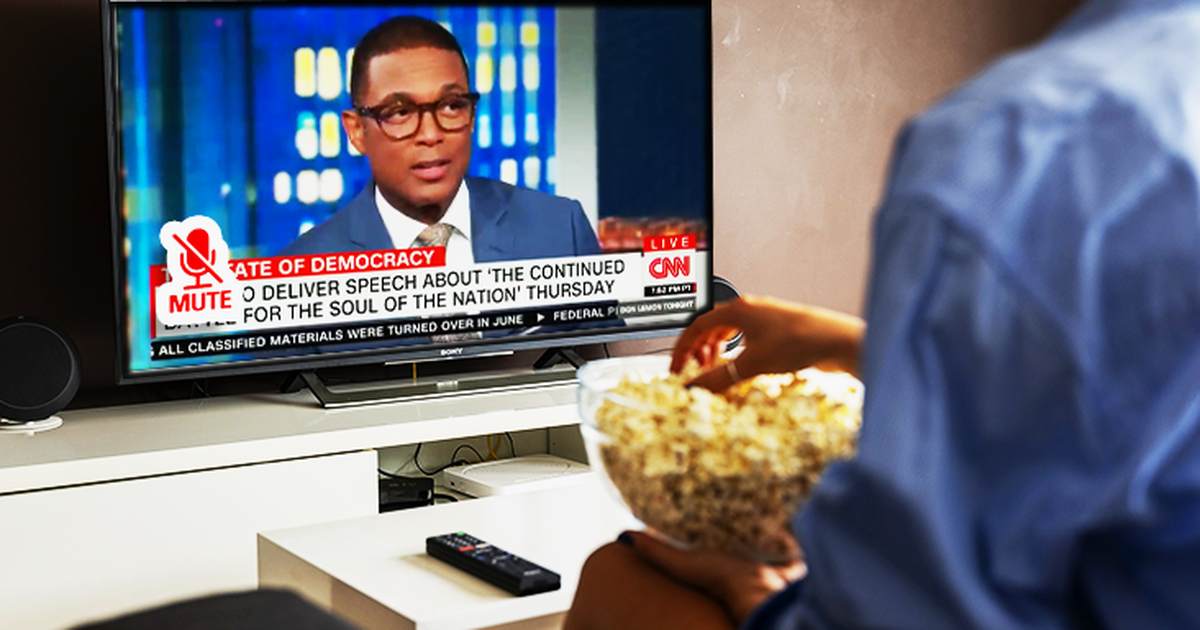
A quick eye on a street interview where a young Persian man told Don Lemon he backs President Trump’s strikes on Iran, explained his family’s history with Iranian brutality, and argued the U.S. should act to stop oppression overseas.
Don Lemon stopped a young man on the street to ask how he felt about the conflict with Iran, expecting criticism of military action. Instead, the interviewee—whose family fled Iran—expressed firm support for the president’s decision and sympathy for victims of the regime’s brutality. His view cut against the common media narrative that most Americans oppose the operation. That unexpected stance turned the exchange into a short, sharp lesson about perspective and lived experience.
The young man made his position clear in simple, direct terms. “How do you feel about the war?” Lemon asked. “I’m Persian. So I support Donald Trump, 100 percent,” the young man said. “The Islamic regime kills women. They killed 50,000 people in two days. A lot of them believe in death to all Americans. So I’m fully a hundred percent support Donald Trump.”
Lemon pushed back on the idea that the conflict was America’s immediate concern, trying to frame it as something distant from U.S. national security. “So you said you’re Persian, but there’s no imminent threat to the United States,” Lemon replied. The interviewee acknowledged the point but answered from a different moral compass. “I’m obviously biased because I’m Persian and I understand why people wouldn’t want war to happen,” the man said. “I understand that fully. My dad grew up in Iran. He had to feed the country when he was 14. Again, fully support Donald Trump with the bombing of the Supreme Leader.”
WATCH: Don Lemon: “How do you feel about the war?”
Young Man: “I'm Persian. I support Donald Trump 100%. The Islamic regime kills woman. They killed 50,000 people in two days. A lot of them believe in death [to] all Americans. I 100% support Trump.”
“My dad grew up in Iran. He… pic.twitter.com/9uiYE3ukiM
— RedWave Press (@RedWavePress) March 26, 2026
When Lemon argued that many Americans see no direct threat, the man did not dodge the larger ethical argument. “But do you understand how Americans feel like this had nothing to do with us? We’re not, there’s no imminent threat,” Lemon pressed. The reply returned to an emotional foundation that can be overlooked in policy debates: personal history and empathy for the suffering of others under a cruel regime. It’s a reminder that foreign policy hits real families, not just headlines.
“Yeah, I understand. Again, I’m Persian. So, when I see, when I see women who are being killed because they’re not wearing the scarf over the head, I feel a connection to that. I mean, that’s, that’s not, that’s not right. But I do see where you’re saying about, you know, America not having anything to do with Iran’s problems, but I stand with Trump.”
The exchange highlights a core conservative argument about American foreign policy: when tyrants slaughter their own people and threaten regional stability, the United States has both the capacity and the duty to respond. That view pushes back against isolationist instincts born from long, costly wars that left the country wary. For many who fled hostile regimes, intervention is not abstract; it is a lifeline for those still trapped under repression.
This moment also underlines the cultural gap between media figures who frame conflicts through a U.S.-centric cost-benefit lens and immigrants who bring firsthand memories of what unchecked tyranny produces. The man’s account of his father’s childhood in Iran and the brutal tactics of the regime places his support for decisive action in a personal context. It’s a perspective often missing from studio panels and op-eds that prioritize risk calculus over human consequences.
The conversation is a reminder that public opinion is not monolithic and that those closest to suffering can have sharply different views from pundit-driven narratives. Many Americans understandably recoil at the word war, but others see targeted action as morally necessary when innocent lives are at stake. That split is exactly why on-the-ground voices deserve attention; they complicate neat assumptions about what Americans want in foreign policy.
Critics will say stepping into another country’s affairs invites cost and danger, and history provides hard lessons on overreach. Still, the young man’s case illustrates why a strong, purposeful response can resonate when the alternative is silence in the face of mass killing. For conservatives who believe in American leadership, restoring a willingness to act is about protecting liberty and preventing atrocities that metastasize into larger threats.
The interview ended without a neat resolution, but it succeeded in forcing a tougher question into the open: whose suffering counts in our calculations, and when does American power become a tool for stopping mass injustice? That question splits leaders, media, and citizens in real and consequential ways. For those who fled Iran’s cruelty, the answer was straightforward: stand with victims, and back the leader taking action to stop the killing.