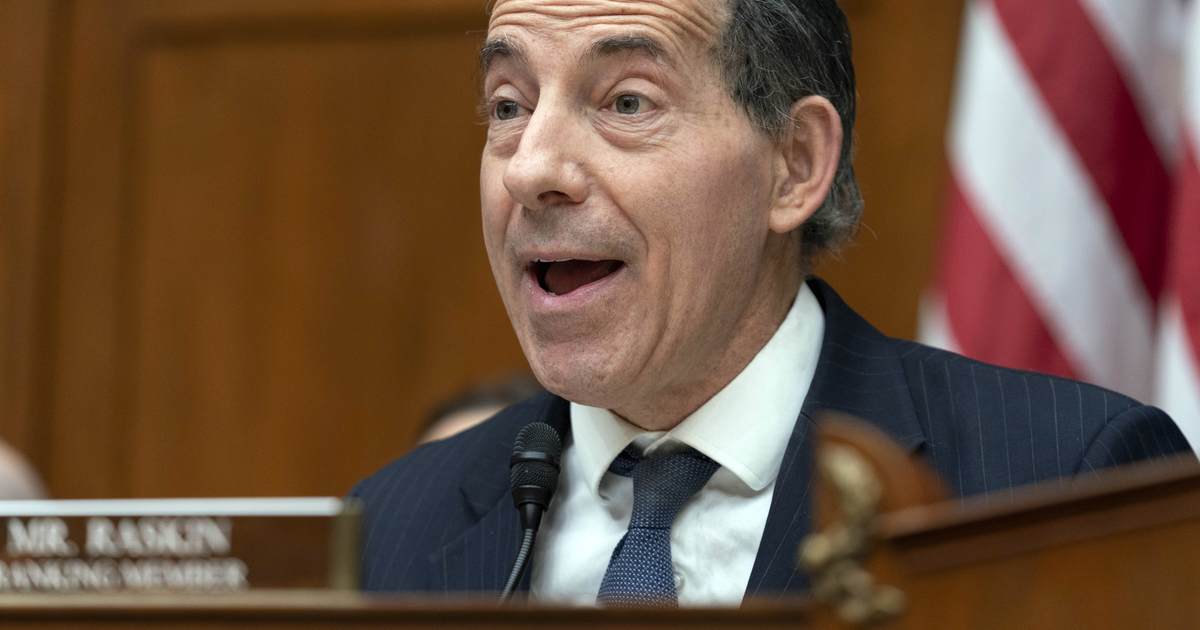
Rep. Jamie Raskin’s claim that founders like Thomas Paine and Thomas Jefferson were “illegal” or “undocumented” migrants sparked a blunt exchange with Rep. Jim Jordan that exposes how applying modern labels to 18th century movement distorts history and risks political embarrassment.
Rep. Jamie Raskin (D-MD) offered a line of argument that landed badly when Rep. Jim Jordan (R-OH) pushed back, and the result was as awkward as it was revealing. Raskin tried to describe figures such as Thomas Paine and Thomas Jefferson with modern migration labels, and Jordan pointed out the obvious historical mismatch. The back-and-forth turned into a clear demonstration that anachronistic terminology can collapse under even a little scrutiny.
At one point Raskin suggested founders were “illegal,” then pivoted to saying they were “undocumented,” as if swapping words fixes the historical error. Jordan calmly corrected him: Paine was born in the United Kingdom and came to America when it was a colony, not a modern nation-state with contemporary immigration law. The attempt to recast colonial relocation as a present-day immigration issue made the argument seem more ideological than factual.
That kind of verbal contortion is exactly the problem conservatives have warned about when history gets used as a political costume change. If every contestant in today’s identity theater can relabel past actors to suit a modern narrative, then history becomes a tool for virtue signaling instead of a record of human decisions and context. The Raskin-Jordan exchange shows how fast authority evaporates when folks treat historical context like optional stage props.
Raskin: "Thomas Paine was an undocumented immigrant."
Jordan: "How was he an illegal immigrant? He was born in the UK and came to America, then a British colony."
Raskin: "I didn't say he was an illegal immigrant. He was an undocumented immigrant." pic.twitter.com/3H6fDV02rf
— Greg Price (@greg_price11) March 18, 2026
There’s a habit on the Left of forcing present-day categories onto the past and expecting that relabeling will carry weight in public debate. It doesn’t, and when pressed people either retreat into word games or double down on nonsense, which is what we saw in this case. Republicans who value clear language and proper context shouldn’t let that slide, because sloppy historical claims degrade the public square.
The exchange also underlines a deeper problem: a lack of basic historical literacy among political elites who shape the conversation. When elected officials mix eras and legal frameworks, they don’t just embarrass themselves; they weaken public trust in policy debates. Accurate historical framing matters because it grounds arguments in facts instead of fashionable rhetoric.
Mocking aside, the substance matters for how the immigration debate gets framed in policy terms. Calling 18th century colonists “undocumented” suggests contemporary legal frameworks apply retroactively, which is simply false. Policy discussions should be about real, present-day laws, enforcement, and border management—not rhetorical stunts that confuse voters.
Beyond policy, there’s a cultural cost when public figures ignore basic distinctions between eras. It signals that winning an argument is more important than telling the truth, and that kind of opportunism corrodes civic discourse. Electorates deserve representatives who will engage honestly with facts and history instead of inventing convenient labels to score points.
So when you watch exchanges like Raskin versus Jordan, notice where the argument goes off rails: into wordplay and away from concrete issues like law, sovereignty, and practical enforcement. Conservatives who push for rule of law and clear definitions win when they insist on straightforward language and proper context. The country benefits when political debate returns to real problems and real solutions rather than rhetorical gymnastics.