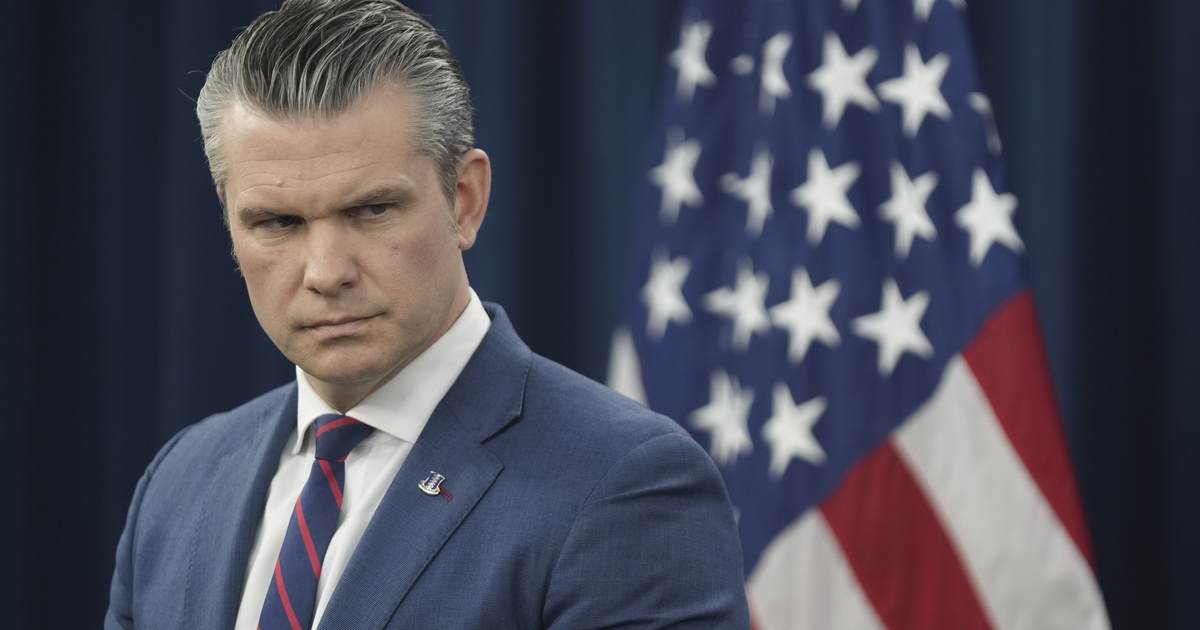
Secretary Pete Hegseth told the House Armed Services Committee that, two months into the Iran conflict, the greatest threat to the United States comes not from Tehran but from defeatist rhetoric at home, and he praised President Trump’s stance and actions to prevent an Iranian nuclear weapon.
Secretary of War Pete Hegseth opened his testimony with a sharp, unapologetic tone, arguing that two months into the Iran war the principal danger is domestic. He singled out the words of some lawmakers as more damaging than enemy moves, framing America’s struggle as one that requires resolve, not hand-wringing.
Hegseth blasted what the administration has started calling “panicans” for their lack of faith in the commander-in-chief, saying the president has been the only leader willing to confront Iran head-on. That attack on pessimism is part political, part strategic, and meant to rally support behind a clear, forceful policy.
“President Trump, unlike other presidents, has had the courage to ensure Iran never gets a nuclear weapon, and he’s ironclad in that. We have the best negotiator in the world driving that deal,” Hegseth said. “The biggest challenge, the biggest adversary we face at this point, are the reckless, feckless, and defeatist words of congressional Democrats and some Republicans.”
🚨 WOW! SecWar Pete Hegseth just UNLEASHED FURY to the Democrats’ FACES
“The biggest adversary we face at this point— ARE THE RECKLESS, FECKLESS, and DEFEATIST WORDS of Congressional DEMOCRATS, and some Republicans, 2 months into a conflict!”
He’s right! 🔥🔥👏🏻 pic.twitter.com/wEbWFFMm4r
— Eric Daugherty (@EricLDaugh) April 29, 2026
“Two months in, I remind you, two months in to a conflict, lest I remind you, and my generation understands, how long we were in Iraq, how long we were in Afghanistan, how long we were in Vietnam. Two months in, on an existential fight for the safety of the American people,” he continued. “Iran cannot have a nuclear bomb. We are proud of this undertaking. I am proud that President Trump had the courage to do it, and I look forward to sharing more about what our troops have accomplished. So I thank you again for the opportunity to address this committee.”
The administration’s strategy has leaned on pressure and isolation rather than naivete, and that shows up in operations at sea. U.S. forces have blockaded Iranian ports and vessels, choking off oil exports that keep the regime afloat and undercutting Tehran’s ability to fund malign activity.
The economic squeeze has real consequences: Iran is reportedly burning through storage and may be forced to shut in wells, which risks damaging infrastructure and could permanently cut production. Analysts in and out of government estimate the blockade has cost Iran more than $400 million a day, a figure that underscores how economic pressure is being used as leverage.
Over the weekend, diplomatic talks were called off after the president accused Iran of stalling, leaving the ball in Tehran’s court and signaling that concessions won’t be handed over. That tough posture is designed to force a serious, verifiable deal on terms that prevent a nuclear-capable Iran.
The president has publicly framed Iran as unraveling, writing that “Iran has just informed us that they are in a ‘State of Collapse,'” and stressing the urgency he sees in the regime’s internal instability. He added, “They want us to ‘Open the Hormuz Strait,’ as soon as possible, as they try to figure out their leadership situation (Which I believe they will be able to do!). Thank you for your attention to this matter! President DONALD J. TRUMP.”
Hegseth’s testimony is a reminder that winning a long-term strategic contest often relies as much on will and messaging at home as it does on operations abroad. His comments reflect a view held by many on the right: that showing strength, unity, and clarity of purpose is the best way to deter aggression and protect American interests.
Lawmakers will keep debating tactics and timelines, but Hegseth made clear his expectation that sustained pressure, backed by political resolve, will bring Tehran to a point where a meaningful agreement is possible. For now, the administration’s playbook rests on hard power, economic strangulation, and the insistence that Iran never acquire a nuclear weapon.