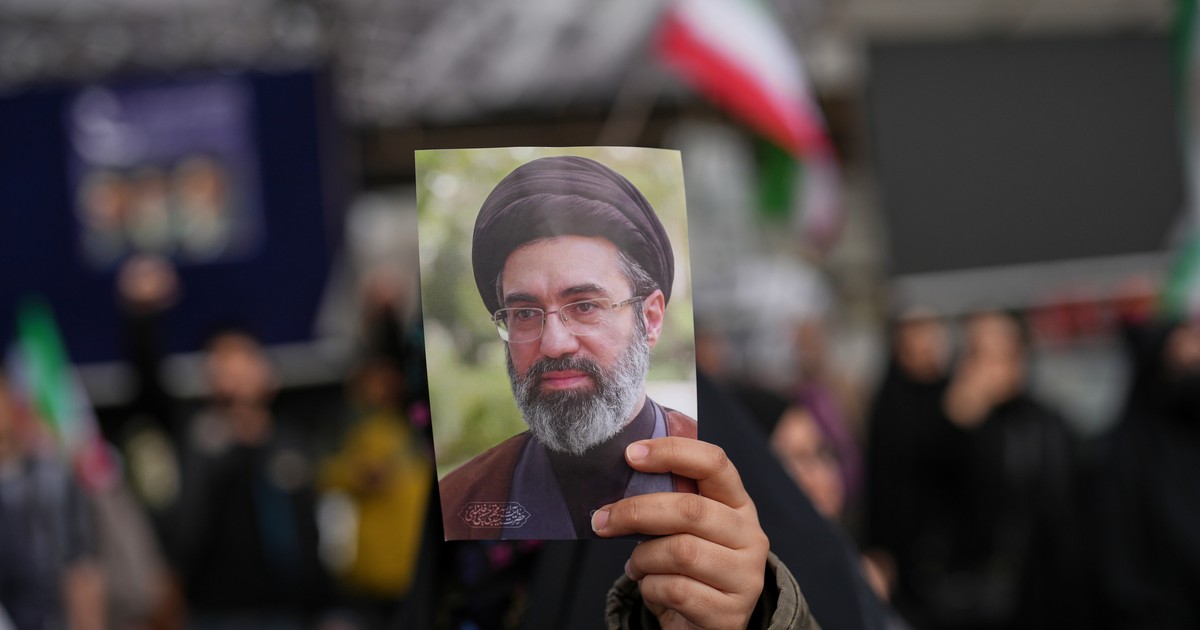
Iran’s newly publicized threat from Supreme Leader Mojtaba Khamenei ratchets up tensions over the U.S. naval blockade, with Tehran vowing to defend its strategic programs while questions swirl about who’s actually in charge inside Iran.
Mojtaba Khamenei issued a blunt written statement on Thursday aimed squarely at the United States, criticizing the naval blockade and insisting Iran will protect its nuclear and missile capabilities as if they were sovereign territory. The language was sharp and unmistakable, signaling Tehran’s refusal to back down even as economic pressure mounts.
The new Ayatollah painted a future for the Strait of Hormuz that explicitly excludes American presence, accusing U.S. forces of acting with “greed and malice” and suggesting the U.S. Navy has no place there. That rhetoric comes as American forces maintain pressure at sea to choke off revenue and supplies to Iran.
“Ninety million proud and honorable Iranians inside and outside the country regard all of Iran’s identity-based, spiritual, human, scientific, industrial and technological capacities — from nanotechnology and biotechnology to nuclear and missile capabilities — as national assets, and will protect them just as they protect the country’s waters, land and airspace,” Khamenei wrote.
🚨 JUST NOW: Iranian "Supreme Leader" Mojtaba Khamenei WENT OFF vowing to sink American ships to the "bottom of its waters" 🤡
The blockade is DEVASTATING Iran, which is why Khamenei put out this statement
President Trump will today be briefed on possible US military plans by… pic.twitter.com/9TCH5p1voK
— Eric Daugherty (@EricLDaugh) April 30, 2026
“By God’s help and power, the bright future of the Persian Gulf region will be a future without America, one serving the progress, comfort and prosperity of its people,” he continued.
“We and our neighbors across the waters of the Persian Gulf and the [Gulf] of Oman share a common destiny. Foreigners who come from thousands of kilometers away to act with greed and malice there have no place in it — except at the bottom of its waters.”
There’s an added layer of uncertainty: Mojtaba Khamenei has not been seen publicly since taking the role, and unconfirmed reports claim he was badly hurt in the strike that killed his father and may have been in a coma for months. Those rumors fuel speculation that the public statement could be less a unifying message than a cover for internal jockeying inside the regime.
The Islamic Revolutionary Guard Corps has been operating with a high profile and claims to be acting on the ayatollah’s wishes, but analysts note that if the supreme leader is incapacitated, the IRGC effectively runs policy. That would help explain why talks with Tehran repeatedly broke down; hardliners with battlefield influence have little incentive to negotiate away strategic programs.
At the same time, the written declaration reads like posturing from a regime squeezed by economics and logistics. U.S. measures at sea, designed to restrict Iranian oil and shipping, are costing Tehran heavily — officials estimate the government is losing more than $400 million every day under the tighter blockade.
Over the weekend, President Trump canceled a round of negotiations with an Iranian delegation, accusing Tehran of stalling and making clear that diplomacy requires seriousness. The administration has signaled it will continue to tighten economic and maritime pressure until Tehran changes course, a hard-line stance that appeals to voters who want decisive action to neutralize threats.
Iran’s oil storage is nearing critical capacity, creating real operational headaches: if tanks top out, Tehran may be forced to shut down production at wells, a step that risks long-term damage and could cut output to a fraction of current levels. For a state dependent on oil revenue to finance regional ambitions, that’s a painful lever to pull.
What happens next depends on a mix of leadership clarity inside Iran, the IRGC’s appetite for escalation, and how far the U.S. is willing to push its maritime pressure. The international waterway at the heart of this crisis is vital to global energy flows, and any miscalculation could produce dangerous consequences for both sides.