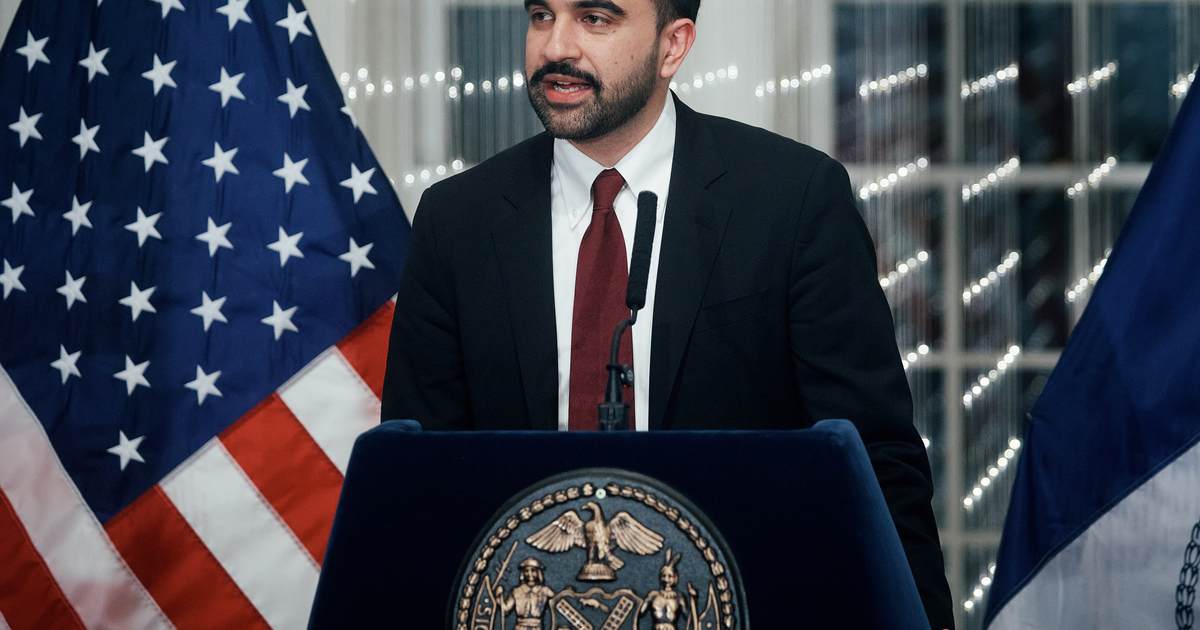
Zohran Mamdani vowed to build city-run grocery stores and now says the first will open next year, despite widespread warnings from bodega owners and clear evidence that municipal grocery experiments have failed elsewhere; this piece lays out the promise, the misread $140 million subsidy claim, the alarm from local shopkeepers, and the likely practical consequences for New York neighborhoods and small businesses.
From the outset of his campaign, Zohran Mamdani vowed to bring government-run grocery stores to the Big Apple, and he has stuck to that promise even as examples from other cities tell a different story. The plan is doomed to fail, as every other city that has tried government-run grocery stores has been forced to shutter them, and savvy opponents point out the predictable problems—logistics, staffing, and the blunt realities of running retail from City Hall. Mamdani’s proposal was also contingent on his misreading a government website about $140 million in subsidies, a number that was not actually available to fund a sweeping rollout.
Local bodega owners sounded the alarm months ago, warning that government competition would crush the neighborhood stores that New Yorkers rely on for groceries, quick essentials, and jobs. Fernando Mateo, a spokesman for the United Bodegas of America, described the plan bluntly, calling the plan a “cancer.” These are not abstract proprietors; they are often immigrant-owned small businesses that keep lights on, provide morning coffee and late-night snacks, and anchor corners where municipal solutions rarely match grassroots resilience.
Despite those warnings and the patchwork record of municipal grocery efforts, Mamdani announced he will open the first government-run grocery store next year. He doubled down on the broader promise in a campaign-style pledge, saying exactly, “During our campaign, we promised New Yorkers that we would create a network of five city-owned grocery stores, one in each borough,” which he followed with, “Today, we make good on that promise. I am proud to announce we will open every single one of these stores by the end of our first term. And the first one will open next year.”
Zohran Mamdani announces he will open his first communist grocery store in New York next year:
“I am proud to announce that we will open every single one of these stores by the end of our first term, and the first one will open next year.” pic.twitter.com/AMp8DMqXKa
— RNC Research (@RNCResearch) April 13, 2026
Those are bold commitments, and the scale matters: there are millions of people living in the five boroughs. Manhattan has a population of about 1.63 million, Brooklyn 2.74 million, Queens 2.4 million, the Bronx 1.47 million, and Staten Island about 500,000. With those numbers in mind, the question on the streets is simple and sharp: And Mamdani thinks one government-run store is going to serve all those people?
Look at the practical record for similar experiments: in Kansas City, which has a population of roughly 510,000, the government-run grocery store was quickly plagued by shortages, rotten food, and theft, showing how municipal operation can struggle with basic inventory control and security. Those problems are not mere anecdotes; they are predictable outcomes when you replace private incentives with bureaucratic systems that lack retail experience and local accountability. Imagine that in lawless NYC, where supply chains, staffing, and safety already strain city agencies, and the mismatch between political promises and retail realities becomes painfully visible; Good luck.
We’ll take the under. It is not just about one grocery opening; it is about a broader philosophy that treats neighborhoods as test sites for ideological experiments instead of protecting small businesses that employ locals and provide essential services. It only took him a year to introduce breadlines to NYC, a line that cuts through the optimistic rhetoric and brings the debate back to outcomes that actually affect people at the corner store and the kitchen table.
He promised free buses, too, and we all see how that went. Voters and shopkeepers are watching to see whether promises translate into practical solutions or whether they will simply swap independent, accountable storefronts for state-run models that historically failed to sustain service or quality. Critics argue that the same city bureaucracy that struggles with sanitation and transit will be asked to run perishables, manage theft, and keep shelves stocked—tasks that require nimble local management, not a one-size-fits-all municipal approach.
There is a broader point beyond partisan argument: when policy choices threaten long-standing small businesses without clear, funded alternatives, the ripple effects hit neighborhoods first. If the goal is to improve food access, policymakers should be careful about dismantling a dense network of mom-and-pop stores that already supply communities, rather than assuming a top-down city store will outperform local operators. New Yorkers deserve practical plans that preserve livelihoods, keep shelves full, and respect the role small businesses play in the city’s daily life.