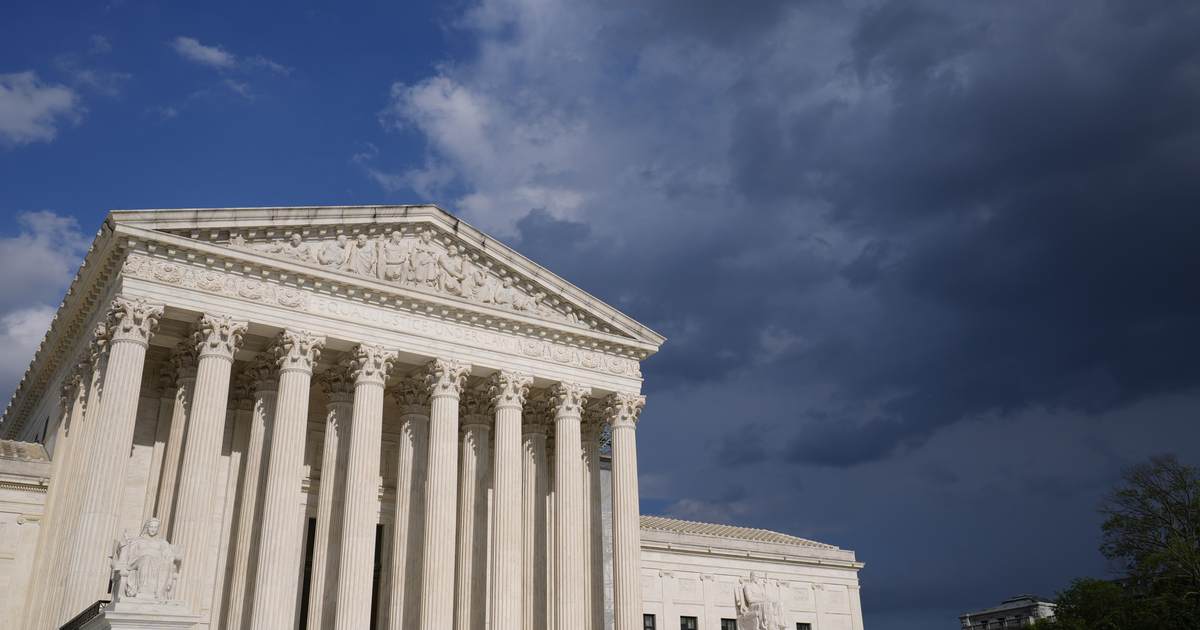
The Supreme Court’s split decision in Louisiana v. Callais upholds limits on a specific district map while leaving Section 2 of the Voting Rights Act intact for now.
The dispute at the center of Louisiana v. Callais started with a state attempt to redraw congressional maps and protect a majority-black district, after an earlier plan was rejected as a Voting Rights violation. The current challenge argued that the newest map crossed constitutional lines by making race the dominant factor in drawing the district. The case landed squarely at the Supreme Court because it raises how Section 2 interacts with race-conscious redistricting.
The Court issued a 6-3 decision finding the specific drawing of the district unconstitutional, but the majority did not formally strike down Section 2 of the Voting Rights Act. Justice Alito’s opinion emphasized the constitutional limits on race-based districting and explained why the state’s justification failed in this instance. “Compliance with Section 2, as properly construed, can provide such a reason. Correctly understood, Section 2 does not impose liability at odds with the Constitution, and it should not have imposed liability on Louisiana for its 2022 map. Compliance with Section 2 thus could not justify the State’s use of race-based redistricting here,” he wrote.
That ruling keeps Section 2 alive in name but narrows how courts and legislatures can rely on it when race is the central decision driver. Republicans who favor clear, race-neutral maps saw the decision as a partial win, since the Court rejected the particular use of race in Louisiana’s drawing. At the same time, critics warned the Court did not go as far as some had hoped in limiting federal reach into state districting choices.
Justice Kagan, joined by Justices Sotomayor and Jackson, delivered a sharp dissent that highlights the stakes for minority representation. She argued the majority’s new framework would make it far harder to enforce Section 2 and protect voters from discriminatory effects. “The new Callais requirements will effectively insulate any practice, including any districting scheme, said by a State to have any race-neutral justification. That justification can sound in traditional redistricting criteria, or else can sound in politics and partisanship. As to the latter, the State need do nothing more than announce a partisan gerrymander.”
The political fallout was immediate: opponents warned the ruling could reshape Southern politics and weaken Democratic chances in areas where coalition-building has relied on protected districts. This case made Democrats nervous as it could virtually wipe them out in the South:
BREAKING: Democrats in full meltdown mode after CNN drops bombshell… They've hit the absolute limit on gerrymandering tricks and are still trailing badly in polls ahead of the 2026 midterms.
The Democrat Party has COLLAPSED! pic.twitter.com/ko4Rm1TWEn
— Gunther Eagleman™ (@GuntherEagleman) October 15, 2025
Outside the courtroom there were eyebrow-raising moments during argument, including an exchange that commentators called wonky when an NAACP lawyer suggested that some white Democrats do not support Black candidates. That claim drew criticism because it oversimplified voting behavior and strained credibility in front of the justices. The substance of those argument moments fed into broader debates about whether race-conscious remedies are still the right tool for addressing past discrimination and present voting patterns.
From a legal perspective, the majority’s approach tries to thread a needle: preserve Section 2 while preventing states from making race the single, overriding factor in mapmaking. Republicans who push for race-neutral criteria welcomed the restraint on race-dominant redistricting, even as the issue of when Section 2 can be invoked remains open. The ruling will send map challenges back to lower courts with a new set of constraints on how plaintiffs can prove improper racial predominance in districting.
Practically, this decision sets a precedent that states will study closely as they redraw maps or defend existing lines, and it guarantees more litigation ahead. The case resolved one map’s fate but left larger doctrinal questions unsettled, so expect more briefs and more challenges on similar grounds.