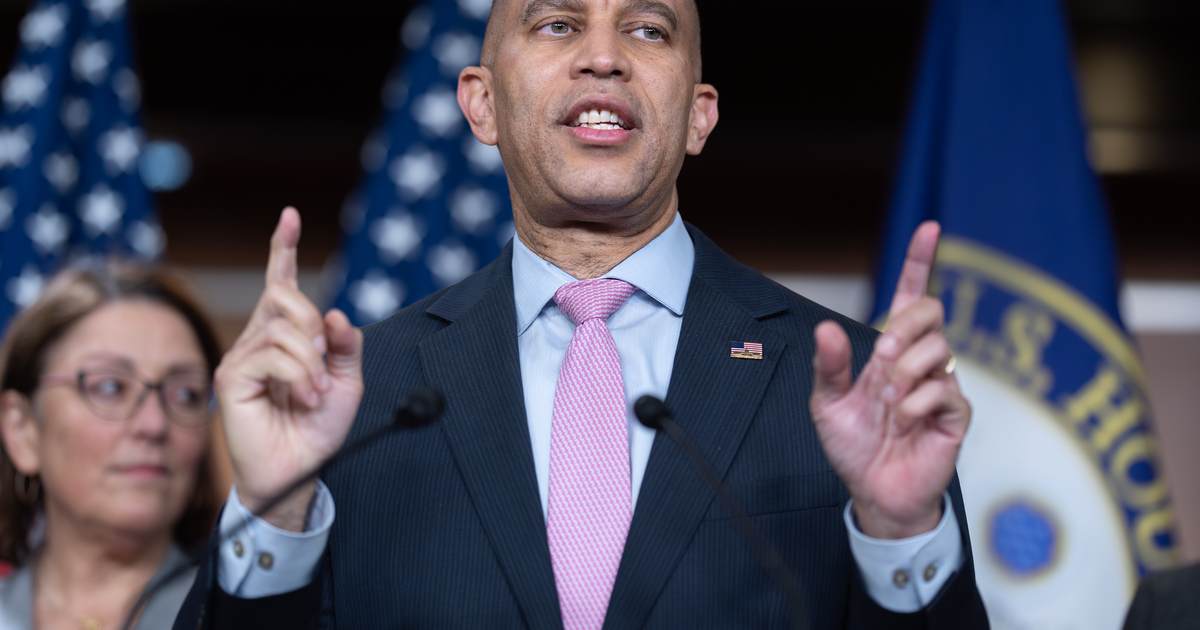
House Minority Leader Hakeem Jeffries urged athletes to boycott certain SEC schools over redistricting, and Republican critics say that demand reveals a pattern of Democrats asking others to sacrifice while avoiding consequences themselves.
Democrats often push policies that require sacrifice from working Americans while staying above the fray, and that point shows up again in the latest controversy. Minnesota Lt. Governor Peggy Flanagan famously told supporters to ‘put your bodies on the line’ to protect people from ICE, a call that many saw as asking others to bear the risk. From crime policy to climate mandates, the complaint from critics is the same: the middle and working class are told to pay the cost.
Now House Minority Leader Hakeem Jeffries and allied civil rights groups are asking athletes to weigh in, which Republicans find offensive. Jeffries and the NAACP are calling for boycotts of SEC institutions located in states whose congressional maps were redrawn after the Supreme Court rejected certain racial gerrymanders. The request targets athletes who have spent years building careers and livelihoods around college programs, asking them to sacrifice those opportunities for a political fight.
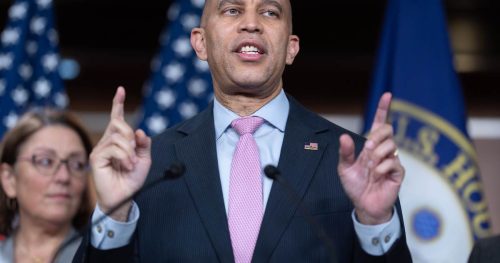
“It’s an honor to stand with members of the Congressional Black Caucus, as well as former athletes committed to this cause, in getting this egregious situation turned around,” Jeffries said. “This is an unprecedented moment featuring an unprecedented attack on Black political representation, and, therefore, it requires an unprecedented response.” That statement is being used to justify a pressure campaign aimed at universities and their athletic programs.
“We are here, standing in solidarity with the NAACP, and its call for athletes to boycott institutions within the SEC that belong to states that have unleashed these Jim Crow-like, racially oppressive tactics,” Jeffries continued, “which is unacceptable, unconscionable, and un-American. And we believe that the silence of these institutions is complicity. And we will not stand for it.” Those words are dramatic, and critics say the demand is equally dramatic in its consequences.
Leader @hakeemjeffries: This is an unprecedented moment with an attack on Black political representation, and it requires an unprecedented response. We are here in solidarity with the NAACP and its call for athletes to boycott SEC institutions in these states that have unleashed… pic.twitter.com/A99kt7gjsy
— Headquarters (@HQNewsNow) May 19, 2026
From this side of the aisle, the bigger issue is the double standard. When the Supreme Court ruled that racially gerrymandered districts violate the Constitution, the decision was treated as law by the bench but as an attack by some partisan actors. Democrats framed the ruling as a threat to “Black political representation,” turning a legal outcome into a political emergency.
So the question now is obvious: Will Democrats actually accept institutional consequences if schools refuse to bow? Will they apply the same pressure to their own institutions? Will they ask their elected leaders and donors to lead by example? Those are fair questions to pose when political muscle is being flexed.
Apparently not. That response is telling, because if this were about principle rather than power, the movement would look different. Instead we are seeing selective outrage aimed at institutions that can be shoved into a headline-driven conflict.
Democrats do not care about the Constitution. They want power. That blunt assessment will anger some readers, but partisan tactics like targeted boycotts make the point hard to deny for many conservatives.
No. Black Republicans do not count. The outrage seems to be measured and deployed by partisan utility rather than any consistent standard about representation or fairness. That selective approach makes the political motive clearer than the moral one.
Much like Lord Farquaad in the ‘Shrek’ movies, Democrats are willing to have others make these sacrifices for them. The metaphor lands because it highlights the unwillingness of leaders to absorb costs they happily assign to others. When the ask is aimed at athletes, the stakes are tangible: scholarships, exposure, and future professional chances.
You know that’s coming. Political operatives will frame compliance as heroic and dissent as betrayal, and institutions will be forced to pick sides under threat of reputational or financial pain. That kind of coercion is exactly what critics worry will replace fair debate.
The optics and framing of this are simply incredible. A party that talks about inclusion and equality is urging a group of young people to forgo opportunities based on geography and politics. That contradiction will be hard to ignore for voters who care about individual rights and merit.
“Democrats do not want a colorblind society” is a sharp charge some conservatives make when they see identity politics used as leverage. The argument here is straightforward: when political advantage comes from division, appeals to unity lose credibility. That makes calls for boycotts look less like moral stands and more like partisan strategy.
Serious athletes select schools based on coaching, development, and the best path to a pro career, not on political pressure campaigns. They will think about their futures and the realities of scouting, exposure, and team fit before signing on to a protest that could cost them dearly. In the end, most athletes will likely choose the route that preserves opportunity and advancement rather than become pawns in a partisan chess match.