The piece argues that national popular vote schemes and other Democratic plans would sideline voters in red states, and it warns that the National Popular Vote Interstate Compact could become reality if Democrats flip a handful of state governments and reach 270 electoral votes.
Democrats have openly discussed big changes: packing the Supreme Court, adding D.C. and Puerto Rico as states, and scrapping the Electoral College. Those are blunt attempts to redraw political influence so coastal majorities run the rest of the country. The effort to shift presidential elections to a national popular vote is the most practical route they’re pursuing right now.
That scheme is known as the National Popular Vote Interstate Compact, or NPVIC, and it would assign a state’s electors to the national popular vote winner once participating states collectively hold 270 electoral votes. The compact doesn’t require a constitutional amendment, which makes it attractive to those who want to bypass the built-in protections of federation. It is, by design, a way to centralize power in a handful of blue population centers.
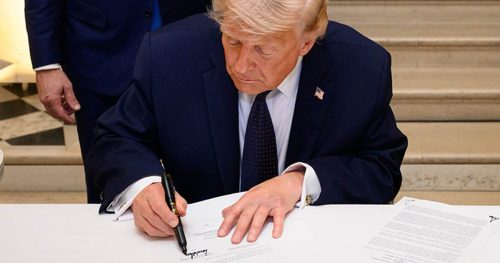
On April 13, Gov. Abigail Spanberger signed a bill making Virginia the 18th state to join the National Popular Vote Interstate Compact.
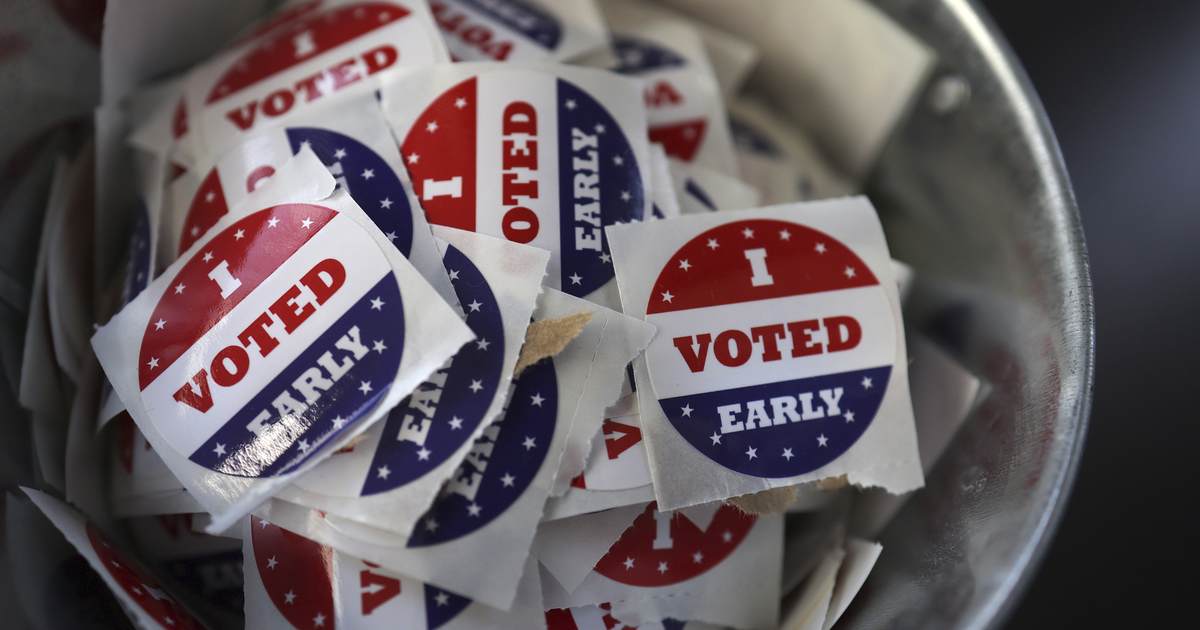
That’s an agreement among states to elect the president by the popular vote rather than the Electoral College.
There’s actually a chance the president could be elected by the popular vote in 2028 instead of the fundamentally undemocratic Electoral College. https://t.co/r2bAQMsx2W
— Mother Jones (@MotherJones) May 15, 2026
The compact goes into effect when enough states sign onto it and reach a total of 270 electoral votes—the number needed to elect the president.
With Virginia’s support, states in the compact now have 222 electoral votes.
And the results of the midterms could push the popular vote effort over the top.
If Democrats take control of state governments in Michigan, Pennsylvania, Wisconsin, Nevada, or Arizona, and legislatures in those states adopt the compact, that would put it over 270.
Even if the compact reaches 270, the legal fights would be immediate and long‑running, likely tied up until the Supreme Court weighs in. States can withdraw with notice, which adds a political chess element to the plan. That still doesn’t erase the fact that a coordinated handful of statehouses could tilt the presidential process toward the biggest population centers.
There’s a simple political truth here: national popular vote advocates favor outcomes that make a few big metros decisive. That approach ignores the constitutional bargain that protects smaller and less populous states. For many Americans outside coastal bubbles, it would feel like being told their votes only matter when the city vote doesn’t produce the result the activists want.
The hypocrisy is obvious: many Democrats loudly defend the Electoral College when their nominee carries it, and only complain when the map goes against them. As one line put it, “Heads we win, tails you lose.” That mindset has driven a steady push to centralize decision-making and reduce the influence of voters who live in red states.
Current polling and political signals make the NPVIC’s immediate success uncertain; betting markets put the chance of it happening before 2028 in the low teens. Republicans have made gains in redistricting and state legislatures that complicate the compact’s path. Still, the possibility can’t be dismissed if Democrats capture statehouses in key states during the next cycles.
This battle isn’t just about presidential mechanics; it’s about state-level control. Whoever runs state legislatures sets maps, appoints officials, and can pass laws that change how national politics operate. That’s why state and local contests matter as much as the marquee national races—control at the state level determines whether plans like the NPVIC can cross the finish line.
The push to change the rules is less a debate about fairness than a strategy to convert temporary popular majorities into permanent institutional advantage. If the aim is to centralize power in a few states and impose those votes on the rest, then the broader democratic bargain is at risk. The choice about how we decide presidents still rests with state legislatures and voters, and the fight over that choice is continuing now.