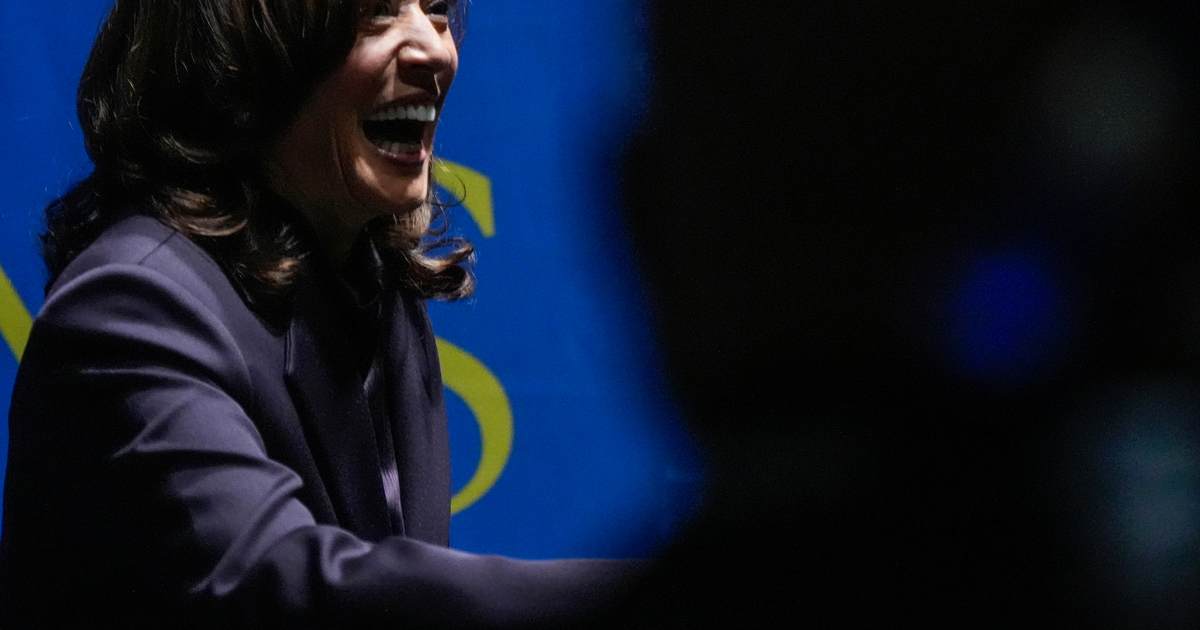
Kamala Harris has quietly urged Democrats to publish the DNC’s 2024 postmortem, even as party leadership has kept the document under wraps amid concerns it could be embarrassing or unfinished.
Behind closed doors, former Vice President Kamala Harris has been pushing donors on a surprising point: she wants the Democratic National Committee to make its 2024 autopsy public. DNC Chair Ken Martin ordered the review after the election but decided to keep the findings confidential, arguing the contents would distract from the party’s immediate priorities. That decision has left allies and critics guessing about what the report actually says and why it remains locked away.
Rumors swirled that parts of the report are muddled, with one contested section reportedly addressing the Israel-Gaza war described by a source as incoherent. Other whispers suggest the postmortem was never fully finished when leadership pulled the plug, which raises questions about competence and motive in equal measure. For a party already reeling, the choice to hide analysis only fuels suspicion.
I’m not so sure she knows what’s in it (via NY Post):
Pressure is mounting on the Democratic National Committee to disclose its 2024 election postmortem, with even former Vice President Kamala Harris urging the party to do so despite the risk of embarrassment.
Shortly after taking over, DNC Chairman Ken Martin ordered an autopsy into his party’s 2024 drubbing, but opted to keep that report secret for months, prompting many Democrats to cry foul.
Keeping the report buried was widely seen as a way to aid Harris if she were to throw her hat into the 2028 arena, given that it might be politically mortifying for her.
But even the ex-veep has privately told donors she feels it should be public, though she hasn’t discussed the issue with Martin, The Post has confirmed. NBC News first reported Harris’ private push for the autopsy’s release.
[…]
“Yeah, release the autopsy,” Sen. Cory Booker (D-NJ) told NBC’s “Meet the Press” on Sunday, making clear he doesn’t want Democrats to dwell on the past. “This is six months before an election. We need to be mobilizing and organizing in this election.”
[…]
Axios reported that it briefly referenced those concerns. CrookedMedia reporter Matt Berg reported that the report didn’t do a deep dive on the political fallout from the Israel-Hamas war, citing a source that described its contents on the matter as “gobbledygook.”
There have also been rumors that the DNC didn’t fully finish the postmortem.
Regardless, prominent Democrats are publicly pushing the DNC to let the public see it.
Public pressure is real: some Democrats say transparency will help organizers focus on the next cycle, while others clearly fear the political fallout. If the analysis exposes strategic mistakes or messaging failures, candidates and organizers will have to reckon with it. That prospect explains the tug-of-war between openness and damage control.
The stakes are personal for Harris. She lost all seven swing states, the popular vote, and the Electoral College to Donald Trump, with 89 percent of all counties shifting to the right. Those raw results are unforgiving, and any internal review that highlights missteps could undercut her standing inside the party. For a politician considering another national run, the last thing you want is a public autopsy that dissects every miscalculation.
There’s also a governance angle: if the report is incomplete or poorly sourced, releasing it would do more harm than good. Democrats who pushed to bury the review may have been motivated by prudent caution, while others see secrecy as protecting favored figures. Either way, hiding an internal review creates more questions than it answers.
From a Republican perspective, the episode looks like textbook damage control. Parties that lose big have an obligation to study failures and adapt, but they also must face the political consequences of honest analysis. If the DNC produced a flawed or embarrassing document, it says something about how the party responds to scrutiny and how confident it is about future prospects.
Whether the autopsy sees the light of day will shape intra-party debates and donor confidence. A public release could spark accountability and strategic adjustments, but it could also hand opponents fodder for months. For now, the tension between disclosure and discretion will play out behind closed doors while voters watch the consequences unfold in statehouses and on the campaign trail.