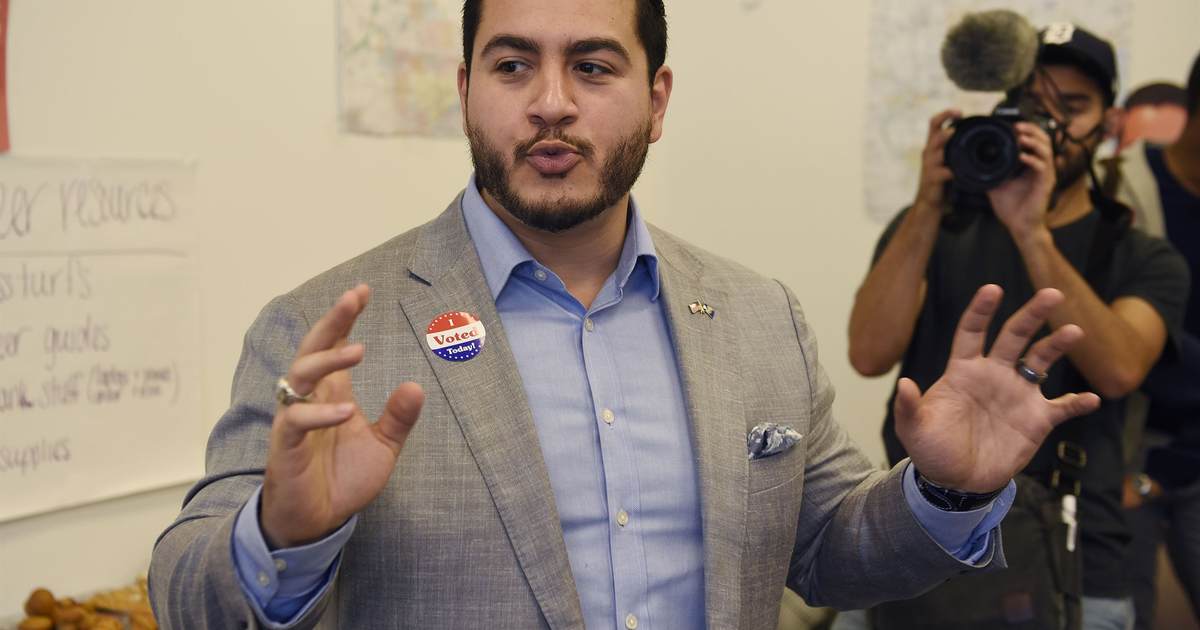
Abdul El-Sayed, a leading Democratic Senate hopeful in Michigan, publicly declared ICE cannot be “reformable” or “retrainable,” and his stance has ignited a wider debate about whether a Democratic majority would dismantle the agency and fundamentally change U.S. immigration enforcement.
Abdul El-Sayed has put the party’s position on immigration in stark terms, saying ICE must be destroyed because it is not “reformable” or “retrainable.” That comment landed hard in a state with real border and enforcement concerns, and it has prompted critics to argue Democrats are signaling a move to abolish core immigration institutions.
Removing ICE would not be a small administrative tweak; it would amount to a practical rollback of enforcement capacity for federal immigration laws. Critics worry there has been no serious public discussion from Democratic leaders about what agency or framework would replace ICE, or how prosecutions and removals would proceed under a different system.
https://x.com/AbdulElSayed/status/2059684191915102393?ref_src=twsrc%5Etfw
Those fears are sharpened by the claim that repealing enforcement without creating workable alternatives would leave large gaps in immigration control. Opponents say that gap would invite more illegal entries, strain public services, and create safety challenges, especially in communities already dealing with migrant inflows.
El-Sayed’s rhetoric has also fed a narrative that some Democrats treat unlawful entry as a minor offense, which conservatives argue normalizes border violations. That framing infuriates voters who expect elected officials to defend rule of law and secure the nation’s frontiers against criminal exploitation.
Scenes from other countries and reports about mass migration have reinforced those concerns, and some Americans say the lack of firm enforcement sends the wrong message to smugglers and would-be migrants. This debate has real electoral stakes in a number of swing states where border and public safety are top issues.
The broad worry among critics is not only policy detail but political priority: they see a party more attuned to activist constituencies than to the everyday security needs of citizens. That perception fuels a partisan split where immigration enforcement has become a core point of contrast ahead of key elections.
Hardline positions like El-Sayed’s also invite sharp cultural arguments about national identity, sovereignty, and who gets precedence in policy choices. Opponents argue those choices matter because they affect jobs, healthcare, and public safety, and they believe voters will hold Democrats accountable if enforcement is weakened.
Some conservative commentators have gone further, claiming that abolishing ICE would signal a willingness to sacrifice American lives for political advantage. That rhetoric escalates the dispute and makes compromise harder, while energizing Republican voters who prioritize strong borders and law enforcement.
There are also practical questions about demographics and migration patterns that shape the debate: many arrivals labeled asylum seekers are military-aged men rather than families, and critics say that pattern should inform policy design. Opponents use that detail to argue current proposals underestimate security implications and overestimate humanitarian claims.
This exchange is part of a larger national conversation about immigration policy, enforcement architecture, and the priorities that will define both parties in coming elections. The stakes are high because shifts in enforcement agencies and authority would reverberate through courts, local law enforcement, and federal immigration processes.
Editor’s Note: The 2026 Midterms will determine the fate of President Trump’s America First agenda. Republicans must maintain control of both chambers of Congress.