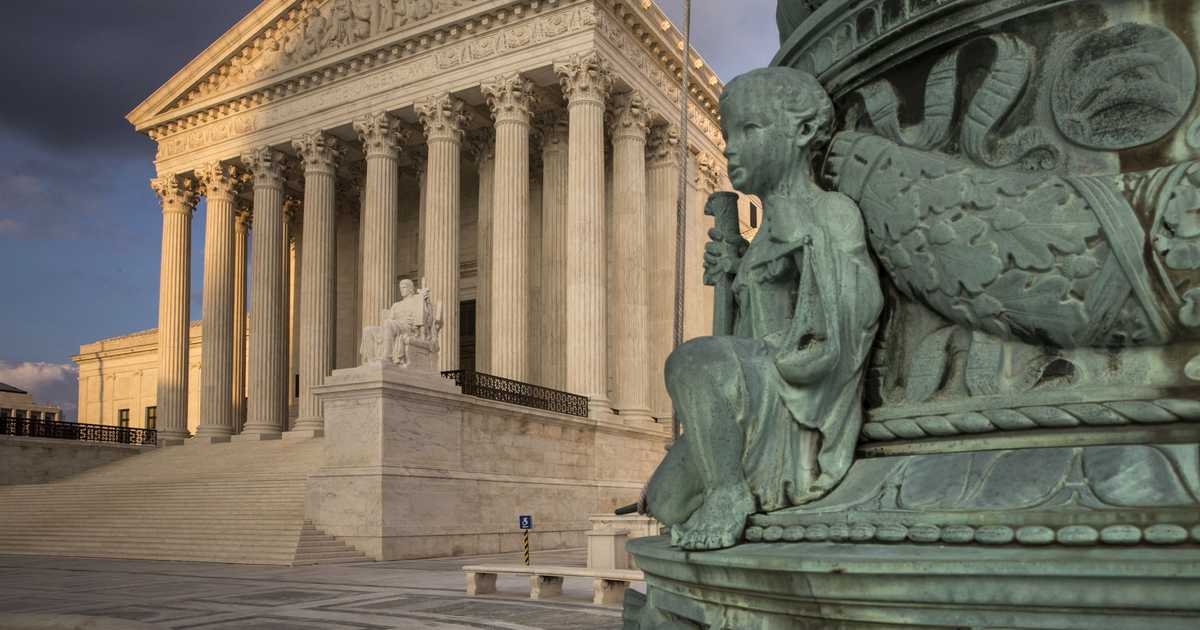
The Supreme Court on May 14 issued a temporary order restoring nationwide mail access to the abortion pill, staying a 5th Circuit injunction and prompting sharp dissents from Justices Clarence Thomas and Samuel Alito while pro-life leaders warned the decision lets abortion businesses ship drugs across state lines into places where abortion is restricted.
The high court’s short order revived the ability to send mifepristone by mail while the legal fight continues, reversing a lower-court pause that had been put in place after a challenge from Louisiana. The 5th Circuit had temporarily halted mail access to the drug, and manufacturers and distributors pushed back in court, arguing the freeze threatened their business and patient access.
Those manufacturers and distributors had filed suit challenging the earlier pause, saying the ruling threatened established distribution channels and supply chains for the medication. The litigation landed squarely before the Supreme Court, which stepped in with an order that restores the status quo for mail delivery of the drug nationwide while the underlying case proceeds.
Justice Clarence Thomas voiced a strong dissent from the majority’s temporary relief, signaling deep concern about states’ authority to regulate abortion within their borders. He wrote that he would deny the application “because they have not satisfied their burden for securing interim relief.”
Thomas went further in his reasoning, arguing that sending mifepristone into states where abortion is largely illegal allows actors to use the mail to circumvent state laws. He warned that such conduct could run afoul of federal statutes and highlighted the scale of the problem, noting the drug’s shipment patterns and claimed effects in places like Louisiana.
🚨 The Supreme Court has temporarily restored nationwide access to mail-order abortion pills, staying a 5th Circuit ruling pending appeal. pic.twitter.com/26V1LhnYoG
— SCOTUS Wire (@scotus_wire) May 14, 2026
Thomas framed the legal stakes plainly and used blunt language about how the court should evaluate requests for emergency relief. “Applicants are not entitled to a stay of an adverse court order based on lost profits from their criminal enterprise,” Thomas wrote. “They cannot, in any legally relevant sense, be irreparably harmed by a court order that makes it more difficult for them to commit crimes.”
Justice Samuel Alito added his own dissent, criticizing the court’s abrupt stay and warning about the broader constitutional implications. “The Court’s unreasoned order granting stays in this case is remarkable,” he wrote. “What is at stake is the perpetration of a scheme to undermine our decision in Dobbs v. Jackson Women’s Health Organization, 597 U. S. 215 (2022), which restored the right of each State to decide how to regulate abortions within its borders. Some States responded to Dobbs by making it even easier to obtain an abortion than it was before, and that is their prerogative. Other States, including Louisiana, made abortion illegal except in narrow circumstances.”
The tone of the dissents underscores a core Republican concern: federal actions or judicial orders that effectively override state choices on moral and medical regulation. Alito framed the issue as a direct tension with Dobbs, saying the stay facilitates efforts that undermine states exercising their post-Dobbs authority to regulate or prohibit abortion.
The state of Louisiana’s lawsuit included tangible costs it said were tied to out-of-state mifepristone shipments, reporting that Medicaid paid $92,000 for emergency care for two women with complications in 2025. Those figures were highlighted in filings aimed at showing concrete harms to state healthcare systems and taxpayers when drugs are shipped into states that have limited abortion availability.
Pro-life leaders reacted quickly and sharply to the court’s order, with Lila Rose, founder and president of LiveAction, calling the decision “tragic and wrong.” Her full statement reiterated the view that allowing mail order distribution of the pill is an attack on state authority and on protections for preborn children.
The Supreme Court’s temporary move means abortion providers can continue mailing the drug while the legal process plays out, a prospect that alarms many conservatives who see this as a dodge around state laws. Republicans in legal circles argue the proper course is to let states enforce their laws and for courts to carefully weigh claims before restoring nationwide access on an emergency basis.
The case will continue through the courts, and the temporary nature of the order means this is not the final word on mail delivery of mifepristone. For now, the debate centers on federal power, state sovereignty, and how the courts should handle emergency requests that touch on deeply contested moral and legal ground.