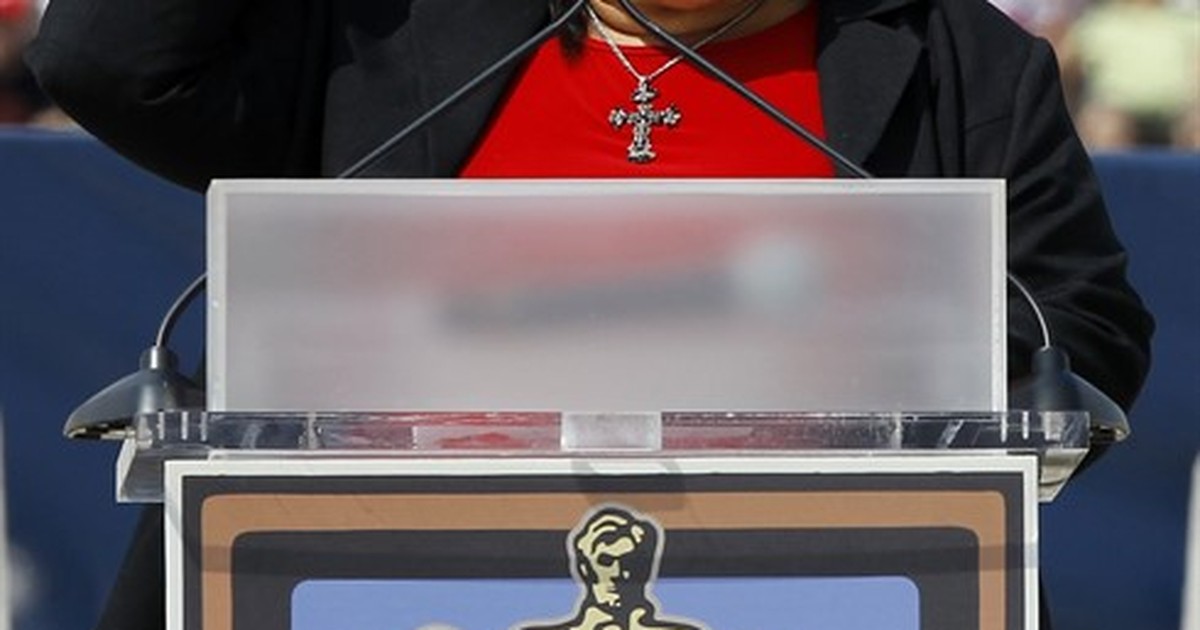
Dr. Alveda King, niece of Dr. Martin Luther King Jr., forcefully challenged the Southern Poverty Law Center at a House Judiciary Committee hearing, reacting to reports and an indictment alleging the SPLC paid people and groups it had labeled extremist to amplify claims of civil rights abuses nationwide.
Dr. Alveda King spoke with sharp clarity and a personal stake in the matter, calling out what she portrayed as a betrayal of her family’s legacy and of honest civil rights work. Her remarks landed in a tense hearing where lawmakers grilled SPLC representatives about alleged payments and political motives. The tone was accusatory and pointed, with members of the committee pressing the organization on its conduct and alleged funding patterns.
King did not soften her language when describing how the SPLC operates, arguing it profits from division rather than healing communities. She contrasted that behavior with how she has lived her life and how she sees American identity. Her criticism was tied directly to a recent federal superseding indictment and media reports that claim the SPLC funneled money to groups it had publicly labeled as dangerous or extremist.
“My family legacy reflects the very truth that America is strongest when we recognize our common humanity,” Dr. Alveda King said. “My grandmother’s family came from the west coast of Africa. My grandfather’s family came from Ireland. My mother’s family included Cherokee roots. I have spent my entire life living the reality that America is not a collection of competing tribes. America is one people under God.”
https://x.com/FoxNews/status/2064364323061809544
“That is why I am troubled by the conduct and messaging of organizations that claim to fight hatred while profiteering from division,” she said. “Recent allegations reportedly contained in a federal superseding indictment raised serious questions about the Southern Poverty Law Center’s activities. Individuals associated with organizations the SPLC itself labeled as extremists or hate groups allegedly received substantial payments over many years.”
The indictment and reporting allege payments totaling hundreds of thousands and, in some instances, more than a million dollars to sources with ties to violent or extremist movements. Those claims, if true, would flip the narrative the SPLC has used for decades, from watchdog to possible enabler. Republicans on the committee framed this as proof the organization has been weaponized for political ends, using labels to silence opponents while maintaining fundraising power.
“The indictment shares of paid payments totaling hundreds of thousands and in some cases more than a million dollars to sources connected to white supremacist neo-nazi and Ku Klux Klan organizations,” she added.
The controversy reaches back to Charlottesville and the Unite the Right rally, an event that reshaped the political conversation and became fodder for years of partisan attacks. Some committee members and conservative commentators argue the SPLC had a role in amplifying or funding groups tied to that moment, and that the group now faces accountability for past choices. Democrats defended the SPLC as a necessary monitor of hate, but the hearing exposed deep skepticism from the Republican side.
Beyond the headlines, the dispute raises bigger questions about how civil society institutions wield power and influence public debate. To critics on the right, the SPLC’s designations and funding patterns look like a political tool, not impartial research. That judgment has broad consequences, because many institutions, schools, and platforms rely on those labels when making policy and content decisions.
For Dr. King, the fight is personal and symbolic at once, a defense of a living legacy that she says has always been about unity. Her words at the hearing were a call for consistency and integrity in civil rights work, not just rhetoric aimed at fundraising or scoring political points. The spotlight on the SPLC could force more scrutiny of how nonprofits are financed and how their public lists influence careers, reputations, and government policy.
Lawmakers left the hearing with different takes on what should happen next, but the exchange made one thing clear: accusations about the SPLC’s behavior are now central to a national debate over the boundaries between advocacy, classification, and influence. The DOJ indictment and related reporting have changed the conversation, and the fallout will play out in courtrooms, committee rooms, and public opinion for months to come.