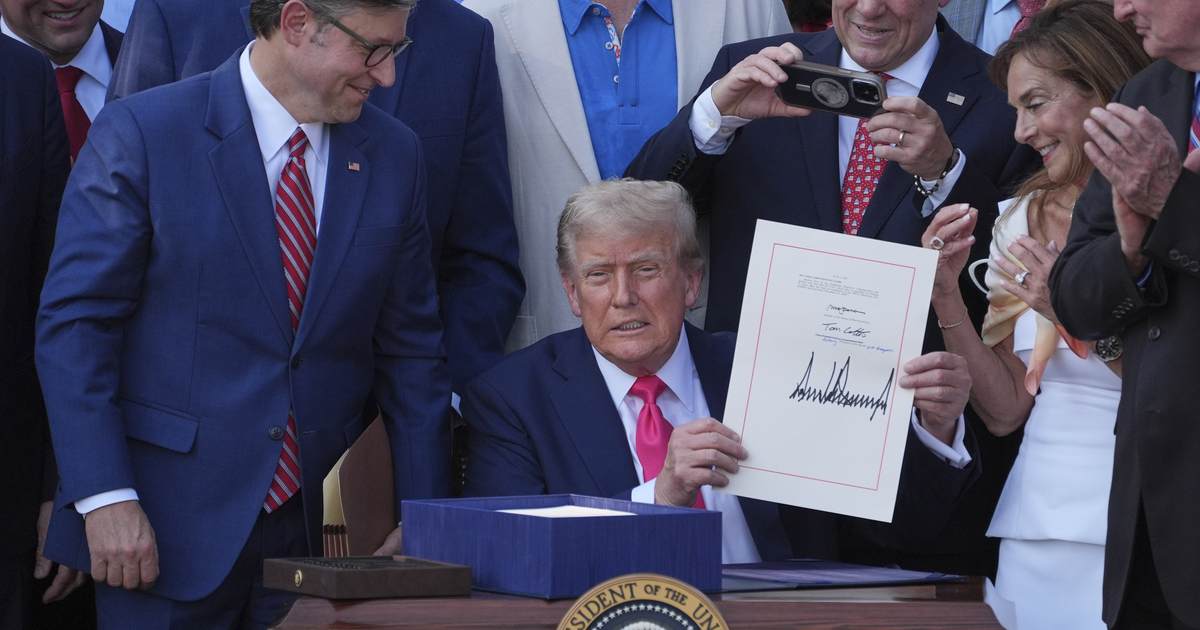
The Working Families Tax Cuts, signed July 4, 2025, delivered broad tax relief to American households and small businesses, yet many Democrats who voted against the law are now trying to claim credit for its benefits.
An NRCC ad marked the one-year anniversary of the Working Families Tax Cuts, pointing to measurable changes in taxpayer outcomes since President Trump signed the law on July 4, 2025. Refunds rose by 11 percent overall, and the package included provisions like No Tax on Overtime, No Tax on Tips, and No Tax on Social Security that reached millions of Americans. About 25 million taxpayers used the No Tax on Overtime benefit last year, showing the package had broad reach across industries and income levels.
Small business owners saw meaningful relief in the form of a roughly $7,000 reduction in their tax bills, and the new Trump Accounts guaranteed $1,000 seed deposits for any child born between 2025 and 2028. Those $1,000 accounts are being billed as a first step toward long-term savings and potential generational wealth for participating families. The combination of immediate tax relief and future-oriented accounts was a central selling point for lawmakers who backed the bill.
The numbers underscore how extensive the cuts were: 97 percent of filers received a tax cut during the last filing season, and $82 billion was returned to American taxpayers. Of those who benefited, 96 percent earned less than $200,000, with filers in the $100,000 to $200,000 bracket receiving an average cut of more than $1,250. Nearly 70 percent of filers who saw a reduction in taxes earned under $100,000, which helped make the case that the law targeted working and middle-class families.
Supporters also argue the legislation prevented a massive tax increase that would have hit Americans had the previous tax structure been allowed to revert. The package is presented as pro-growth and pro-worker policy that prioritized putting more money back into people’s pockets. Lawmakers on the Republican side framed the law as both economic relief and protection against higher future taxes.
Democrats in Congress, including House Minority Leader Hakeem Jeffries and Senate Minority Leader Chuck Schumer, opposed the measure on its passage, with members voting unanimously against it. Arizona Democrat Amish Shah called the Working Families Tax Cuts ‘abominable’ and called for their ‘wholesale repeal.’ That unanimous opposition is now central to the criticism that Democrats are attempting to reverse-course publicly.
Once the tangible benefits became clear, several Democrats who voted no began signaling support for elements of the law or proposing related fixes, which critics describe as an attempt to take credit after the fact. Voters deserve transparency about who supported the bill and who opposed it, especially when lawmakers start touting measures they formally rejected. The shift from opposition to selective endorsement has drawn sharp responses from Republican leaders.
Michigan Rep. Kristen McDonald Rivet ran two television ads, funded with taxpayer dollars, in which she claims to have ‘passed the Working Families Tax Credit’ and that she’s helping Michigan families ‘claim the Working Families Tax Credit.’ If McDonald Rivet is pointing to a state-level Michigan credit enacted years earlier, the messaging blurs a distinction between state policy and the federal Working Families Tax Cuts and risks misleading voters. Public advertising that implies sponsorship of a federal law she voted against raises questions about accountability.
Arizona Senator Ruben Gallego has introduced legislation to make Trump Accounts permanent and to automatically enroll newborns, while rebranding them as ‘American Dream Accounts’ to distance the idea from its Republican origins. He has also proposed making the No Tax on Tips provision permanent, even though he voted against the original Working Families Tax Cuts. That pattern — voting no, then proposing similar or renamed programs — is part of the broader critique of Democratic messaging.
In Nevada, Representatives Dina Titus, Steven Horsford, and Susie Lee, along with Senators Catherine Cortez Masto and Jacky Rosen, wrote a letter to Treasury Secretary Scott Bessent “to ensure the successful implementation” of the No Tax on Tips provision. Those lawmakers voted against the Working Families Tax Cuts but publicly urged administration action to help tipped workers in their hospitality-heavy state, a move critics call inconsistent. The lawmakers themselves acknowledged they represent “lawmakers representing our nation’s most hospitality and service industry dependent economy,” which underscores the tension between votes and constituent advocacy.
Some members who voted no have since championed narrow pieces of the package. Reps. Tom Suozzi and Emilia Sykes introduced legislation to expand eligibility for No Tax on Overtime even though they opposed the original bill. And other Democrats have highlighted separate wins while having rejected the comprehensive package that produced those same benefits. Those actions feed the narrative that voting records and later public claims are out of sync.
Several members, including Reps. Emanuel Cleaver and Sharice Davids and Rep. Nellie Pou, promoted credit for securing World Cup security funding while having voted against the Working Families Tax Cuts and supporting measures that kept the Department of Homeland Security closed at times. That disconnect between voting behavior and later claims of accomplishment is a running theme in the scrutiny from Republican leaders.
“With their unanimous opposition to the Working Families Tax Cuts, Congressional Democrats in unison voted against the average American family receiving between $2,300 and $3,750 in tax relief — with 97% of all tax filers receiving a tax cut — and $1000 investment accounts for every newborn citizen in America,” said House Speaker Mike Johnson. “They also voted against no tax on tips and overtime, the doubled child tax credit, and $50 billion for rural healthcare. Now, as tens of millions of citizens are benefiting from this historic tax relief, Democrats are attempting to mislead the American people and claim credit for something they opposed vehemently. Republicans will not let the American people forget that if Democrats had it their way, every taxpayer would have faced the largest tax increase in American history.”