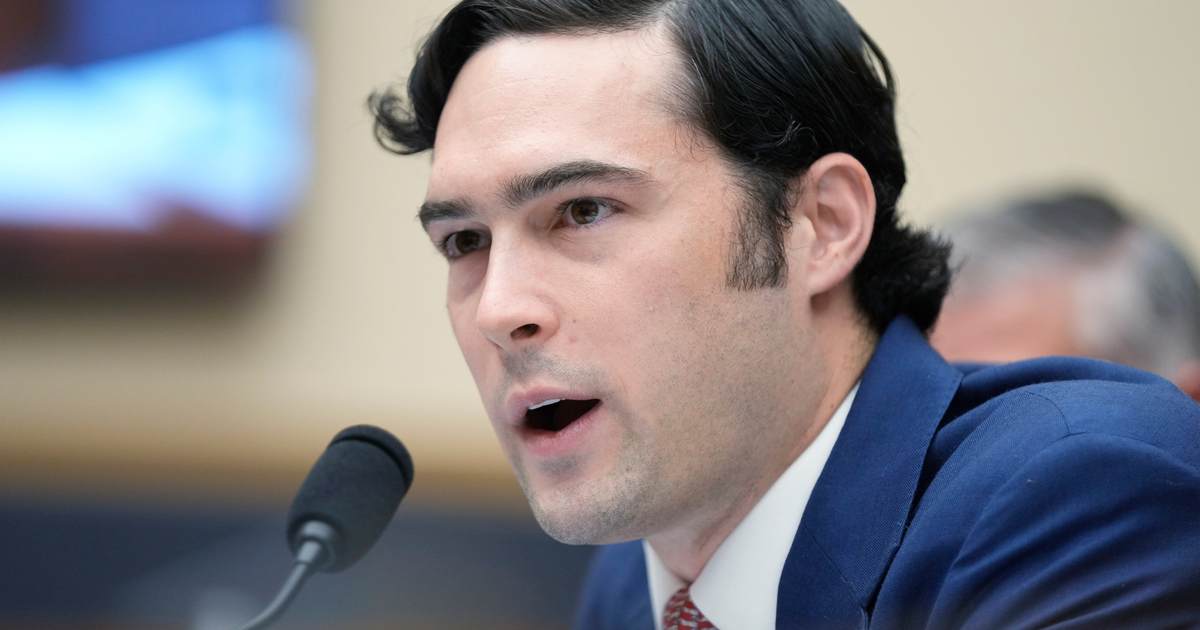
Rep. Brandon Gill’s confrontation with the SPLC president exploded into a sharp exchange that forced Democrats to step in and raised fresh questions about the group’s judgment and legal troubles.
Brandon Gill Goes Scorched Earth on SPLC President Brian Fair during a tense congressional hearing that put the Southern Poverty Law Center’s labeling practices and credibility under a spotlight. The hearing turned confrontational as Gill pressed the SPLC on its tendency to categorize mainstream conservative and pro-life groups as extremist or tied to White supremacy. The tone was unapologetic and aimed at exposing what Gill framed as an organizational pattern of politicized targeting.
Gill directly challenged Fair over the SPLC’s public language about the pro-life movement, asking why an organization would describe those efforts as serving “the pro-life movement is a tool used by the far-right to promote White supremacy.” The Republican congressman wanted clarity on whether the SPLC was applying consistent standards or simply advancing a partisan narrative. Fair’s answers were cautious and, according to witnesses in the room, at times evasive.
When Gill pushed harder, the hearing took a sharper turn as Fair struggled to fully defend the SPLC’s positions, and the exchange required intervention from Democratic Representative Jaime Raskin. Raskin cut in to redirect the questioning, which highlighted the partisan split on the committee and underscored how heated the topic had become. That interruption did not quiet the scrutiny; if anything, it amplified the perception that Democrats were shielding a once-respected nonprofit from tough interrogation.
https://x.com/townhallcom/status/2064410108357144756
Gill also raised a pointed, uncomfortable hypothetical about a candidate with a “Nazi tattoo,” naming Democrat candidate Graham Platner in the context of whether the SPLC would ever deem such a symbol disqualifying. Under repeated questioning, Fair conceded that Platner’s tattoo was beyond what the SPLC would support and described it as disqualifying. That admission landed heavily and gave Gill room to argue the SPLC draws lines inconsistently when it suits political allies.
The exchange illustrated a broader argument Gill and other conservatives have long made: that powerful nonprofits can shape public debate by branding opponents as extremists. Gill framed the SPLC’s labels as not only inaccurate but dangerous, saying they stigmatize ordinary citizens and legitimate advocacy groups. That line of attack resonated with Republican members who see the SPLC as a partisan actor rather than an impartial monitor of hate.
Gill’s approach was strategic and relentless, aiming to force a record that could be used to challenge the SPLC’s influence in courtrooms, classrooms, and media coverage. The hearing also opened space for lawmakers to question how nonprofits are funded and whether donors deserve transparency about where their money ends up. Those questions got sharper when the conversation turned to legal jeopardy looming over the organization.
The SPLC is currently under indictment in 11 federal counts of wire fraud, false statements to a federally insured bank, and conspiracy to commit concealment money laundering after allegedly funneling over $3 million in donations to violent extremist groups. Those charges raise practical questions about governance and accountability that Republicans like Gill argue are long overdue. The legal storm has become a central piece of the conservative case that the organization needs far greater oversight.
Members on both sides of the aisle acknowledged the optics of the moment: a nonprofit once widely cited for civil rights work is now defending itself against serious criminal allegations and withering congressional scrutiny. For Republicans, the hearing was less about partisan theater and more about reining in institutions they view as weaponized against conservative causes. For Democrats, interrupting or softening the questioning has become a way to protect an ally facing both political and legal peril.
The fallout from the hearing is likely to persist as lawmakers, media, and the public digest the SPLC’s behavior, its labeling practices, and the pending federal case. Gill’s performance made clear that conservatives will not back down from challenging organizations they believe misuse influence and money. Expect this confrontation to be referenced in future debates over nonprofit accountability and political classification of advocacy groups.