A federal court in Boston sentenced Dr. Pankaj Merchia on June 5, 2026, after a jury conviction on healthcare fraud, money laundering, and tax evasion charges, imposing 58 months behind bars, three years of supervised release, and $1.8 million in restitution.
A former Brookline physician, Dr. Pankaj Merchia, 52, was sentenced in federal court for a string of financial crimes tied to his medical practices. The sentence handed down by U.S. Senior District Court Judge Nathaniel M. Gorton includes 58 months in prison and three years of supervised release. He was also ordered to pay $1.8 million in restitution tied to the fraud schemes and tax violations.
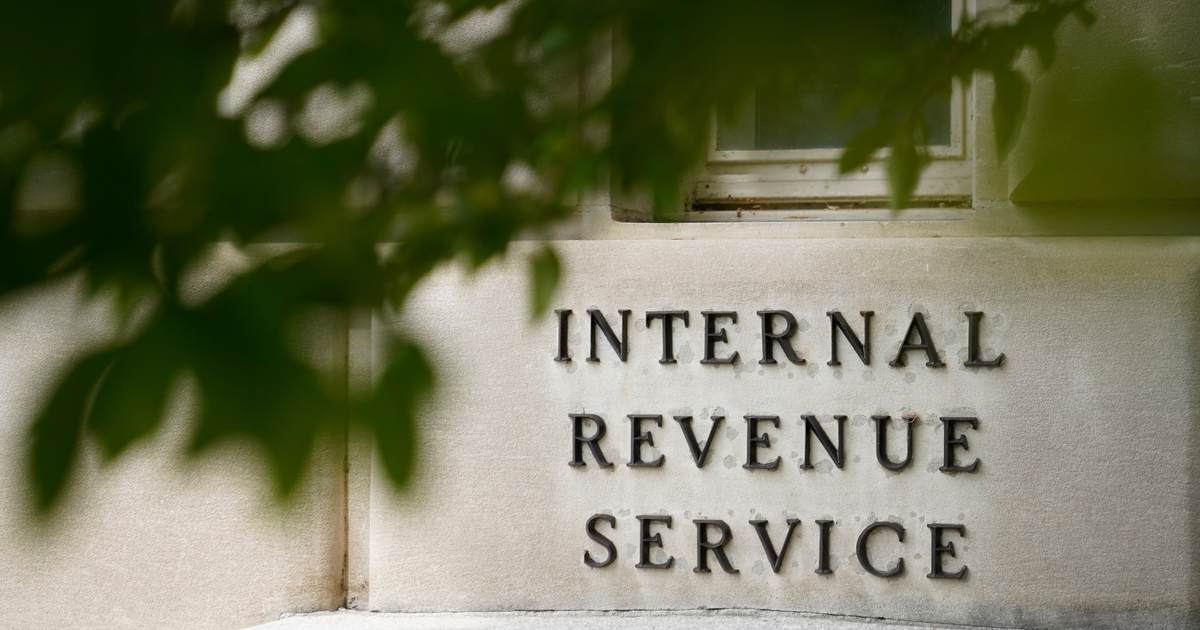
In January 2026, Merchia was convicted of one count of health care fraud, three counts of money laundering, two counts of tax evasion, and one count of conspiracy to defraud the Internal Revenue Service. He had originally been indicted on money laundering and health care fraud charges in December 2022, with tax offenses added in a superseding indictment in February 2023. The later tax charges named an alleged co-conspirator, Dr. Shona Pendse.
The government says Merchia ran at least two separate healthcare fraud schemes. From 2017 to 2019 he billed insurers for monthly rentals of CPAP and BiPAP machines for patients he had not treated since at least 2011, and some of those patients had returned the devices. Prosecutors allege he funneled the proceeds from this scheme into personal purchases, including an expensive home in Brookline.
A second scheme allegedly involved over $390,000 in false claims for a CPAP machine provided to his brother. After an insurer refused payment because the treatment was rendered by a family member, prosecutors say Merchia created a new medical business and resubmitted claims so the carrier would pay. The gains from that scheme reportedly funded a $250,000 wire transfer and purchases of at least $140,000 in securities.
Separately, investigators uncovered extended tax fraud stretching from 2009 to 2019, during which Merchia allegedly failed to report or pay taxes on more than $6.5 million in income from his medical businesses. To conceal that income he is alleged to have falsely claimed the businesses were owned by a co-conspirator, fabricating a sham sale in 2008 and taking large amortization deductions across multiple years. That fabricated paperwork formed a key element of the tax-evasion case.
>The prosecution and investigation were announced by United States Attorney Leah B. Foley, Thomas Demeo, Special Agent in Charge of the Internal Revenue Service Criminal Investigation, Boston Field Office, and Anthony M. DiPaolo, Executive Director of the Insurance Fraud Bureau of Massachusetts. Assistant U.S. Attorney Neil J. Gallagher, Jr. of the Health Care Fraud Unit and Trial Attorney Ezra Spiro of the Department of Justice Criminal Division’s Tax Section handled the prosecution. Their involvement highlights the coordination between healthcare fraud and tax enforcement teams.
On March 26, 2026, United States Attorney Leah B. Foley announced a new Benefit & Voter Fraud Team, a district-wide effort aimed at aggressively investigating and prosecuting misuse of taxpayer-funded benefits across Massachusetts. That team, led by senior prosecutors serving as Fraud Coordinators, was created in response to what prosecutors described as widespread fraud uncovered in the state. The announcement signaled increased local focus on benefit-related crimes.
At the national level, the Department of Justice announced the creation of the National Fraud Enforcement Division on April 7, 2026, via Acting Attorney General Todd Blanche. That division complements the Department’s Fraud Division efforts and connects with broader initiatives, including President Trump’s Task Force to Eliminate Fraud, chaired by Vice President J.D. Vance. Officials say the coordinated effort aims to reduce fraud, waste, and abuse across federal benefit programs.
Members of the public in Massachusetts are asked to report suspected benefit fraud by calling 1-855-SCAM-MA-1 (855-722-6621). The charging documents contain allegations, and the remaining defendant is presumed innocent unless and until proven guilty beyond a reasonable doubt in a court of law.