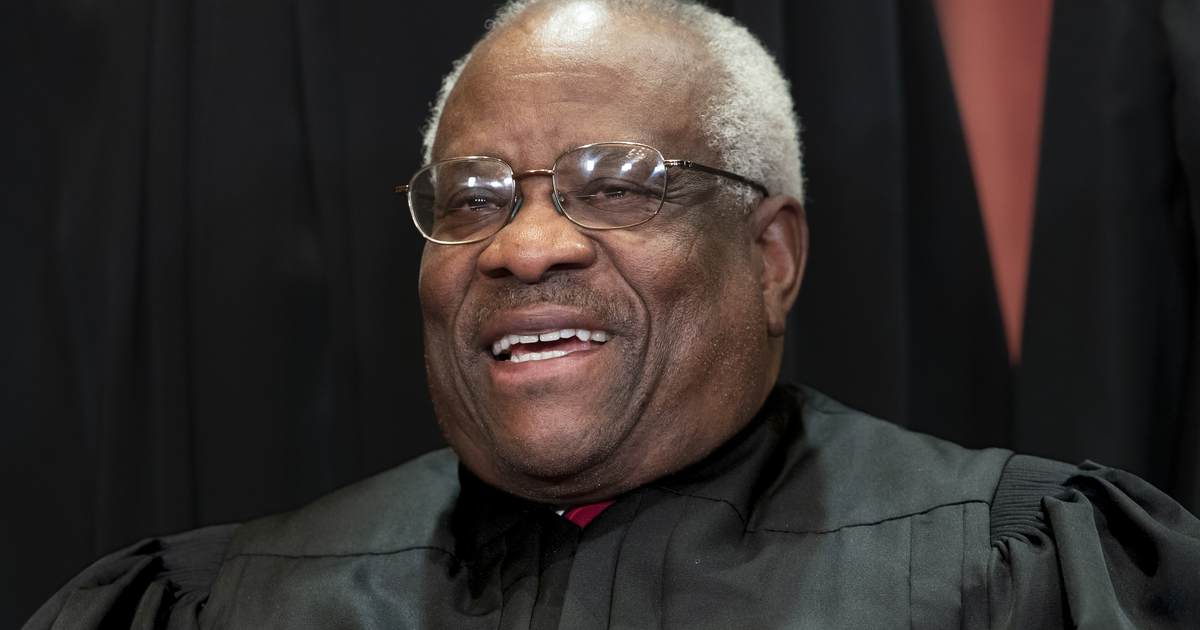
Supreme Court Justice Clarence Thomas brushed off persistent questions from reporter Mychael Schnell about his meetings on Capitol Hill and what the court might do as the term ends, even as high-stakes decisions loom that could reshape policy on citizenship, athletics, and campaign finance.
When a reporter pressed Justice Clarence Thomas on Monday, the justice responded with a laugh and a light deflection rather than a comment, leaving the press with little to report before an important set of rulings. The exchange underscored the tight-lipped culture around justices and the zero-tolerance judges often show for attempts to extract previews of deliberations. Observers saw the interaction as typical of a justice who prefers action from the bench to words in public.
In the days leading up to the end of term, the court was set to issue decisions in several headline-grabbing cases, including two cases about the participation of trans athletes in women’s sports and a lawsuit brought by the NRSC that could alter campaign finance rules. Those items carry political and cultural weight, but the docket also included what many regard as an earth-moving question about birthright citizenship. The timing made any public comment from a justice particularly charged and likely to be parsed by media and policymakers alike.
https://x.com/mychaelschnell/status/2071652863806415181
At the center of attention was a case asking whether the President can rescind the long-standing practice of birthright citizenship, a constitutional doctrine that has been in place for generations. Legal scholars and political operatives compared the potential scale of the ruling to the fallout from Dobbs in 2022, noting that a change to birthright status would have sweeping implications. The controversy animated both court watchers and activists, and it framed every interaction between the press and the justices as consequential.
A favorable ruling for the Trump administration would be a major win for immigration restriction advocates within the Republican Party who have pushed for clamping down on birth tourism and creating stronger disincentives for illegal border crossings. Those policymakers argue that ending automatic citizenship for children born here to noncitizen parents would be a powerful tool to discourage strategies that exploit current rules. Opponents warn such a move would upend established constitutional interpretations and provoke years of litigation and political backlash.
If the court did not side with the administration, the decision would mark another high-profile setback for the President’s legal agenda following the loss in Learning Resources, Inc. v. Trump, which halted a tariff initiative earlier in the year. That precedent is fresh in the minds of Republican lawyers who worry about the court pushing back on executive actions they favor. The sequence of rulings would shape how future administrations approach big policy moves, especially those that test legal boundaries.
Justice Thomas’s role in any birthright citizenship ruling would likely be pivotal given his conservative outlook and his influence among like-minded justices. Political strategists on the right are watching him closely because his vote could help lock in a major legal shift that aligns with immigration control priorities. At the same time, legal experts caution that individual votes don’t exist in a vacuum and that complex doctrinal work will determine the scope and reach of any change.
The broader context matters as well: decisions on trans athletes and campaign finance could produce immediate policy ripples that affect state law and federal election mechanics. Those outcomes, combined with the birthright question, mean the court could hand down a package of decisions that reshape public policy on multiple fronts. That reality helps explain why reporters were trying to glean signals from justices and why any small exchange, like the one with Schnell, drew attention.
For journalists, the incident was a reminder of the limits of on-court questioning and of the patience required when covering an institution that moves through written opinions rather than off-the-cuff remarks. For Republicans watching the docket, the focus remains squarely on outcomes that advance conservative priorities, from tighter immigration policies to rulings that constrain certain administrative actions. The coming decisions promised to test legal theories, political calculations, and the public’s appetite for change.