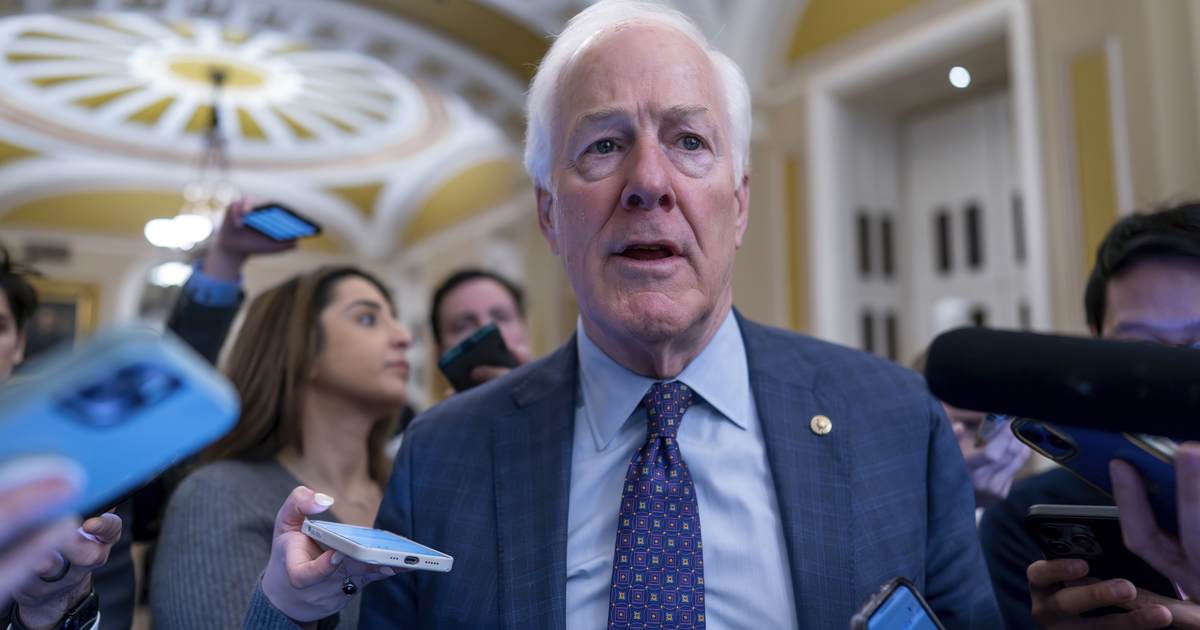
Sen. John Cornyn has reacted badly to a brutal primary showing, amplifying an interview tied to a Libertarian opponent and pushing back by calling coverage of his actions “fake news,” while his loss and the fallout are reshaping GOP strategy in Texas.
Senator Cornyn’s response to his primary defeat has been unsteady and defensive, and that reaction has become part of the story. He shared an interview that promoted a Libertarian challenger and then rejected reporting about his behavior, calling some posts “fake news.” The moves underline a senator unwilling to accept the political damage he faces after crashing in a high-profile contest.
That interview he promoted backed Libertarian Ted Brown and openly encouraged a strategy meant to peel away establishment Republicans, touting a plan to siphon votes from the GOP. The piece explicitly pitched attracting voters who “aren’t satisfied with the primary results” to undercut the Republican ticket. By amplifying that message, Cornyn deepened questions about his judgment and about whether he was trying to nudge the race in an odd direction after the fact.
https://x.com/JohnCornyn/status/2061977724219019433
The numbers from Cornyn’s primary were humiliating by any standard, with losses across 248 counties and bizarre local tallies that became talking points. In one county, for instance, Cornyn reportedly received six votes while Ken Paxton managed two, a detail that became shorthand for how thoroughly Cornyn fell apart at the polls. Those results aren’t just embarrassing; they reveal a candidate who lost touch with the voters he was supposed to lead.
Cornyn’s recent record fed the frustration voters showed at the ballot box, with critics citing a long history of inaction when Republicans expected wins. He had pitched himself as an experienced legislator needed to pass important measures, yet failed to move hallmark items like the SAVE Act forward in a meaningful way. That gap between promises and results helped frame the narrative of a senator who talked big but delivered little.
After the primary, Cornyn’s public posture became defensive and awkward, scrambling to control the story rather than owning the loss. He amplified the interview with Brown, then accused posts that reported those moves of being “fake news,” a phrase that drew attention and little sympathy. For conservative voters who prioritize clarity and backbone, the performance felt out of step with what the base expects from its leaders.
Across the state, other Republican leaders moved quickly to reassure activists and donors that the party can recover, focusing on practical steps to secure the governorship and legislative majorities. Ken Paxton’s team, along with Texas leaders, moved into rapid damage-control and planning mode as the general election looms. High-level meetings and strategy sessions are now the priority, with the GOP eyeing every pathway back to a strong ticket in November.
On that front, Paxton and Texas Lt. Governor Dan Patrick met with former President Donald Trump to coordinate strategy and shore up support as the stakes rose, signaling a top-down effort to stabilize the party. That meeting, part of a broader push to keep Texas in Republican hands, underscores how quickly the state’s power players regroup after a public stumble. The discussions were practical and focused, aimed at shoring up turnout, fundraising, and messaging for the months ahead.
The fallout from Cornyn’s loss and his post-election antics has sparked wider conversations about Republican leadership and accountability in Washington. Grassroots activists are demanding clearer results and stronger advocacy, while state leaders are working to translate that anger into organized strategy. For a party that prides itself on results, the lesson is blunt: voters notice when leaders fail to produce.
Whatever happens next, Cornyn’s abrupt exit and the theater around it are forcing the GOP to sharpen its message and tactics in Texas. The focus now is on practical campaigning and keeping the electorate engaged, not on inside-the-Beltway explanations that fall flat with voters. That shift could determine whether the party recovers momentum or lets a painful primary become a long-term liability.