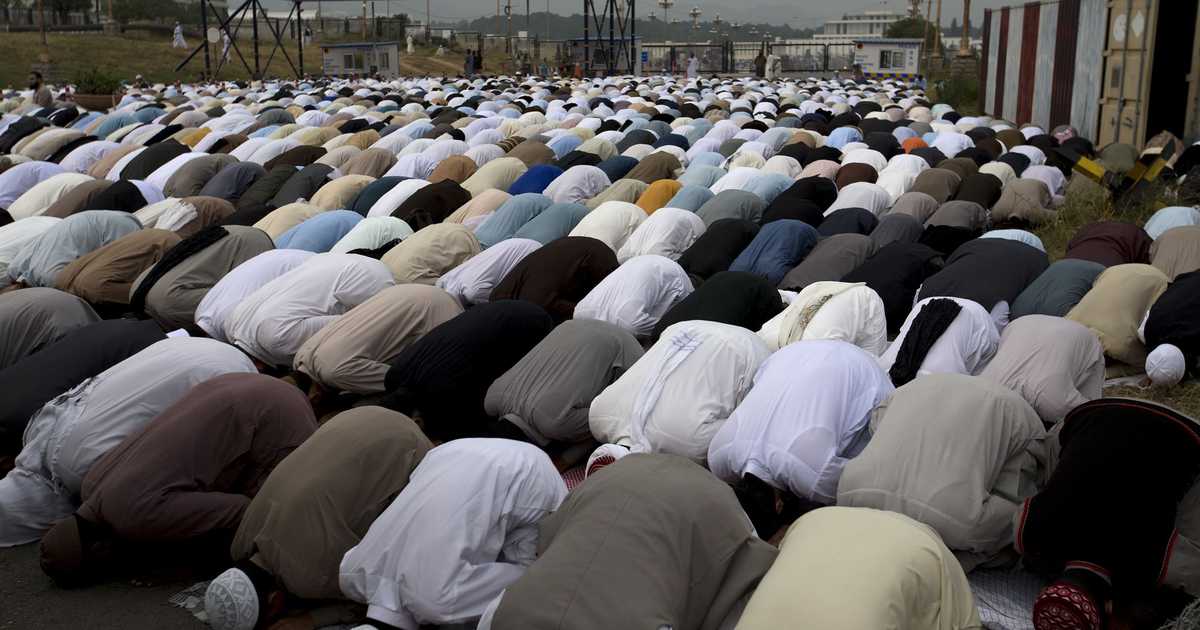
Denmark’s government is weighing a ban on the Islamic call to prayer, with officials arguing the broadcasts clash with local norms and raise questions about integration, legal rights, and the strain of mass migration on public services.
Morten Bødskov, Denmark’s immigration minister and a member of the Social Democrats, has opened a review of whether the Islamic call to prayer should be permitted to be broadcast across Danish neighborhoods. He put the issue bluntly, saying the country should not sound “like a suburb of Islamabad.” The comment crystallizes worries among some Danes about public space, identity, and cultural signals in towns and cities.
In a follow-up statement, Bødskov made the case for preserving an audible public environment that reflects Danish culture. “The call to prayer should not be heard over Danish rooftops. It has no place in Denmark, and you shouldn’t be in any doubt whether you’ve ended up in a suburb of Islamabad when you walk around Denmark,” he told various news outlets. That language has sharpened the debate between protecting religious expression and preserving a common public soundscape.
Denmark already enforces tough immigration rules that aim to encourage rapid integration and limit long-term dependency on welfare. Children from Islamic families are required to spend at least 25 hours per week in state-mandated daycare to learn Danish language and values, and government policy treats asylum as a temporary protection rather than a fast track to permanent citizenship. Policymakers argue those measures protect the generous Danish welfare model by keeping employment and public finances stable.
https://x.com/libsoftiktok/status/2069852844614729934
Experts note the fiscal effects of immigration vary depending on migrants’ skills and employment prospects, and Denmark’s strategy reflects concern about long-term costs. The welfare state depends on broadly high employment and steady tax revenue, and officials worry that poorly integrated arrivals could strain services. Those practical fiscal concerns now feed into cultural debates about public norms, including what should be broadcast from religious sites.
Legal obstacles make a blanket ban complicated, since freedom of religion is protected under Danish and European law. Courts in neighboring countries have allowed restrictions tied to specific harms, such as bans on anti-democratic preaching or rules limiting external funding from proscribed organizations. Germany and Britain, for instance, already regulate when mosques can broadcast the call to prayer and cap volume so broadcasts do not disturb other residents.
The proposals in Denmark follow a broader European conversation about migration from the Middle East, North Africa, and South Asia and how national institutions cope with rapid demographic change. The European Border and Coast Guard Agency, Frontex, lists Afghanistan, Syria, Egypt, Sudan, Bangladesh, and Algeria among primary origin countries for illegal crossings in recent years. Those migration patterns have put pressure on integration systems across the continent and fueled political backlash in several capitals.
Critics of the proposed measures say limiting religious broadcasts risks stigmatizing Muslim communities and could provoke social tensions if done clumsily. Supporters argue that a public broadcasting ban is not an attack on faith but a defense of shared civic space and national rhythm, especially where places of worship are close to residential areas. The debate, therefore, hinges on balancing collective public interests against individual religious freedoms.
Practically speaking, governments that want to curb loud religious broadcasts have several narrow tools available: time-of-day restrictions, volume caps, and permitting requirements tied to public nuisance laws. Those targeted options are easier to defend in court than sweeping bans. Danish authorities will likely test limited measures first and see how courts respond before moving toward any comprehensive prohibition.
Politically, the issue plays well with voters who prioritize assimilation and cultural continuity, and it highlights tensions within center-left governments that combine social safety nets with restrictive immigration policies. Denmark’s approach shows a strand of policymaking that is simultaneously protective of welfare-state benefits and wary of cultural change perceived as incompatible with local norms. Other European governments watching this debate may draw lessons about mixing integration rules, social policy, and public-order regulation.
A short video circulating on social media shows busy streets in Manchester and has been used in broader conversations about how public life looks in European cities today. The clip has become part of the visual argument some make for clearer boundaries around public expressions of culture and religion.
Whatever legal path Denmark chooses, the controversy underscores a larger question for democratic societies: how to keep public life accessible and cohesive as populations change. The ongoing debate will test legal guarantees, political will, and the capacity of institutions to manage cultural friction while maintaining civil liberties.