A Chicago man has been charged with obstructing a federal investigation tied to a foiled plot connected to a planned attack at a White House event, and authorities say his actions interfered with their effort to gather evidence.
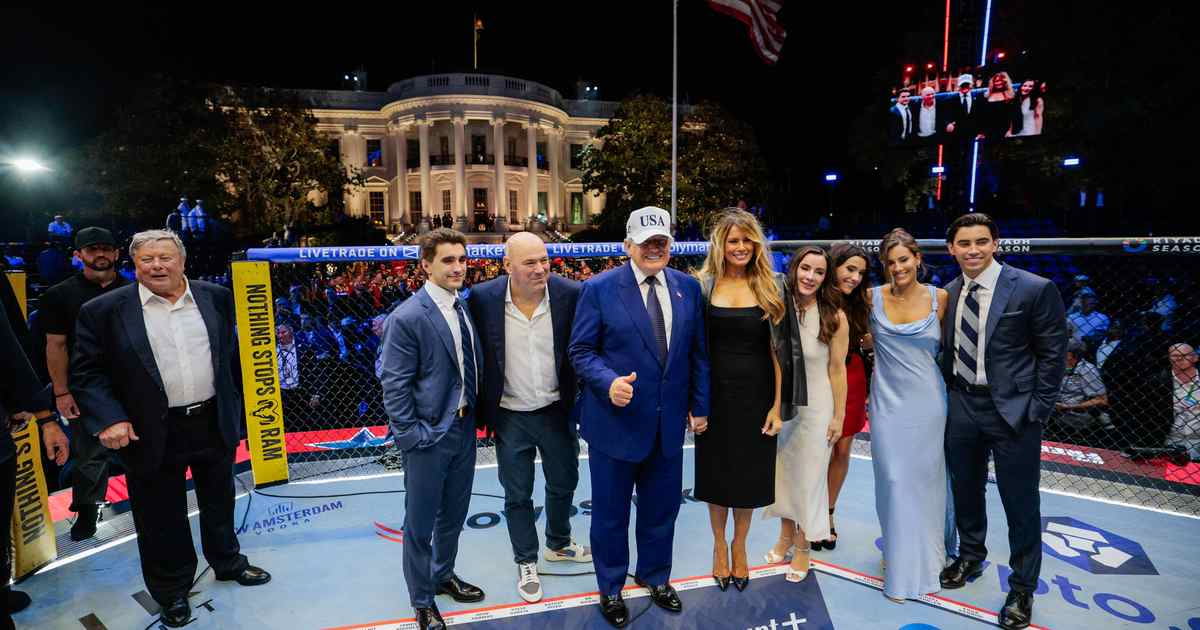
Federal prosecutors arrested 20-year-old Alexander Iniguez Mercado of Chicago on an obstruction of justice charge after investigators say he deleted evidence during an inquiry into a planned violent incident at a White House event. The indictment returned in U.S. District Court for the Northern District of Illinois alleges Mercado was an administrator and member of Signal messaging groups tied to planning for an attack at the Ultimate Fighting Championship event held at the White House on June 14. Authorities say his behavior came to light during routine investigative steps and that other suspects across multiple states are also facing charges.
According to the indictment, Mercado reportedly helped manage Signal groups where members discussed the event and potential violence. Prosecutors say those groups included individuals who appeared to communicate about planning an attack, and federal agents traced conversations and contacts that linked multiple participants. Officials have charged seven other people from several states in connection with the alleged plot, and investigators say the case shows how online platforms can facilitate coordination for violent schemes.
The filing alleges that the day before the event an FBI special agent called Mercado to discuss online threats tied to the UFC event and asked whether Mercado intended to travel to Washington, D.C., to assist with any planned attack. The indictment says Mercado denied planning to go and told the agent he did not want to meet, then uninstalled the Signal application from his phone, which allegedly rendered the message data unavailable to investigators. Prosecutors framed that deletion as an intentional effort to hinder law enforcement from following up on the leads they had developed.
U.S. Attorney Andrew S. Boutros for the Northern District of Illinois commented on the significance of obstruction in a case involving threats to public safety, saying, “Obstructing justice in a law enforcement investigation into a planned violent domestic attack is a profoundly serious offense. The investigation in this case involved serious threats to public safety, including the safety of President Donald J. Trump, the 45th and 47th President of the United States of America, other members of government, as well as the many attendees and athletes who attended the event at the White House. Any obstructive conduct to interfere with this investigation undermines the integrity of the justice system as well as the rule of law. The Chicago U.S. Attorney’s Office will pursue all appropriate charges against those who act to obstruct law enforcement investigations because safeguarding the public depends on the full, unhindered pursuit of the evidence.”
Mercado faces a single obstruction count that carries a maximum statutory penalty of 20 years in prison if he is convicted. The indictment also emphasizes the broader investigation that identified multiple actors and communications, and prosecutors say they will continue to follow forensic leads and digital traces to build out the case. Federal authorities typically weigh the totality of actions, such as deletion of applications or files, when deciding whether to pursue obstruction and related charges.
Special Agent in Charge Douglas S. DePodesta of the FBI’s Chicago Field Office described the agency’s role and the cooperative effort that led to disrupting the threat, saying, “The FBI’s most important responsibility of protecting the American people means that our personnel work 24/7/365 to evaluate the ever-changing threat landscape and disrupt acts of violence before they occur. Thanks to the partnerships on the FBI Chicago’s Joint Terrorism Task Force, to include the relentless work by the U.S. Secret Service, this attack was successfully foiled before any innocent people were gravely injured or killed. While the FBI will continue to use every available resource to hold accountable those who seek to terrorize our community, we urge the public to join us in this effort by immediately calling 9-1-1, 1-800-CALL-FBI, or submitting to tips.fbi.gov if they encounter any suspicious or threatening behavior, in-person or online.”
Mercado was taken into custody on Thursday and is scheduled for an initial appearance in federal court in Chicago at 3:00 p.m. before U.S. Magistrate Judge Gabriel A. Fuentes for the Northern District of Illinois. The court calendar reflects the routine processing that follows federal arrests, including the presentation of charges, detention or release status, and scheduling of any further hearings. Defense counsel and prosecutors will have the opportunity to address detention and discovery as the case moves forward.
Acting Special Agent in Charge James Morley of the U.S. Secret Service Chicago Field Office emphasized the protective mission behind the response and the interagency coordination that supported it, saying, “The safety and security of the President of the United States and all those under our protection is the U.S. Secret Service’s highest priority. We approach this mission with dedication and vigilance in the current heightened threat environment. Successfully carrying out our protective mission is strengthened by strong partnerships. I want to thank the FBI for its steadfast collaboration and the U.S. Attorney’s Office of the Northern District of Illinois for its relentless pursuit of justice.”
The FBI and the U.S. Secret Service are jointly investigating the facts alleged in the indictment, and the U.S. Attorney’s Office for the Northern District of Illinois is prosecuting the case with assistance from the Justice Department’s National Security Division. As with all indictments, the document contains allegations that must be proven in court, and defendants are presumed innocent until convicted beyond a reasonable doubt. The matter remains active as investigators and prosecutors continue to review evidence and coordinate across jurisdictions.