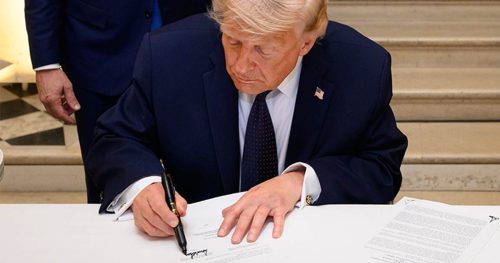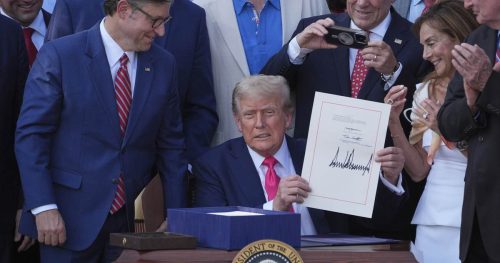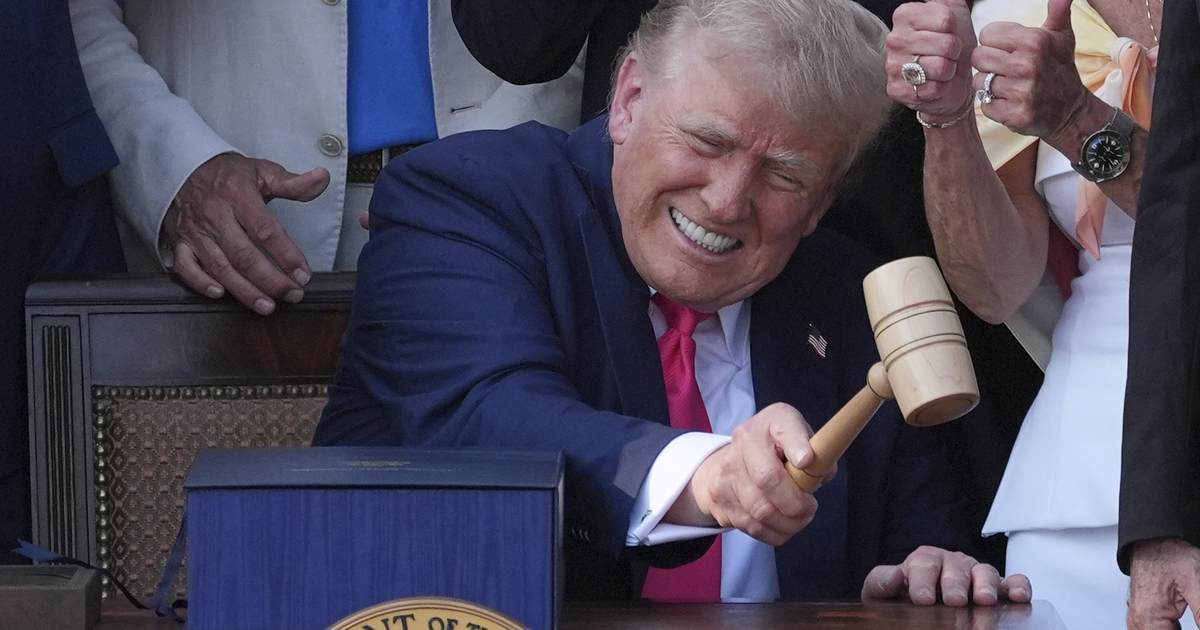
The Secure America Act cleared Congress and now goes to President Trump, approving roughly $70 billion to keep Immigration and Customs Enforcement and Customs and Border Protection funded through early 2029.
The House approved the Secure America Act on a party-line vote, sending a reconciliation package to the president that aims to lock in funding for border and immigration enforcement into the next presidential term. The bill totals about $70 billion and passed after the Senate cleared it last week, setting up final approval from President Trump. This move reflects Republicans’ push to secure federal agencies that enforce immigration laws and border security.
The roll call in the House was 214-212, a split that tracked party lines as Republicans held firm. The Senate passage saw most Democrats oppose it, joined by Sen. Lisa Murkowski (R-AK), and Rep. Kevin Kiley (I-CA) also opposed the measure along with all House Democrats.
Speaker Mike Johnson celebrated the outcome and framed the vote as a Republican victory over what he described as obstruction by Democrats. He argued the funding decision prevents Democrats from defunding CBP and ICE in the next two Congresses and tied the shutdown fight to broader Democratic support for open borders. The speaker’s full statement read exactly as follows:
https://x.com/BillMelugin_/status/2064458772773519469?ref_src=twsrc%5Etfw
“With today’s vote, House and Senate Republicans have officially ended the third Democrat government shutdown of this Congress,” Johnson said in a statement. “And here’s the end result of Democrats’ record-setting obstruction: CBP and ICE will now be funded for the remainder of President Trump’s term and Democrats will have no ability to defund these agencies in the 119th or 120th Congresses. All that Democrats have achieved by their shutdown is a useful reminder to the American people of their support for open borders and keeping criminal illegal immigrants in American communities — policies that have been soundly rejected by the American people over and over again. We hope this episode serves as a future reminder to Democrats that when they shut the government down, they will receive less than nothing in return.”
Republicans used reconciliation to pass the package after a long standoff, arguing it was the practical route to secure enforcement funding without giving ground to Democratic demands. The process sidestepped a list of requests from Democrats tied to immigration policy, and it let GOP lawmakers deliver a straight line on funding for ICE and CBP. Conservative leaders emphasized that federal partners must be reliable for state-level enforcement arrangements to work.
The Secure America Act drew backing from Republican governors and state attorneys general who have pressed Washington to fund enforcement partners. “Governors will only be as successful as their federal partners, and Congressional Democrats are failing to fulfill the basic federal responsibility of funding key portions of our federal law enforcement system,” the governors wrote in a recent letter. State attorneys general made a similar point about cooperation with federal agencies and warned that delays in funding hindered those partnerships.
In a letter to congressional Republican leadership, state attorneys general underscored that many jurisdictions have formal agreements to work alongside ICE and noted, “Senate Democrats have spent months blocking funding for these vital agencies.”
The budget fight included a Department of Homeland Security partial shutdown that lasted from February through the end of April, a stretch that Republicans blamed on Democratic obstruction. Many of the Trump administration’s priority immigration programs were already funded through previous legislation, but the shutdown still disrupted some operations at agencies like FEMA and constrained portions of ICE and CBP. That disruption sharpened Republican claims that Democrats were willing to let federal law enforcement operate short-handed for political reasons.
House Democrats tried to frame the debate around social services and spending priorities, while Republicans focused on security and enforcement. House Minority Leader Hakeem Jeffries posted on X before the final House vote, questioning the GOP’s agenda and framing the bill as a trade-off that targeted domestic programs. He wrote: “The cost of living is out of control. What are Republicans focused on this week?” and later added, “Cutting your Social Security and giving a $70 billion blank check to ICE. House Democrats are a HELL NO.”
Speaker Johnson has floated the idea of a third reconciliation vehicle after the Secure America Act and the earlier One Big Beautiful Bill Act, but Senate leadership signaled limits. Senators Susan Collins and Mitch McConnell both suggested another reconciliation move was unlikely at recent hearings.
“I think it’s safe to conclude there will not be another reconciliation bill. So, it’s really not an option,” McConnell said during the hearing with Air Force leadership, in which Collins replied, “I agree with that assessment.” The comments from the Maine Republican reflected a practical recognition of Senate dynamics and the narrowing window for major budget maneuvers this season.