This piece explains a string of recent court wins for gun owners, recounting the Supreme Court’s Bruen impact, a Hawaii ruling, and a new Virginia injunction that blocks an assault weapons ban while courts sort out the constitutional questions.
No surprise: the Supreme Court’s 2022 Bruen decision keeps delivering results for basic self-defense rights. Hawaii tried to impose sweeping limits on where concealed-carry permit holders could go, even suggesting they had to get permission to enter private businesses. Courts pushed back because those restrictions clashed with what Bruen requires: a history-and-tradition test, not policy balancing.
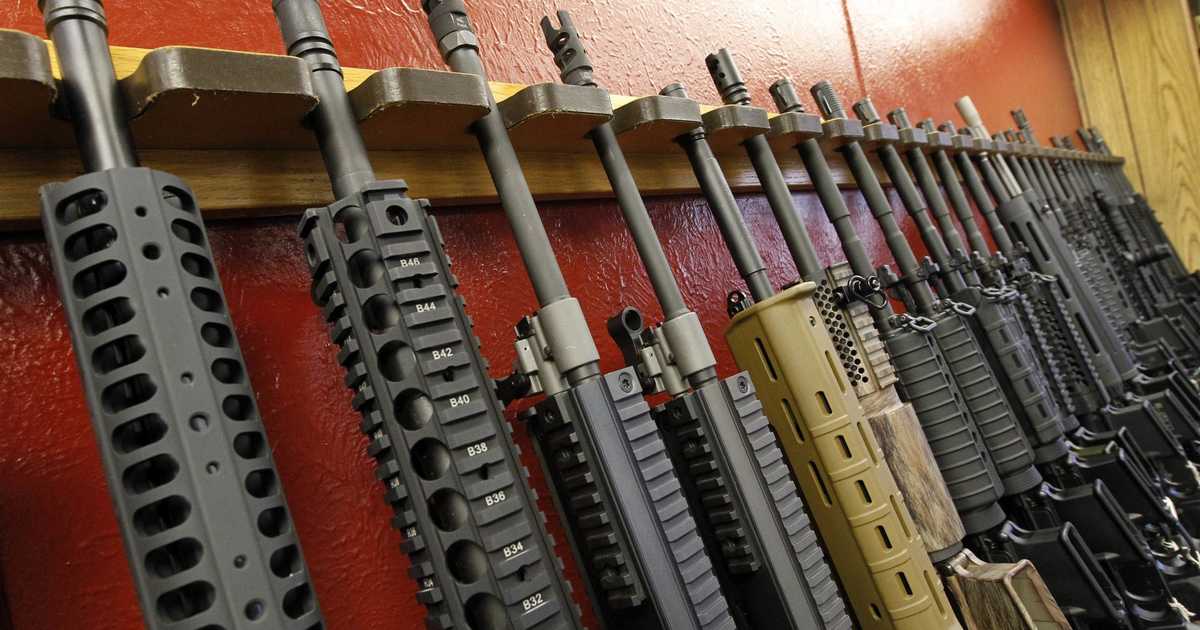
That backdrop matters for Virginia’s recent fight. A Lancaster County judge issued a preliminary injunction stopping state police from enforcing an assault weapons ban set to start July 1. The legal teams arguing for gun owners pointed to the state constitution and the federal standard from Bruen, saying Virginia’s new law likely violates both.
https://x.com/NoVA_Campaigns/status/2070234289917063452
This isn’t a small procedural hiccup; it’s a clear example of judges applying Bruen across the country. When lawmakers write bans that sweep up common firearms and magazines, courts must ask whether those rules fit into our historical tradition of firearm regulation. If they don’t, the Constitution wins out.
A judge in rural Virginia sided with gun rights activists Thursday, barring state police from enforcing an assault weapons ban set to take effect July 1.
Lancaster County Circuit Judge John Martin issued the preliminary injunction from his bench in favor of Gun Owners of America, the Virginia Citizens Defense League and resident John Crump, finding the commonwealth unlikely to succeed in arguing the impending law doesn’t run afoul of the state’s constitution.
In the hearing, which took a little over two hours, Crump and the organizations argued that the newly passed law conflicts with a provision of the Virginia Constitution enshrining the right to keep and bear arms, added in 1971.
“Article I, Section 13 is the commonwealth’s recognition of a pre-existing right with which Virginians were endowed by their creator, and it operates as a fixed limitation on the power of government to enact legislation affecting firearms,” the plaintiffs said in a motion.
Martin denied the commonwealth’s attempt to separate the state court’s analysis from the analysis the Supreme Court requires of federal courts following its 2022 decision in N.Y. State Rifle & Pistol Ass’n v. Bruen.
Martin held that the federal analysis — which requires the government to demonstrate that the challenged gun regulation is rooted in the historical tradition of firearm regulations rather than engaging in interest-balancing or policy-laden analyses — is instructive.
The plaintiffs rebutted the commonwealth’s assertion that the weapons at issue aren’t in common use and are thus not the bearable arms protected by the Second Amendment.
“They are not just common, they are ubiquitous,” attorney David Browne of Spiro & Browne, representing the plaintiffs, told the judge. “The challenged statutes in this case concern some of the most commonly used arms and magazines in the nation.”
Judge Martin explicitly rejected the state’s attempt to treat state-level review differently from the federal Bruen framework. That sets a strong precedent within Virginia: state constitutional protections and the Supreme Court’s guidance are both on the table. Lawyers for gun owners emphasized that the arms at issue are widespread and commonly used for lawful purposes.
The plaintiffs in this case include Gun Owners of America, the Virginia Citizens Defense League and a private resident, John Crump. Their motion relied on Article I, Section 13 of the Virginia Constitution, which the plaintiffs described as a pre-existing right that limits government overreach. That line of argument resonated enough for the judge to freeze enforcement while the dispute proceeds.
Practically speaking, the injunction pauses the new law until the court can issue a final judgment or until December 31, whichever comes first. That window gives litigants time to gather historical evidence, make legal arguments under Bruen, and seek a fuller ruling. It also prevents immediate enforcement that could displace thousands of lawful gun owners and collectors.
These rulings matter beyond Virginia. When courts look for historical analogues rather than weighing policy goals, legislatures face stricter demands to explain how modern limits match long-standing traditions. That legal framework protects the rights of ordinary Americans who keep and bear arms for defense, sport and livelihood.
For Republicans and conservatives who emphasize constitutional limits, this decision is welcome and predictable: judges applying existing law to check legislative overreach. Lawmakers can legislate responsibly, but they cannot simply ignore constitutional text and precedent. Courts exist to enforce those limits when governments overstep.
Editor’s Note: The radical Left will stop at nothing to enact their radical gun control agenda and strip us of our Second Amendment rights.