In a high-profile Texas case, 19-year-old Karmelo Anthony was found guilty of murder for the 2025 stabbing death of 17-year-old Austin Metcalf, provoking heated reactions outside the courthouse and sharp claims of bias from supporters and family members.
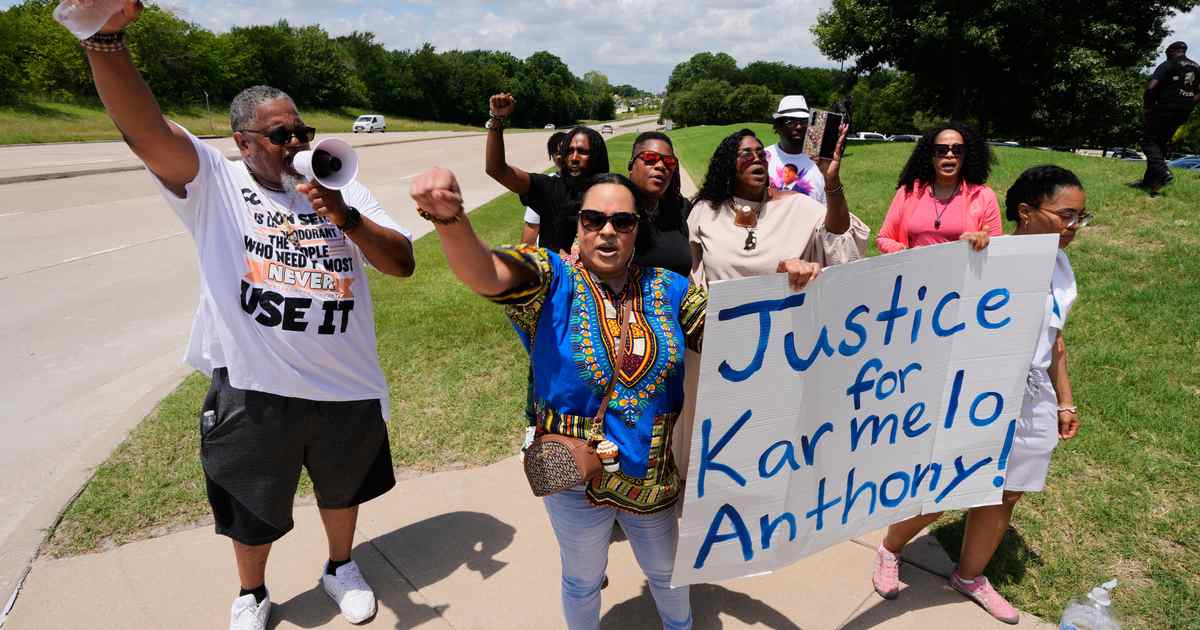
The jury returned a guilty verdict in McKinney, Texas, after hearing that Austin Metcalf was fatally stabbed during a 2025 track meet in nearby Frisco. The court handed down a 35-year sentence to Karmelo Anthony, a decision that immediately sparked strong responses from both sides. Local residents, supporters and critics gathered outside the courthouse, turning a courtroom outcome into a public flashpoint.
Across the crowd, emotions ran high and opinions diverged sharply about the punishment. Some called the sentence too light and argued for harsher penalties in cases of deadly violence, while others and members of the defense community raised concerns about fairness and procedure. Those divides fueled loud exchanges and visible protests as people processed the verdict.
As the defendant was escorted from the courtroom area, his mother drew attention with a sequence of shouts and gestures toward the assembled crowd. Video captured her declaring the verdict through the car window and accusing observers and the system of bias. The moment intensified an already charged scene and became a focal point for national coverage.
Karmelo Anthony’s mother was filmed shouting “racist!” as she left a Texas courthouse in an Acura sedan — hours after her 19-year-old son was convicted of murdering fellow teen Austin Metcalf and sentenced to 35 years in prison.
“Racist! Bias!” Kayla Hayes yells through the passenger side window of a black car on Tuesday amid the throngs of protesters outside the court in McKinney, Texas, in the Dallas suburbs.
The chant appeared to start among the crowd of mostly black supporters who gathered ahead of Tuesday’s verdict in the murder trial — which saw Anthony’s family quickly claim he was the victim of racism.
[…]
Hayes is also heard saying, “Send that message that they can do whatever,” before making a heart gesture at her killer son’s supporters.
https://x.com/ElijahSchaffer/status/2064545892795809957
“Keep your head up!” another supporter yells, as others shout, “Power to the people!” and “free Karmelo!”
Footage from outside the courthouse shows supporters echoing those chants while others in the crowd criticized the family’s response. Demonstrators and bystanders traded words, and the scene underscored how criminal trials can spill into public life long after a verdict is read. Officials kept a presence to prevent the confrontation from escalating into violence amid the strong emotions.
The media coverage quickly highlighted the competing narratives: one side insisting the conviction was justice served after a fatal attack, the other side pointing to systemic issues they say affected the process. That split viewpoint shaped social commentary and local reaction, with both camps using the moment to press broader arguments about criminal justice. Public debate around the case has not been limited to legal facts, but also to community perceptions and historical context.
Reaction on social platforms and in comment threads reflected the same polarization seen in person at the courthouse, with some observers using harsh language toward the family and others defending them. The mix of condemnation and defense made clear that the verdict would not settle the larger questions being asked about race, fairness and punishment. Community leaders called for calm even as conversations heated up online and off.
Legal avenues remain available to the defense, including appeal options and post-conviction motions, which could extend the case into months or years of further legal action. Meanwhile the family’s public displays and the crowd’s chants ensure the case will stay in the public eye as the sentence is carried out. Courts and communities will continue to navigate the fallout as the legal process moves forward.