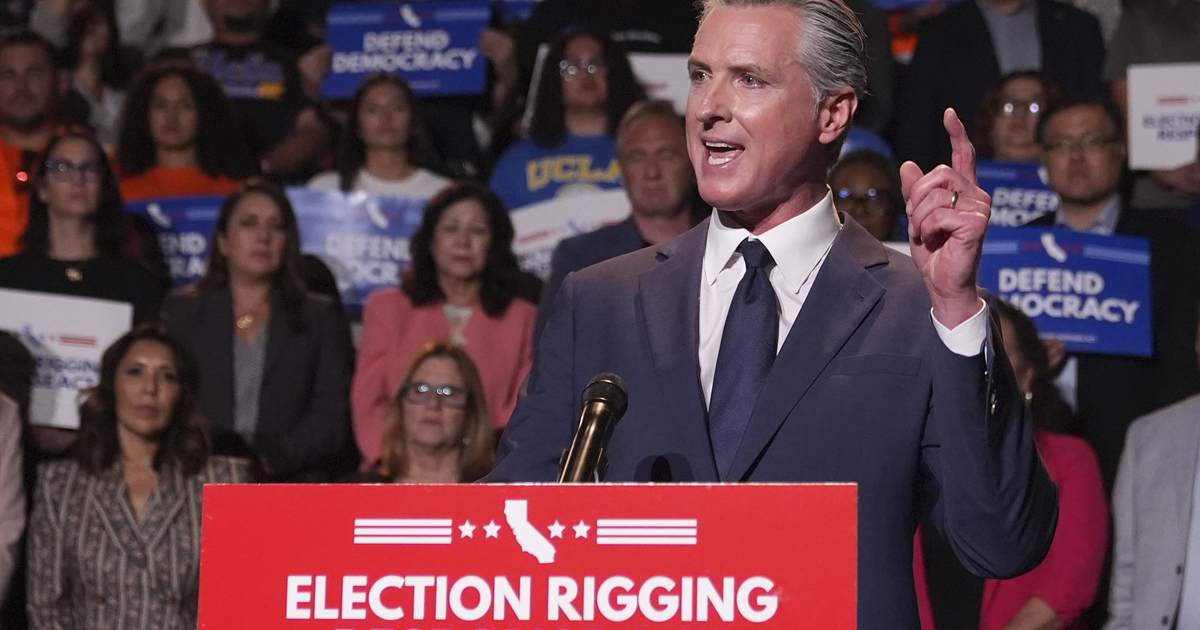
Governor Gavin Newsom defended California’s vote-counting system and promised budget talks in May, but the extra money he hinted at never arrived before the primary and the state still faces slow, contested tallies.
Gavin Newsom has spent weeks defending California’s election process even as questions about timing and integrity mounted. He said officials were already coordinating with the legislature to figure out what investments were needed, yet the concrete funding he suggested did not appear before voters went to the polls.
That response fits a pattern: instead of tackling rules, timelines, and accountability, the state leans on more spending as a fix. Critics on the right argue that throwing money at the problem without changing incentives or transparency simply delays real reform and lets systematic weaknesses persist.
Newsom spoke to reporters in May about the plan to work with lawmakers, saying, “We’ve had detailed conversations with the legislature, and it was mutually agreed that we would work together over the course of the next month as we balance the budget to land specifically what those investments may look like, and we both agreed on that,” Newsom told the press in May. “So on the basis of that question, no new resources in today’s presentation, but absolute full commitment and cooperation with the legislature to land that in the final budget deal.”
https://x.com/ZavalaA/status/2064124294578479452
He also warned county officials directly, noting the political risks if ballots were not counted quickly and accurately. “What you’re referring to is a letter I put out to all the county registrars to say get your act together, get these ballots counted. I’m very concerned that if we don’t do that, particularly on the basis of the new rules and regulations that we’ve now implemented, where we’re requiring them to do so, I think it will expose us to the accusations that will be exploited by the Trump administration.”
Even with those public assurances, the promised resources never showed up in time to change how the primary played out. Claims that more funding will solve slow counts deserve scrutiny when California already spends more on elections than any other state, both in total dollars and per capita, yet still struggles to report timely results.
When a Republican candidate for governor, Steve Hilton, suggested a targeted fund to accelerate counting, Newsom dismissed him — only to later adopt the same idea in public. Hilton wrote, “Last week I proposed an Election Count Accelerator Fund to give counties more resources to process ballots,” Hilton wrote on X. “Newsom said it showed I ‘don’t understand’ how elections work and it’s ‘nothing to do with’ the governor. Now he says he’ll do what I said. What a joke he is.”
The flip from derision to mimicry underlines the political theater around election administration in California. Conservatives see this as a pattern: when Republicans raise practical fixes, they are attacked, then the same fixes are quietly embraced by the other side when convenient.
State leaders have defended delays by pointing to expanded mail voting and efforts to maximize ballot access, arguing those priorities naturally slow processing. That defense ignores the predictable tradeoffs between convenience and speed and fails to explain why extra money, without new rules or accountability, will produce faster, more trustworthy counts.
Voters deserve a system that counts ballots quickly and transparently, and they deserve straight talk about whether budget tweaks will actually change outcomes. The conversation in Sacramento so far has centered on optics and funding promises rather than clear operational reforms that would force faster, verifiable results.
Republicans and other skeptics are pressing for structural changes: clearer deadlines, stronger oversight of county offices, and incentives that prioritize counting as ballots arrive. Until those kinds of reforms are on the table rather than just more spending, questions about legitimacy and competence will keep surfacing every election cycle.
For now, the political moment is fixed: the governor defends the system, offers budget talk as a salve, and repeats the familiar pattern of preferring extra resources to systemic change. That approach may buy a few headlines, but it does not resolve why a state that spends so much still struggles to produce timely, uncontested results.