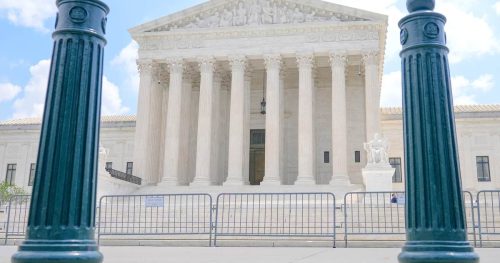
Rep. Andy Ogles introduced the Anchors Away Act after the Supreme Court struck down President Trump’s executive order on birthright citizenship, proposing a statutory limit on birth tourism and rallying conservative backing to reclaim national sovereignty.
The Supreme Court decision that invalidated the executive order ending birthright citizenship has sent lawmakers back to the drawing board, and Rep. Andy Ogles moved quickly with legislation aimed at closing the loophole that enables birth tourism. His Anchors Away Act targets a specific practice: pregnant foreign nationals who travel here primarily to give birth and secure U.S. citizenship for their children. Conservatives see the bill as a concrete next step after the court’s ruling, pushing policy rather than relying solely on litigation.
The measure would change the Immigration and Nationality Act to bar admission of pregnant women who are coming to the United States specifically to deliver a child for the purpose of acquiring citizenship. That language is meant to strip the incentive for birth tourism without redefining citizenship across the board. Supporters argue the tweak is narrowly focused and enforceable at ports of entry and through existing visa screening procedures.
https://x.com/RepOgles/status/2072014309614346549
Conservative reaction has been swift and loud, framing the bill as necessary to stop what they describe as a deliberate exploitation of American law. Lawmakers and commentators on the right are framing the issue as one of sovereignty and fairness, saying the country should not be a magnet for transactional births. Ogles framed the stakes in stark terms when he called out the court’s decision and the perceived consequences for the nation’s civic fabric.
“Today, the Supreme Court cheapened the most valuable thing on planet Earth: U.S. citizenship,” Ogles told Townhall. “Not only is birthright citizenship clearly not in the U.S. Constitution, but this broken system has allowed foreign nationals to take advantage of our country, our benefits, and our generosity. These foreigners have embedded themselves into our society and are being trained by foreign governments to corrupt our culture,”
Ogles’ rhetoric underscores a broader conservative pattern: use congressional authority to close legal openings the courts leave. The Anchors Away Act is presented as one piece of a multi-pronged response, coupling statutory change with enhanced enforcement and public messaging. Backers emphasize that Congress has the power to adjust admission standards and to define who is admitted for what purpose.
Other Republicans are lining up with complementary ideas. Sen. Eric Schmitt announced legislation along similar lines and flagged plans to pursue a constitutional amendment to make citizenship rules explicit, showing the depth of concern on the right. That parallel strategy reflects a willingness to pursue both immediate statutory fixes and longer-term constitutional clarity if needed. Conservative leaders are treating the court’s decision as a prompt for aggressive policy work rather than passive acceptance.
President Trump urged a quick legislative response, pressing Congress to convert his now-defeated executive order into law. That call for speed reflects a political calculation: move while public attention is high and while the base is energized. GOP lawmakers see an opportunity to present a unified front on immigration and national identity ahead of upcoming political fights.
Legal and enforcement questions remain about how to implement a ban on birth tourism without sweeping innocent pregnant travelers into exclusion. Critics argue that careful definitions and due process safeguards will be required to prevent wrongful denials at the border. Supporters counter that targeted questions during visa processing and credible-intent assessments can distinguish routine travel from intentional birth tourism.
Republican supporters also point to practical tools: visa vetting, traveler history, and collaboration with airlines and consulates to flag high-risk cases. They argue those measures can be scaled without rewriting citizenship doctrine or creating new categories of statelessness. For conservatives, the priority is restoring a sense of control and fairness to the immigration system.
Ogles capped his remarks in blunt, unapologetic language that emphasizes identity and national defense: “I refuse to let these anchor babies colonize our country. Save our sovereignty. Anchors away!” That line sums up the political energy behind the bill and why many on the right view statutory action as urgent. Whether the Anchors Away Act will pass intact or be reshaped in committee remains to be seen, but it has already refocused the debate in Congress.