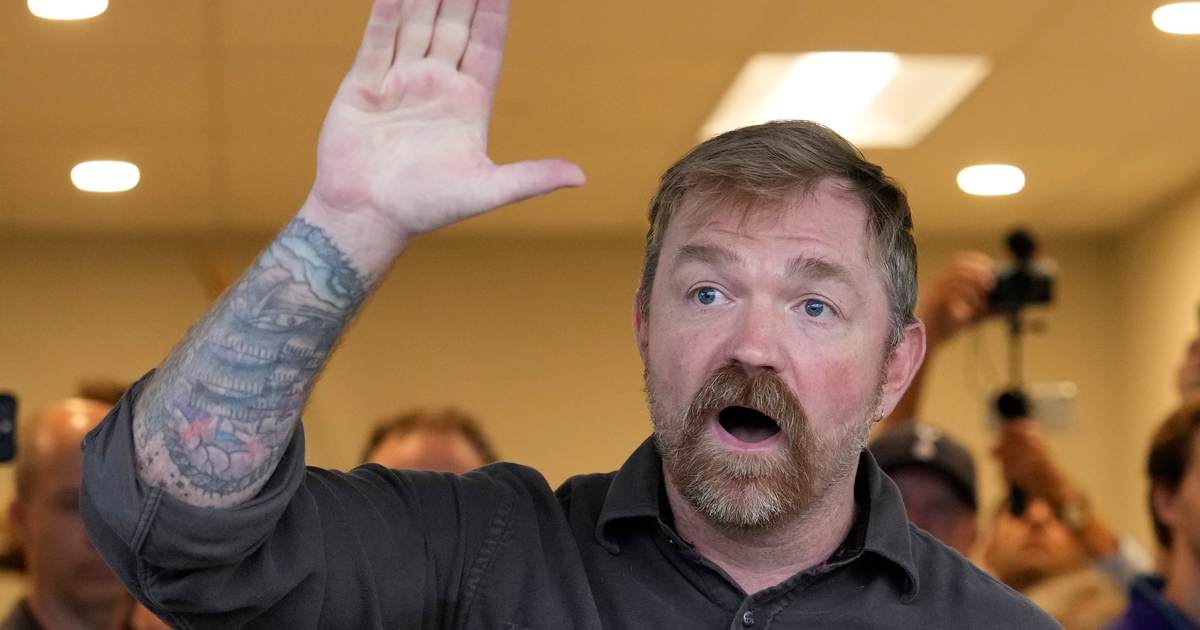
Maine’s Democratic primary confirmed Graham Platner as the nominee to challenge Republican Sen. Susan Collins this fall, and the result has sparked sharp debate across the state about character, strategy, and the stakes for control of the Senate.
Graham Platner emerged from the Democratic primary with momentum and a war chest, but his victory carries heavy baggage that Republicans are eager to spotlight. Voters are hearing about a string of controversies tied to his past, from a high-profile tattoo to explicit social posts and serious personal allegations. For many conservatives in Maine, those issues are not minor; they go straight to judgment about fitness for office and the party that backs him.
The Democratic response has largely been to downplay headlines and emphasize a single political goal: defeating former President Trump and reshaping the judiciary. That focus has made it easier for the party to tolerate headline-grabbing conduct from a nominee so long as he promises to pursue aggressive reforms. To critics, it looks like policy priorities now eclipse basic questions of judgment and personal conduct.
https://x.com/DecisionDeskHQ/status/2064515138573472097
The new matchup will be one of the marquee races in the battle for the Senate this year, and Maine’s unique political mix makes it unpredictable. Susan Collins, a long-standing incumbent, faces a challenger who styles himself as a brash outsider and who has used provocative language and imagery to rally parts of the base. For Republican strategists, the contrast between Collins’ steady record and Platner’s chaotic baggage is a central theme of the fall campaign.
It’s official: Republican Sen. Susan Collins will face Democrat Graham Platner this fall, NBC News projects, in what will be a marquee election in the fight for control of the Senate.
Collins and Platner both won their primaries on Tuesday, in a predictable result. Collins, first elected to the Senate in 1996, ran unopposed for re-nomination as she seeks a sixth six-year term.
[…]
While the primary results were foreseeable, what happens next is anything but. The Senate election has already become a battleground over the future of the Democratic Party and what voters think is most important, as Platner faces numerous controversies about his past conduct.
And that’s before the real campaigning between the resilient incumbent and the brash outsider has even kicked off.
Maine looms large in the battle for the Senate majority. Democrats currently hold 47 seats and need a net gain of four to capture the majority. Collins, as the only Republican senator from a state President Donald Trump lost in 2024, is an inviting target for defeat.
Outside of the Washington bubble, many Mainers care less about party talking points and more about local impact: jobs, fisheries, energy, and cost-of-living. That practical lens favors a candidate who has delivered tangible results or at least avoided self-inflicted scandals. Collins can lean on a record of constituent service and coalition-building, while Platner will have to convince wary voters that his past controversies won’t become governing liabilities.
Republican voices argue this is about more than personality. They see Platner’s stated ambitions and rhetoric—calls to remake the federal bench and other sweeping promises—as an assault on longstanding institutions. From that perspective, the electorate faces a clear choice between steady stewardship and a dramatic, risky overhaul engineered by activists and donors.
Democrats, for their part, appear willing to accept riskier candidates if they promise transformational outcomes, and that strategy can work when voters prioritize seismic change. But it can also create vulnerabilities, especially when opponents can tie the candidate’s temperament and judgments to the unlikely consequences of radical reforms. That line of attack is likely to feature heavily in campaign messaging.
Expect the fall campaign to be noisy and personal. Platner’s social media history and the allegations swirling around him provide ammunition for attack ads, while Collins will have to defend votes and positions that moderate voters still question. The contest will test whether Maine voters lean toward the familiar balancing act of a long-term senator or swing toward the fervor of a challenger promising big shifts.
Money and outside groups will shape the narrative as much as local debates. National committees on both sides have already signaled intent to pour resources into Maine, making the race a national bellwether on how parties prioritize winnable seats. That national attention will magnify every gaffe and sharpen the contrast between incumbency and insurgency.
Strategically, Republicans will push a clear, disciplined message: competence, experience, and caution about radical change. Democrats will try to keep the spotlight on national narratives about the Supreme Court and the former president, while shielding their nominee from his worst headlines. How voters respond to that framing will decide whether Maine becomes a firewall or a flip in the Senate fight.
One more thing to watch is turnout dynamics. Primary results showed energized bases on both sides, but the general election will hinge on independents and suburban voters who often decide Maine’s statewide races. Both campaigns will have to expand beyond their core supporters to lock down a November win, and how they handle the controversies around Platner will be a major factor in that outreach.
Operation Barbarossa has been invoked by critics to describe the Democrats’ approach here, and the metaphor signals high stakes and high risk. Whatever language people choose, the bottom line is that Maine is set up for a bruising, headline-driven contest that national Republicans will study closely as they defend Senate control.