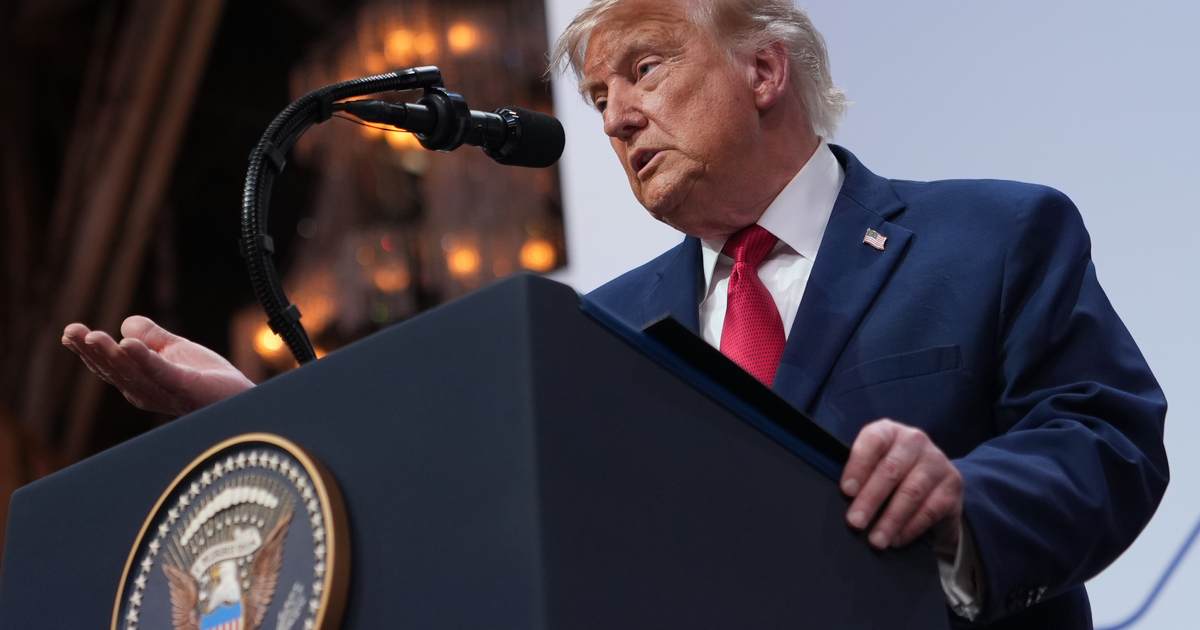
Donald Trump’s recent remarks and the anecdotes in a new book have stirred talk about who he may prefer as his successor, highlighting both political signaling and personal dynamics within his circle.
A forthcoming book by Maggie Haberman and Jonathan Swan examines the first year of Donald Trump’s second term and includes an episode about Oval Office renovations that readers say hints at presidential succession preferences. The reporting mixes anecdotes about Trump’s public posture, private questions to aides, and how donors and staff view potential heirs. That combination of theater and strategy is exactly the sort of thing that gets Republicans talking about legacy and continuity.
The book notes Trump showed off new flagpoles and framed his return to the White House as a reversal of fortune, a theme he often leans into. Those moments do more than decorate a story; they reveal how he thinks about perception, press pressure, and the message he leaves behind. The passage about redecorating the Oval Office moves beyond aesthetics and into political branding.
https://x.com/michellelprice/status/2067720490253197789
Showing off towering new flagpoles he had erected on the White House North and South Lawns last summer, President Donald Trump suggested that he wanted to make similar renovations in his first term but was worried about the negative press.
“You guys were after me,” he told reporters. “I was the hunted. And now I’m the hunter.”
The incident, recalled in “Regime Change,” New York Times reporters Maggie Haberman and Jonathan Swan’s new book on the first year of Trump’s second term, encapsulates how different Trump’s return to the White House in 2025 has been from his first term.
[…]
The authors recount how Trump frequently quizzed aides about whether Vice President JD Vance or Secretary of State Marco Rubio would be better to succeed him.
Some donors promoted Rubio and some aides thought the secretary and the president had better personal chemistry than Trump and Vance. But Trump also indicated that he was impressed by Vance’s intellect and abilities during television interviews — particularly tough ones, the book says.
Trump is also said to be impressed by the background of Rubio, who is the son of Cuban immigrants. The book describes how, after Trump redecorated the Oval Office to fill it with gold flourishes, someone asked the president about the likelihood that the next president would undo all that he had done. Trump retorted: “Cubans love gold.”
But, Haberman and Swan write, Rubio and Vance are also friends. An example they offer is Rubio texting Vance after the 2024 Republican vice presidential nominee’s comments about “ childless cat ladies ” became a scandal. Rubio offered to campaign with Vance to show his support.
The book’s reporting that Trump privately asked aides whether JD Vance or Marco Rubio would make a better successor is revealing in two ways: it shows a president engaged in succession planning, and it frames the choices in terms of what donors and voters might prefer. That sort of testing matters; donors push candidates they think can win, aides read chemistry, and Trump weighs both political instincts and loyalty. He’s always been pragmatic about who can carry forward a brand he built.
Vance comes across as someone Trump admires for toughness and intellection in media settings, which matters to a leader who prizes undefeated performance in interviews and debates. Rubio, by contrast, is presented with the kind of backstory and cultural appeal that can play well in key states and among specific voter blocs. Each has a different strength: one is a combative media performer, the other offers a compelling narrative that connects with immigrant communities and conservative values.
The “Cubans love gold” exchange lands like a wink more than a policy pronouncement. It’s classic Trump: a shorthand that signals who he thinks will carry the aesthetic and cultural elements of his presidency forward. For Republicans, such a quip is part of the messaging toolkit—an offhand remark that voters and operatives will parse for political meaning. It’s also a reminder that cultural signals can be as potent as platform promises in certain electorates.
People will point to the friendship between Rubio and Vance and call it a stabilizing factor, but real politics is rarely sentimental. Ambition and opportunity tend to trump friendship when stakes are high, especially in presidential succession talk. What matters more is whether a prospective successor can unite donors, energize voters, and preserve the policy and cultural legacy that supporters care about.
Ultimately, this episode underscores how Trump manages his image and tests the field without making formal endorsements prematurely. It also shows how anecdotes become ammunition for pundits on both sides—Republicans can see signal and strategy, while opponents will call it mere theater. The takeaway for the GOP is to watch which qualities Trump praises publicly and privately, because those cues shape donor behavior and voter expectations heading into the next round of political contests.