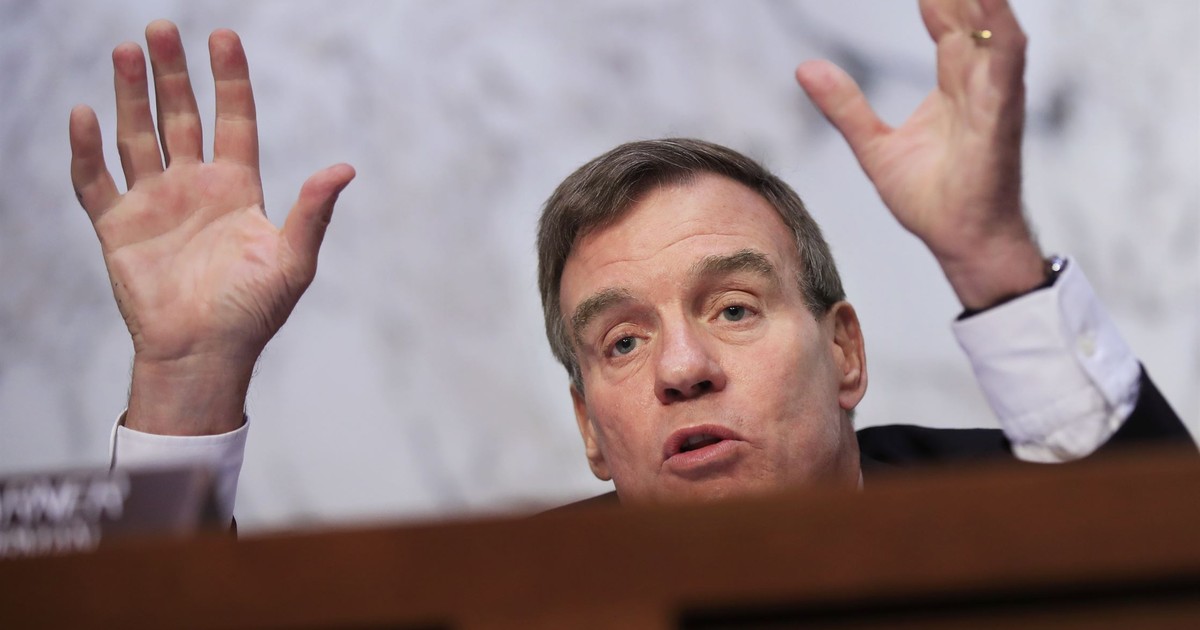
Sen. Mark Warner’s defense of a troubled Maine Democrat and his claim that President Trump “lowered the bar” for personal conduct has stirred sharp reactions and raised questions about priorities on the Hill.
Sen. Mark Warner of Virginia offered an explanation that many will find hard to swallow, arguing that standards for behavior shifted after high-profile conduct by President Trump. That line of defense comes as Democrats scramble to justify backing Graham Platner, the Maine Democrat who has been linked to disturbing tattoos and multiple allegations of misconduct. The party’s strategic need to win Maine and flip the Senate is obvious, but political survival does not erase troubling red flags.
Senator Mark Warner of Virginia, a centrist Democrat, called the allegations “beyond disturbing” in an appearance Sunday on Fox News. But he said Maine voters would ultimately decide if the accusations were disqualifying.
https://x.com/PollTracker2024/status/2063708208079011884
“If these allegations are true, they’re very troubling,” he said on “Fox News Sunday.” “But I don’t know if they are true or not. I think, frankly, the people in Maine ought to decide that.”
[…]
Mr. Warner, who appeared on several Sunday shows, said that Mr. Platner’s behavior would probably have taken him out of the running in earlier decades, but that President Trump had lowered the bar for candidates’ personal conduct.
“President Trump set a new standard,” Mr. Warner told “This Week” on ABC News, invoking the “Access Hollywood” tapes in which Mr. Trump boasted about groping women. “Whether that low standard is what we ought to proceed with is going to be, again, in the hands of the voters.”
The core facts about Platner are stark: reports of Nazi imagery in tattoos, a sexting scandal, and accusations from several women about emotional abuse have dogged him. Those are not small character notes you gloss over for a narrow arithmetic advantage in the Senate. Voters who care about decency and personal conduct expect their parties to hold candidates to some basic standard, especially when allegations multiply.
Warner’s “the standards changed” line is thin political logic dressed up as realism, and it sidesteps inconvenient history. Democrats loudly condemned similar behavior in past decades when it suited their agendas, and those moments are still part of public memory. Shifting the goalposts now looks less like nuance and more like opportunism.
Placing the decision solely in the voters’ hands is technically defensible, but it’s also an easy dodge for party leaders who want plausible deniability. Saying “let the voters decide” allows leadership to avoid taking responsibility for recruiting or backing candidates with serious baggage. Political parties should be gatekeepers, not bystanders, when credible accusations surface.
One obvious cultural double standard sits behind this debate: certain political figures have endured intense scrutiny in other eras for behavior that, by Warner’s logic, should have disqualified them. That inconsistency fuels public cynicism about elites who lecture on ethics while bending rules when power is at stake. Citizens notice when accountability shifts depending on partisan needs.
And then there’s the awkward historical echo: Democrats once demanded consequences for powerful men in their ranks during scandals in the 1990s. Those moments are part of the record and cannot be conveniently erased. Bringing up past controversies serves as a reminder that moral clarity does not expire when it becomes inconvenient.
The larger lesson is simple: parties that prioritize short-term pickups over long-term standards risk weakening their credibility. If leaders excuse or downplay troubling conduct to chase a senate majority, they invite voters to view their principles as transactional. That calculation may deliver a seat or two, but it erodes trust in institutions over time.
For those who value consistent standards, accountability should not depend on the balance of power. Candidates facing serious allegations deserve transparent scrutiny, and parties should make clear decisions rather than offering rhetorical cover. The voters will have the final say, but parties should not pretend they bear no responsibility for the people they elevate to the ballot.