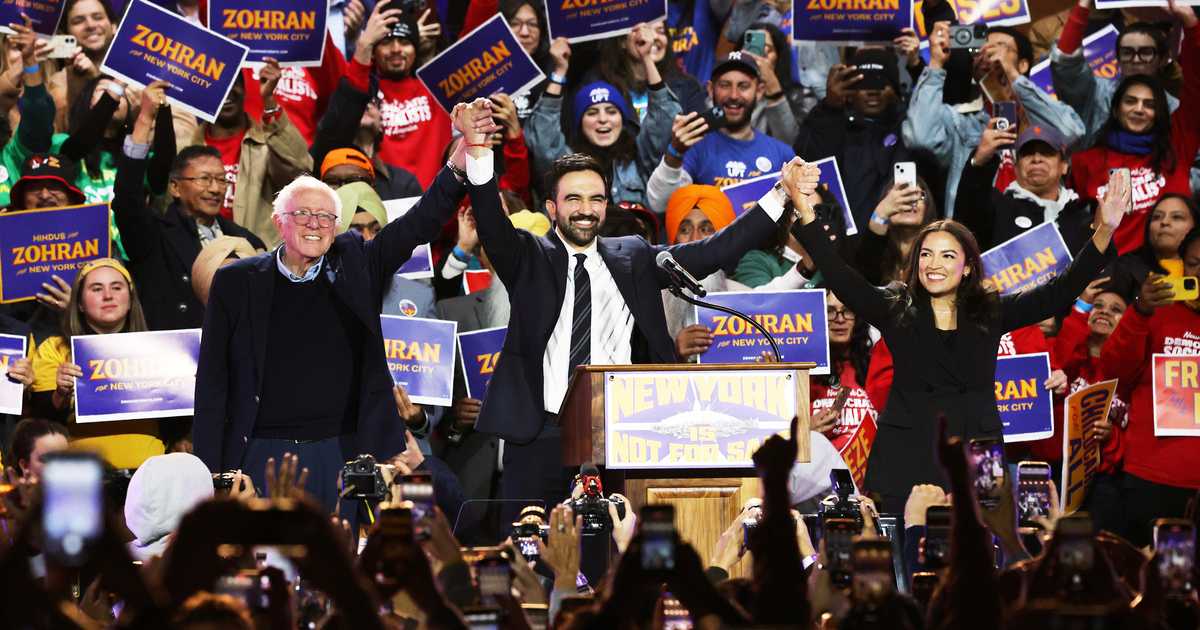
A Democratic shift toward socialism is emerging as a product of elite disconnection, strategic messaging, and voter backlash, producing messy primaries and brittle candidates that threaten the party’s electability.
A socialist insurgency is gaining ground inside the Democratic Party, powered by a mix of arrogance, cultural bubble thinking, and strategic spin. The new faction rewards theatrical radicalism and punishes pragmatic candidates, leaving establishment Democrats scrambling. That dynamic explains why a party already struggling with brand issues looks increasingly vulnerable to its own extremes.
Recent polling showed Immigration and Customs Enforcement more popular than Democrats, and that kind of perception matters when an energized minority seizes the moment. The establishment will be forced to pour scarce money into defending more electable candidates — those without Nazi tattoos, who are not antisemitic, who do not call for abolishing police and prisons, and who understand that money isn’t printed on trees. It’s a raw political problem: electability is collapsing in some primaries while radical promises attract attention.
The base driving this turn is clustered in elite institutions and professions, and that has real consequences for messaging and priorities. They’re adept at soft-pedaling unpopular ideas until after they win, which is one reason moderates are left on defense. Michael Shellenberger and others argue that the rejection of the traditional liberal agenda is pushing some voters farther left in search of solutions that actually speak to economic pain.
…all of those socialists support a much more radical agenda than the one they ran on. The program of the Democratic Socialists of America (DSA), of which Mamdani and AOC are members, calls for: total defunding and abolition of the police, jails, and prisons; ending the independence of the Supreme Court and the entire Executive Branch, making them subordinate to congress; “expropriat[ing] property from capitalists and deliver it to the working class”; socializing energy production; allowing surgeons to sterilize children and adolescents in an effort to change their sex; a return to Joe Biden’s open borders policy; and the decriminalization of illegal camping and open air drug use. Burnham has proposed to spend an additional £39 billion on public housing, impose a new tax on everyone, and adopt the “Housing First” policy, which has resulted in the subsidization and enabling of drug addiction and death in the U.S.
And those policies are wildly unpopular. Abolishing the police drew just 15% support even back in 2020 at the height of the power of Black Lives Matter. Seventy-four percent of Americans approve of the separation of powers, 90% favor co-equal branches, and only 9% want any one branch to hold more power. Eighty-one percent of Americans view free enterprise positively, while only 39% view socialism positively, and that 39% reflects the diluted Scandinavian sense of the word, not expropriating apartment buildings and other forms of housing. Only 37% of the public think doctors should be able to give drugs to or operate on minors in an effort to change their gender. Seventy percent support closing the border, and 69% support limiting who can claim asylum.
[…]
A big part of the reason for the socialist victories is that they successfully hide their radicalism. In 2021, Mamdani told the Young Democratic Socialists of America to lead with popular measures and to hold back the rest. “If we’re talking about the cancellation of student debt, if we’re talking about Medicare for All, these are issues which have the groundswell of popular support across this country,” he said. “But then there are also other issues that we firmly believe in, whether it’s BDS [boycott, divest, and sanction Israel], or whether it is the end goal of seizing the means of production, where we do not have the same level of support at this very moment.” The task, he said, was to “meet people where they’re at” and “over time bring people to that issue.”
Part of the reason it was hard for the opponents of Mamdani and other socialists to use his radicalism against him was simply that he did not campaign on it, was disciplined in ignoring attacks framed around it, and manipulated language. “Democratic socialism” calls to mind Scandinavia rather than the Democratic Socialists of America program of abolition and expropriation.
The mainstream media have helped. “There’s a fair amount of confusion and fear generated in the US by the term ‘socialist,’ which is associated with repressive societies like Communist China, the Union of Soviet Socialist Republics (USSR), North Korea or Cuba,” wrote CNN. “So it’s worth looking at what Mamdani and his supporters mean by it (think social programs in Western Europe) and also how the political right will use it against Democrats.”
The “Affordability” framing does the same work. It evokes cheaper groceries and rent, not Mamdani’s stated “end goal of seizing the means of production,” which he set aside in public only because, as he put it, “we do not have the same level of support at this very moment.” Similarly, one of the socialists who won in the New York primary, Darializa Avila Chevalier, deleted posts that read “Seize the means of production” and “No more police at all ever,” then told CNN she had “grown considerably” and was focused on “our community and our community’s future.”
[…]
Second, there are far more college graduates than jobs that require a college degree, which has suppressed wages and created resentment. Peter Turchin called this “elite overproduction,” while sociologist Musa Al-Gharbi credits it as the main driver of the recurring waves of progressive zeal he calls “awokenings.” Graduates “went to the right schools, got good grades, majored in the right things, earned college diplomas, expected to have six-figure salaries,” he said, and then found that “the life that they were just taking for granted their whole life seems not to be in the cards.”
[…]
Finally, the public has largely repudiated much of the Left’s agenda, creating urgency behind the turn toward affordability issues. Moderate House Democrats who issued a public letter saying, “We are capitalists, not socialists” are either talking to deaf ears or further alienating themselves from dissatisfied progressives, who feel that capitalism isn’t working for them. “Ending wars, passing Medicare for All, forgiving student loan debt, abolishing ICE and taxing the rich — those are all popular policies,” said the DSA in a statement.
Medicare for All has failed in practice at the state level and was shelved in California because the math didn’t work. Student loan forgiveness polls well, but handing out debt relief risks creating resentment from people who played by the rules and paid their loans without bailouts. That kind of populist fuel tends to create its own backlash and breeds candidates who run on grievance more than policy.
But there are good reasons to expect that radicalism will be limited and will provoke a healthy backlash, particularly outside the bluest cities in the bluest states. The Democrats’ favorability has declined from 47% to 39% between 2020 and 2026, in part due to the party’s radicalism, and could decline further with more radical candidates becoming standard-bearers. And the candidates Mamdani endorsed took their June 2026 congressional primaries on turnout between 15% and 19%, with young-voter turnout less than half of the year before, and Raman advanced in Los Angeles on 29%. A movement that depends on low-turnout primaries hands moderate Democrats and Republicans an obvious opening.
For now, this is a Democratic internecine mess, and it’s giving Republicans clear political openings in swing districts. The party’s flirtation with hard-left ideas makes governing harder and winning national elections riskier for Democrats who are already facing skeptical voters.