A South Florida financier pleaded guilty to laundering fraudulently obtained COVID-19 relief funds and was sentenced to 20 years in federal prison after those proceeds were used to help finance the plot that resulted in the assassination of Haitian President Jovenel Moïse.
Keegan Harricharan, 42, of Coral Springs pleaded guilty to conspiracy to engage in money laundering and received a 20-year federal sentence from U.S. District Judge Jacqueline Becerra. Prosecutors say the scheme involved routing pandemic relief loans through shell transactions to conceal the flow of money that underwrote a violent political conspiracy. The case tied financial fraud directly to a deadly international plot and drew federal attention for the reach of the laundering network.
The laundered proceeds came from Paycheck Protection Program and Economic Injury Disaster Loan funds issued under the CARES Act, programs meant to help small businesses during the pandemic. Authorities found that those pandemic loans were obtained fraudulently and then repurposed to fund elements of the assassination operation. That reuse of federally backed relief dollars into violent political activity is central to the government’s charging theory.
“This case is a stark reminder that financial crime is often the engine behind far more dangerous conduct,” said U.S. Attorney Jason A. Reding Quiñones for the Southern District of Florida. “This defendant did not simply commit fraud. He exploited pandemic relief programs meant to keep small businesses alive during a national crisis and laundered those stolen taxpayer funds to help advance a conspiracy that ended in the assassination of Haitian President Jovenel Moise. As a career federal prosecutor and former trial judge, I have seen how following the money exposes the true scope of criminal schemes. When fraud proceeds are funneled into political violence and bloodshed, the threat extends beyond financial loss to the stability of democratic institutions themselves. We will continue to follow the money, dismantle these networks, and ensure that those who finance violence face federal justice.”
Court documents name Arcangel Pretel Ortiz, Antonio Intriago, Walter Veintemilla, James Junior Solages, Christian Emmanuel Sanon, Jacob Israel, and others as co-conspirators who worked with Harricharan to launder stolen COVID relief funds. Several of those individuals were convicted after a lengthy jury trial in May, and others remain pending trial or sentencing. The document trail paints a coordinated effort across borders to move cash, personnel, and material support for a plan to topple Haiti’s government.
Investigators say that beginning in June 2020, Harricharan and Jacob Israel fraudulently obtained roughly $840,827 in PPP loan proceeds, and that Israel and his associates received about $126,124 in kickbacks. In April and May 2021, Harricharan reportedly met multiple times in South Florida with members of the conspiracy to discuss removing President Moïse and installing a new government. Those meetings also addressed how to secure funding, weapons, ammunition, personnel, and equipment needed to carry out the operation.
Harricharan agreed to use his company, TNR Holding Group Inc., to receive and move the fraud proceeds in support of the conspiracy. Between May 18 and May 28, 2021, approximately $175,000 in PPP fraud proceeds and other funds were deposited into TNR Holding’s bank account. At the direction of co-conspirators, Harricharan transferred the money to Veintemilla, who then redistributed it through a chain of transactions to other members of the plot.
Federal filings show that between June 9 and June 10, 2021, Harricharan wired an additional $80,000, including EIDL loan proceeds, to Veintemilla for further distribution. The financial movements were relatively rapid and structured to obscure their true origin and destination. Prosecutors used bank records and other financial evidence to link those transfers back to the fraudulent loan applications and to the people who benefited from the payments.
In the early morning hours of July 7, 2021, the conspiracy culminated in the fatal attack on President Moïse in Port-au-Prince. A team of Colombian mercenaries, financed in part through the laundered proceeds described by prosecutors, entered the president’s residence after exchanging gunfire with security personnel. The attackers fatally shot President Moïse multiple times and seriously wounded First Lady Martine Moïse while the couple’s children hid inside the home.
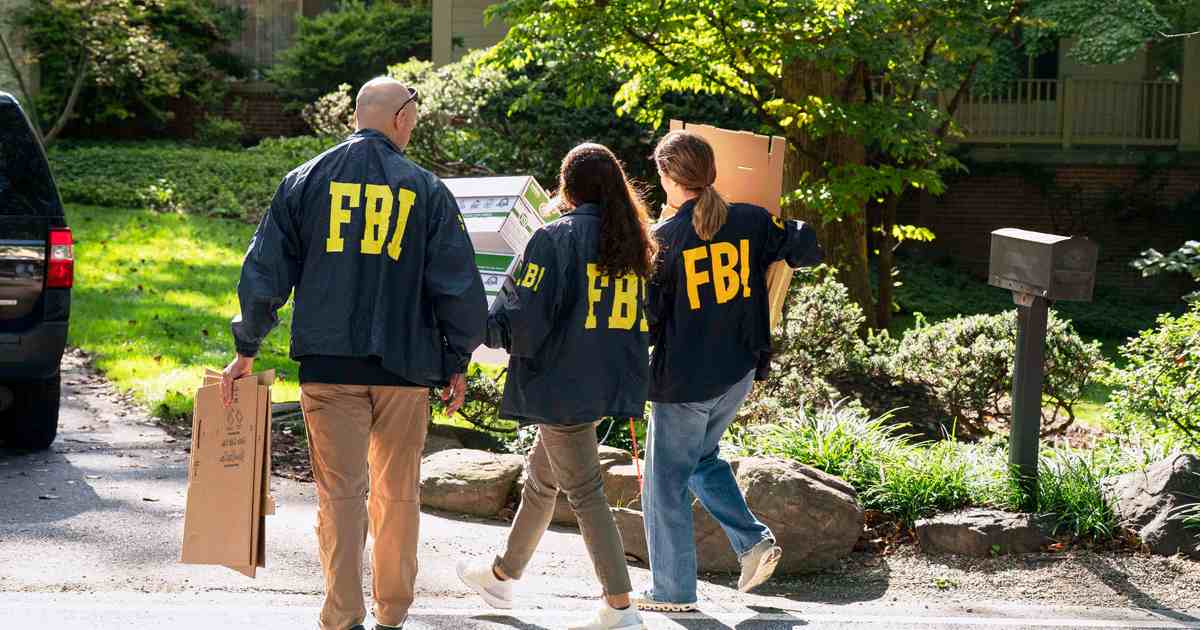
The prosecution was announced by U.S. Attorney Reding Quiñones along with Special Agent in Charge Brett D. Skiles of the FBI Miami Field Office and Special Agent in Charge José R. Figueroa of Homeland Security Investigations Miami. FBI Miami and HSI Miami led the investigation, with Assistant U.S. Attorneys Sean T. McLaughlin, Jason Wu, and Altanese Phenelus handling the prosecution. The case relied on interagency cooperation to trace the cross-border financial flows at the heart of the scheme.
This prosecution is part of the Homeland Security Task Force initiative established by Executive Order 14159, Protecting the American People Against Invasion. The HSTF is a whole-of-government partnership focused on dismantling criminal cartels, transnational criminal organizations, and human smuggling and trafficking rings that operate in the United States and abroad. HSTF Miami combines agents and task force officers from FBI Miami and HSI Miami, with prosecutions led by the United States Attorney’s Office for the Southern District of Florida.