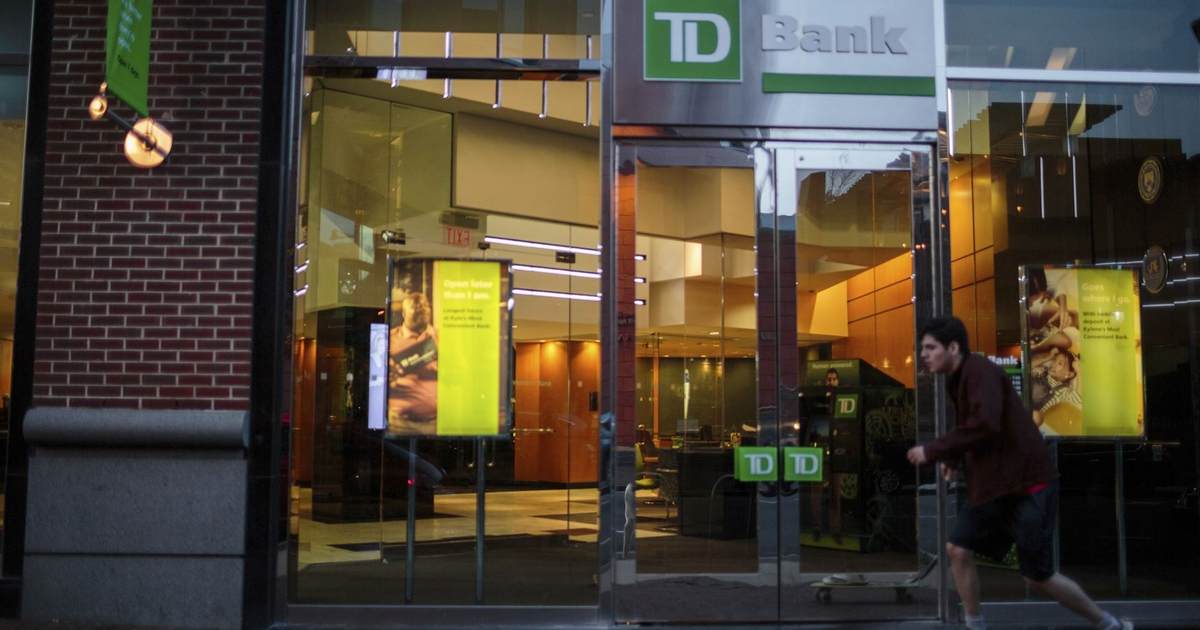
A former TD Bank employee received a 46-month prison sentence after being convicted for facilitating a vast money laundering network that moved hundreds of millions through bank accounts, while another bank insider received 24 months for related fraud and false reporting.
A federal court sentenced Wilfredo Aquino, 47, to 46 months in prison after prosecutors say he leveraged his role as an assistant store manager at TD Bank to assist a money laundering ring. Court filings say the scheme moved approximately $474 million through TD Bank accounts between 2019 and February 2021. Aquino processed more than 1,680 official bank checks for the operation, which amounted to over $92 million in instruments tied to large cash deposits.
The leader of the laundering network, Da Ying Sze, known as David, has pleaded guilty to coordinating a larger money laundering conspiracy that prosecutors calculate at $653 million, along with operating an unlicensed money transmitting business and bribing bank staff. Documents state that nearly all of the checks Aquino processed were backed by cash deposits above $10,000, which should have triggered mandatory currency transaction reports. Aquino repeatedly failed to identify David as the “conductor” on those reports, concealing David’s role in the deposits.
Colleagues flagged suspicious activity to Aquino, including a warning that the behavior “looks like money laundering,” yet the conduct continued according to prosecutors. In February 2021 alone Aquino is accused of facilitating three transactions that moved almost $2 million in cash through a third party’s account without reporting the true conductor. In exchange for his help, prosecutors say Aquino accepted numerous retail gift cards valued at more than $11,000.
Separately, Edward Low, 31 of Flushing, New York, admitted to taking bribes and using his position as a retail bank employee to steal customer information and to assist in account takeovers. From January 2021 through May 2021 Low allegedly received at least $26,700 in payments and helped facilitate $484,572.16 in fraudulent transactions at TD Bank. He later accepted another bribe while working at a different financial institution and falsified records to open a shell company account used to commit at least $47,195 in additional fraud.
Low pleaded guilty in February 2026 to conspiring to commit wire fraud affecting a financial institution and to making false bank entries or reports as a bank employee, and he was sentenced to 24 months in prison for those offenses. Aquino pleaded guilty in January 2026 to conspiring to launder monetary instruments before receiving his sentence. The cases underline how insiders can be exploited to move illicit funds and to manipulate account records in ways that defeat basic anti-money laundering controls.
Investigators from the IRS Criminal Investigation Newark Field Office and the Federal Deposit Insurance Corporation Office of Inspector General New York Region carried out the probes, with local police providing assistance. The Department of Justice announced the outcomes and named officials associated with the prosecutions, including Assistant Attorney General A. Tysen Duva and U.S. Attorney Robert Frazer. Trial attorneys D. Zachary Adams and Chelsea R. Rooney and Assistant U.S. Attorney Mark J. Pesce handled the courtroom work on behalf of the government.
The Money Laundering, Narcotics and Forfeiture Section pursues cases that strip profits from crime, target international money launderers and the financial facilitators who enable transnational organized crime, and investigate officers or employees whose actions threaten banks and the wider financial system. Its Bank Integrity Unit focuses specifically on bank insiders and institutional vulnerabilities that can erode confidence in financial institutions. Prosecutors emphasized that these prosecutions are intended to deter internal corruption and protect customers and the integrity of the system.
Federal filings detail how routine retail transactions were converted into a conduit for massive dollar flows by exploiting teller processes and by disguising the conductor of deposits on required reports. The government’s evidence centers on transaction records, internal bank documents and cooperation from witnesses who described the pattern of cash deposits, check processing and the flow of bribe payments. Those records anchored the charges that led to guilty pleas and the subsequent sentences handed down in 2026.
The cases illustrate how criminal networks combine on-the-ground cash collection with bribed or corrupt bank employees to create complex, high-volume laundering operations. Prosecutors say removing those conduits and holding insiders accountable is critical to disrupting networks that rely on financial institutions to hide and move illicit proceeds. Courts responded with prison terms aimed at punishing the misconduct and signaling that such insider assistance will draw significant federal penalties.