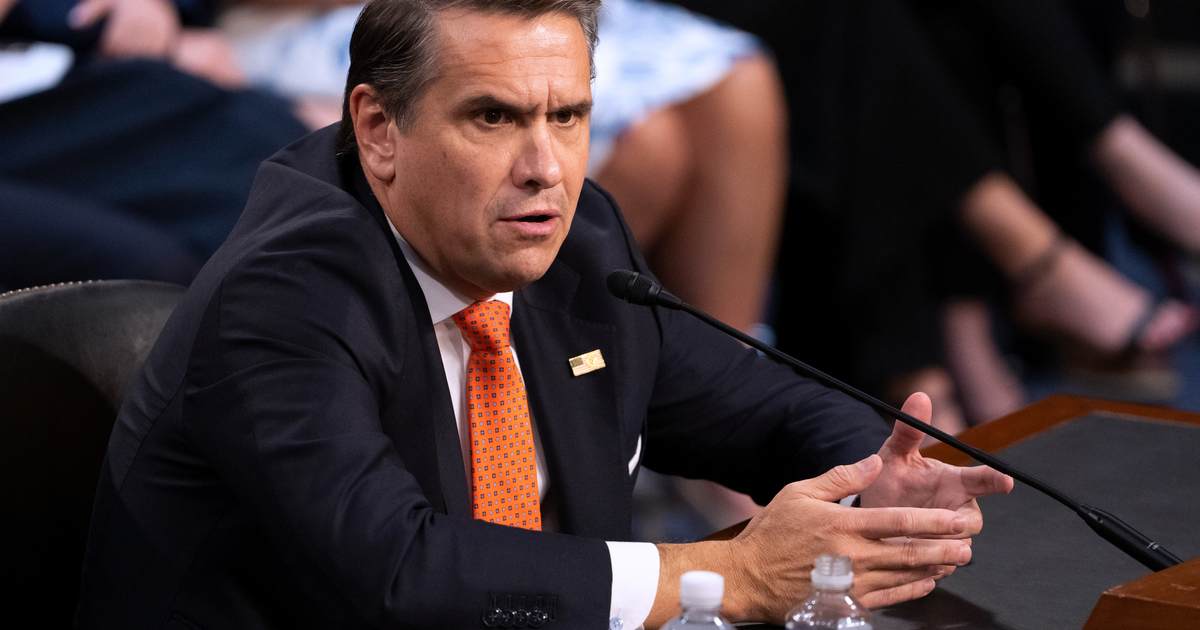
Todd Blanche’s path to full confirmation has hit a snag as two Senate Republicans press the Justice Department for written assurances tied to a contentious $1.8 billion anti-weaponization fund, exposing fractures within the GOP and the vacuum left by the late Sen. Lindsey Graham.
Losing Sen. Lindsey Graham has left a practical gap in Senate Republican leadership, and many notice it in moments like this. Graham’s knack for brokering deals and smoothing tensions mattered, especially as a bridge to the Trump White House. The chamber feels different without that steady hand.
Acting Attorney General Todd Blanche has finished his hearings but still awaits a committee vote to advance his nomination. That vote was postponed after two Republican senators asked the Justice Department for written assurances tied to a settlement involving the former president and the IRS. The timing could not be worse for an administration trying to move its agenda.
Senators Thom Tillis of North Carolina and John Cornyn of Texas have been the center of the delay, demanding clarity about how an anti-weaponization fund would operate. The fund, described as $1.8 billion and intended to compensate Americans who were allegedly persecuted by the prior Justice Department, sits at the heart of their concern. Those demands have forced committee leaders to pause and negotiate.
The Senate Judiciary Committee postponed its vote on whether to advance Todd Blanche’s nomination as attorney general after two Republican senators said they did not receive written assurances they’re seeking from the Justice Department surrounding a settlement between President Donald Trump and the IRS.
The GOP-led committee was scheduled to hold a vote Thursday morning on sending Blanche’s nomination to the full Senate, but Republican Sens. John Cornyn of Texas and Thom Tillis of North Carolina, both of whom have clashed with Trump and neither of whom is facing re-election in November, have complicated Blanche’s path to confirmation with their demands from the Justice Department.
Cornyn and Tillis met with Judiciary Committee chair Chuck Grassley, R-Iowa, Wednesday afternoon as they said they were continuing to negotiate with the DOJ.
A spokesperson for the committee said Wednesday evening that the vote would not happen on Thursday.
“Chairman Grassley works to set President Trump’s nominees up for success in committee, not failure,” the spokesperson said in a statement. “Senators Cornyn and Tillis want written assurances from the Department of Justice regarding the Trump-IRS settlement. Tomorrow’s markup is postponed as work continues to secure sufficient support in committee to favorably report Attorney General-nominee Todd Blanche, who is highly qualified for the job.”
A Justice Department official said Wednesday night that the DOJ has transmitted new language to Cornyn and Tillis and that conversations to resolve their concerns are continuing.
Much of Cornyn and Tillis’ negotiations with the DOJ have been around the so-called “anti-weaponization” fund that was established under a purported settlement between Trump and the executive branch he controls over a lawsuit the president filed over the disclosure of his tax records. The suit led to a five-year prison sentence for a former IRS contractor.
Officials say the Justice Department has sent new language and is still talking through details, but the core dispute remains. The fund springs from a settlement tied to litigation over tax record disclosures and the penalty against a former IRS contractor. Whatever the legal fine print, the political fallout is obvious.
From a Republican perspective, this feels less like a substantive legal standoff and more like intra-party sparring that leaves nominees stranded. Blanche is broadly viewed by allies as qualified, yet internal negotiations have slowed his path. Conservatives who expect decisive action see these delays as avoidable and frustrating.
There’s also a clear political subtext: both Tillis and Cornyn have had tense runs with former President Trump. Tillis announced he would not seek another term, and Cornyn recently faced a bruising primary where he failed to secure renomination. Those backstories shape how their moves are being read inside GOP circles.
For many grassroots conservatives, this is not about paperwork or legal phrasing; it’s about perception and consequence. When Republican senators appear to balk in ways that stall a Trump administration nominee, it raises questions about unity and priorities. Voters who backed change want action, not prolonged bargaining.
The dynamic also shows how personnel losses can ripple through governance. Graham’s role as a fixer is often underrated until his absence is felt, and the vacuum lets procedural disputes become more consequential. A Senate without that kind of operator struggles to move nominees smoothly.
Republican leaders will need to weigh the optics of demanding additional guarantees against the costs of holding up a key confirmation. If Blanche’s nomination is delayed further, it becomes a talking point for critics and a distraction for the administration. Pragmatism and political courage will be required to resolve the impasse.
At stake is more than a single vote. The handling of this nomination will signal how the Senate GOP manages internal disagreements and protects its agenda. For conservatives focused on results, the lesson is clear: infighting that blocks qualified nominees has real consequences for governance.
As negotiations proceed, expect pressure to mount on all sides to convert assurances into action and move the process forward. The Justice Department and Senate negotiators face a test of both legal clarity and political will. How they handle it will shape not only Blanche’s future but the Senate’s capacity to confirm presidential nominees.