National Democrats have quietly decided not to back a Montana Senate nominee who faces steep poll deficits and tiny fundraising, and that decision speaks to a simple political reality.
Some races are simply uphill right from the start, and both parties know when a contest is a long shot. Republicans accept that they will lose in deep-blue states just like Democrats accept tough sledding in deep-red territory. Political parties have to triage resources and back candidates with paths to victory, not every hopeful who files paperwork.
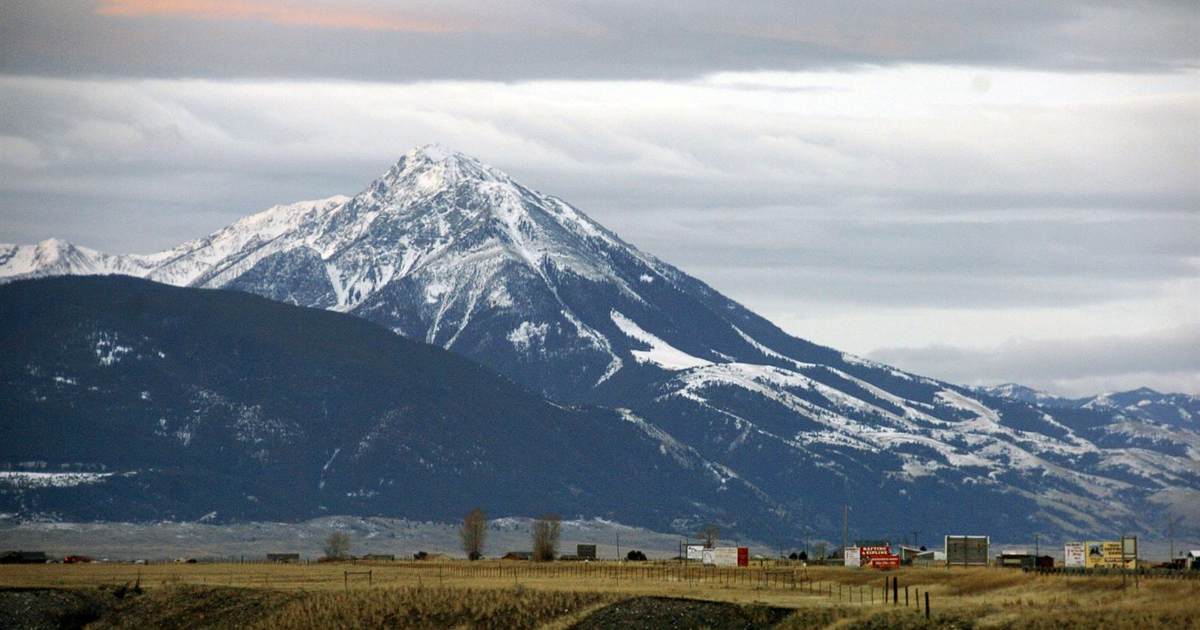
That reality is playing out in Montana, where Democrat Alani Bankhead is the nominee running against Republican Kurt Alme and independent Seth Bodnar. The numbers are cold: even polls from Democratic firms show Alme leading by at least six points in some samples and one poll has him up by 22. The arithmetic is harsh when you look at internals and public polling together.
Alani Bankhead, the Democratic nominee in Montana’s Senate race, bashed the Democratic Senatorial Campaign Committee this week for its “absolute lack of support” and said “it’s not too late” for the DSCC to get behind her campaign against Republican Kurt Alme and independent Seth Bodnar.
That’s not going to happen.
DSCC executive director Devan Barber told Semafor that “the DSCC partners with viable campaigns who have a path to victory, which Ms. Bankhead does not.”
The DSCC did not comment directly on Bodnar, but by traditional metrics he’s the more viable candidate: He’s raised more than $3 million so far and has nearly $1 million on hand; Bankhead has raised only $58,000 thus far. But Bankhead creates a problem for Bodnar by splitting the anti-Alme vote.
The fundraising gap is brutal and textbook. Bodnar has pulled in more than $3 million with nearly $1 million cash on hand, while Bankhead has managed roughly $58,000 in total receipts. Campaigns are expensive enterprises, and national committees measure viability partly by the cash a campaign can deploy in the near term.
Beyond money, the DSCC looks at structure and strategy: ground game, message discipline, targeted advertising, and credible polling that shows a race can move. When internal data and outside polling both tilt decisively the other way, party committees fold their tents and concentrate on competitive races. That’s sensible politics, not betrayal.
From a Republican perspective this is exactly how it should work. Parties focus where they can win and let other contests play out locally. If Democrats want to keep pouring money into hopeless bids, that’s on them; the GOP’s job is to guard its strongholds and challenge where there is genuine opportunity.
Bankhead’s public complaint about the DSCC’s “absolute lack of support” is understandable from a candidate in a tight spot, but complaints don’t change the numbers. The DSCC’s assessment that she lacks a path simply reflects the hard calculus of modern campaigns: polling, fundraising, and the ability to deliver votes on Election Day.
There’s also the classic third-party spoiler dynamic at work when an independent like Bodnar runs well-funded and competitive. Splitting an anti-incumbent or anti-establishment vote can hand a win to the front-runner, especially when that front-runner is already ahead in surveys. Political strategists call that a recipe for wasted opportunities.
Republicans watching Montana don’t need to break a sweat over this particular matchup. The state has been trending in a direction that makes many Senate contests difficult for Democrats. That dynamic frees GOP resources for tougher fights elsewhere while allowing local Republican campaigns to keep momentum going.
All of this reinforces a blunt truth of American campaigns: national committees are caretakers of finite resources and must prioritize winnable battles. That means some nominees will be embraced, others will be left on their own, and candidates chasing long shots will be told the same thing the voters will eventually say at the ballot box.
For Alani Bankhead the choice is simple if not pleasant: acknowledge the reality and concentrate on building a local operation with the money she has, or continue to rail at national actors who are making a strategic decision. Either way, the situation is now defined by numbers and practical politics rather than ambition or righteous outrage.
Political life rewards realism. Parties that accept the map, the polls, and the fundraising realities tend to survive and thrive; those that squander everything on unwinnable showdowns risk burning credibility and leaving better chances undefended. That’s the cold, practical lesson playing out in Montana right now.