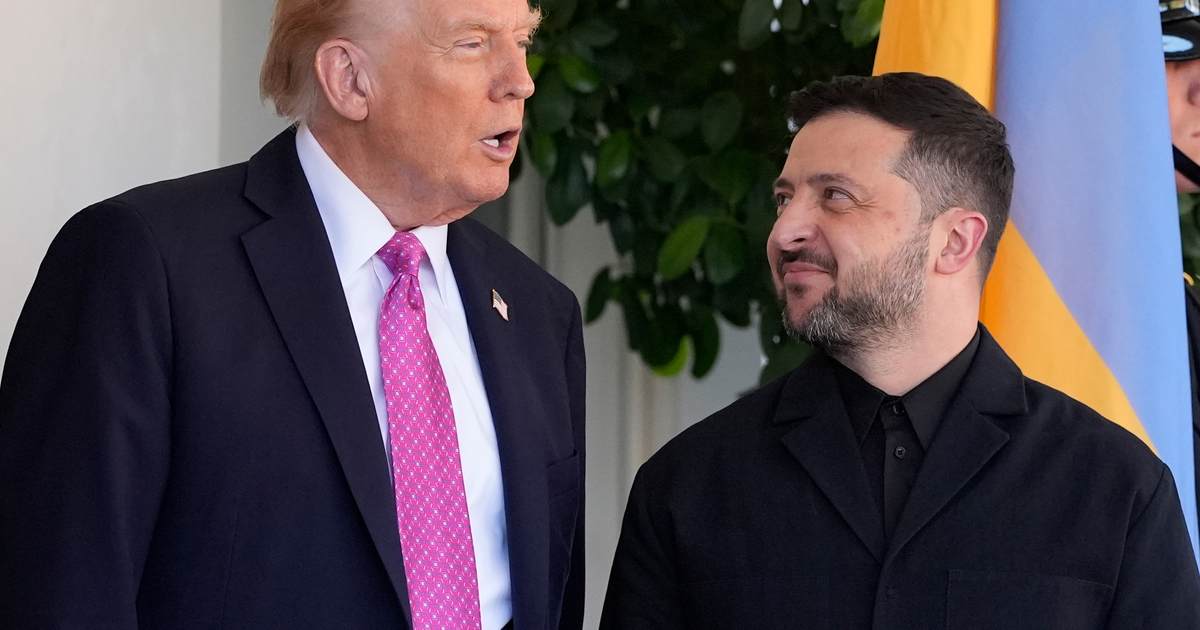
President Donald Trump held back-to-back private meetings at the White House with Ukrainian President Volodymyr Zelenskyy and Israeli Prime Minister Benjamin Netanyahu, drawing intense security and signaling ongoing U.S. engagement on Ukraine, Israel, and Iran-related tensions.
President Donald Trump met privately with Ukrainian President Volodymyr Zelenskyy and Israeli Prime Minister Benjamin Netanyahu at the White House on Tuesday, when both foreign leaders were in Washington for the memorial for the late Sen. Lindsey Graham (R-SC). The encounters were brief but significant, with Zelenskyy’s visit taking place early in the morning and Netanyahu arriving later before noon. These meetings underscored America’s direct role in supporting allies and working through complex regional issues.
Zelenskyy’s session reportedly began around 9:30 AM Eastern and was followed by Netanyahu’s visit at 11 AM, producing a heavy security footprint around the White House that extended to the Hay-Adams Hotel. The visible fencing and barricades reflected the high-profile nature of both visits and the tough global environment our leaders are navigating. The memorial for Lindsey Graham, a consistent advocate for U.S. backing of Ukraine and Israel, brought the two leaders to Washington at the same time.
Trump’s conversation with Zelenskyy focused on military support and diplomatic coordination, with Zelenskyy calling the meeting positive. “The President and I discussed licenses for Patriot interceptor production and several other ideas that could help,” Zelenskyy wrote. “We also spoke about diplomacy – it’s important that the diplomatic process be reinvigorated. Our teams will arrange the details of their further communication. I am grateful to the United States for its firm support.”
The talks come after Ukraine carried out strikes in the Caspian Sea, including an attack on an Iran cargo ship accused of aiding Russia and the Islamic Republic. Those actions have complicated the broader regional picture, raising tensions between Tehran and nations protecting commercial shipping lanes. Washington has been navigating a narrow path between deterrence and avoiding uncontrolled escalation.
https://x.com/BarakRavid/status/2082131192313167964
Trump has publicly described a cautious pause in intense U.S. strikes against Iran in recent days, framing the situation as a window for talks. “We are in very deep talks with Iran. If they don’t work out, we will go back to very strong military action,” the president told Axios Monday. He also relayed pressure from advisers who urged restraint, saying, “All of the people that deal with Iran asked me: ‘Don’t fire,’” to explain the current posture.
The Israeli meeting marked Prime Minister Benjamin Netanyahu’s first in-person sit-down with President Trump since December, signaling a reset in direct channels. Reported agenda items included Lebanon peace talks and the Abraham Accords, issues that matter for regional stability and Israel’s security. The Trump administration has been pushing diplomatic frameworks that strengthen ties between Israel and Sunni Arab states as part of a broader strategy to contain hostile actors.
Separately, the administration has crafted a nuclear framework with Saudi Arabia, but the president tied its implementation to Riyadh formally signing the Abraham Accords, making normalization a lever for a stronger U.S.-backed security architecture in the Middle East. Conditioning diplomatic and defense moves on concrete agreements reinforces the idea that peace and security go hand in hand. That stance reflects a transactional, America-first approach to alliances and deals.
The sequence of meetings — a focused conversation with Ukraine followed by a strategic session with Israel — shows a president balancing immediate battlefield needs with long-term diplomatic strategy. Both partners returned to Washington with direct lines into the White House, and that access matters when the threats they face are real and evolving. For Republicans and America’s allies, the message is clear: strong leadership and clear red lines remain central to U.S. policy.