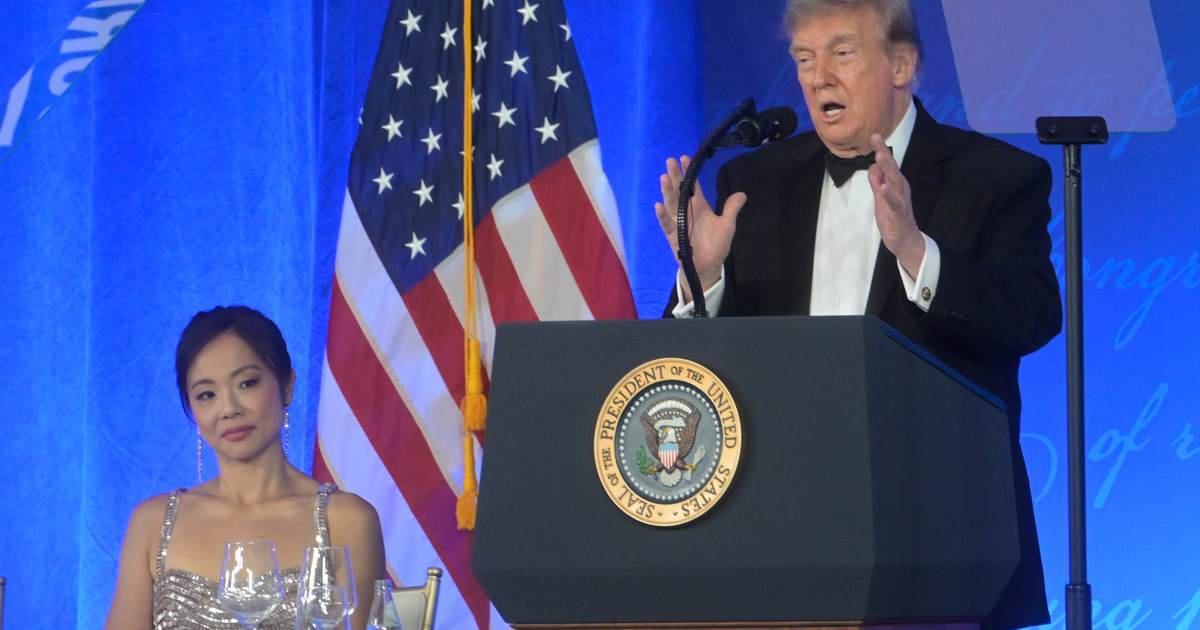
President Trump said he will not pursue a legal challenge to Joe Biden’s pardon of Dr. Anthony Fauci, while questioning whether many of Biden’s last-minute clemencies were signed directly by the president or routed through an autopen. The exchange came after a Senate hearing in which Fauci repeatedly declined to answer questions about the COVID-19 pandemic. Trump praised the pardon power while raising transparency concerns and suggested Republican investigators will keep pressing for accountability.
President Donald Trump told reporters he would not fight Biden’s pardon for Dr. Anthony Fauci, even after a contentious Senate session where Fauci largely refused to testify. Trump pointed to the constitutional weight of the presidential pardon and framed his stance as respect for that institutional authority. At the same time, he left room for political and legislative pushback by allies who want answers.
Trump framed the pardon as an exercise of extraordinary power, repeating a familiar refrain: “the most powerful thing the president has…is the power of the pardon.” Those words underscored why the move carries huge political impact and why Republicans will keep the issue in the spotlight. His comment read as an acknowledgment that the pardon ends legal options while not ending political scrutiny.
“So, he was pardoned by Biden, and I respect that,” Trump continued. “I know how powerful it is. It’s a very powerful— they say it’s literally the most powerful thing a president has. Now, whether or not I sign my things directly, always, almost everything I sign directly.” Those exact words pushed the conversation toward how pardons are executed as much as who received them.
Trump went further, suggesting that some of Biden’s pardons may have been completed with an autopen rather than by the president’s personal signature, and arguing that process matters for accountability. He acknowledged that proving autopen use would be difficult, but he cast doubt on the idea that Biden personally signed every clemency. That doubt has become a rallying point for critics who demand clear records and chain-of-custody documentation.
You need to have letters. You need to have all sorts of things that the person operating the Autopen has to know exactly what it’s all about. He didn’t know what it was about because I saw him testify. So maybe there’s something on the Autopen. Other than that, the power of pardon is very powerful.
Just hours before leaving office, Biden issued a full and unconditional pardon for Fauci, covering any federal offenses tied to his work from 2014 through the date the pardon was issued. The White House explanation emphasized shielding public servants from politically driven probes, saying the clemency did not imply guilt. Fauci publicly accepted the pardon, saying that threats had caused stress for him and his family while maintaining he had committed no crimes.
During the 2024 campaign and since, Republicans have repeatedly pushed for investigations into Fauci’s role during the pandemic, alleging he misled Americans on the virus’s origins and supported risky research funding tied to China. The GOP narrative centers on transparency and responsibility, arguing that those who led pandemic policy must answer hard questions. That push has kept momentum in the Senate, where Republicans are lining up to press further.
https://x.com/ShadowofEzra/status/2082549386601447833
Several Republican senators, including Ted Cruz, Josh Hawley, and Tommy Tuberville, have publicly called for Fauci’s arrest and prosecution, and the upper chamber is planning a hearing to consider contempt or other actions next week. Those senators frame the measures as part of a broader effort to hold officials accountable and to expose what they describe as failures in pandemic leadership. The coming hearings will test whether political pressure translates into formal consequences.
Biden’s stated reason for the pardon was to blunt “politically driven investigations and prosecutions,” but critics say that blanket protection can shield wrongdoing and short-circuit fact-finding. Republicans argue the right balance is transparency plus accountability, not blanket immunity for powerful officials. They also see the autopen questions as emblematic of a broader lack of presidential engagement on consequential decisions made at the end of a term.
The controversy keeps two threads alive: the constitutional reality that a president’s pardon is final and the political reality that pardons do not erase public demand for answers. Republicans will continue to press the hearings, demand documents, and question the mechanics behind how clemencies were signed. That approach aims to keep oversight active even when legal remedies are closed by clemency.