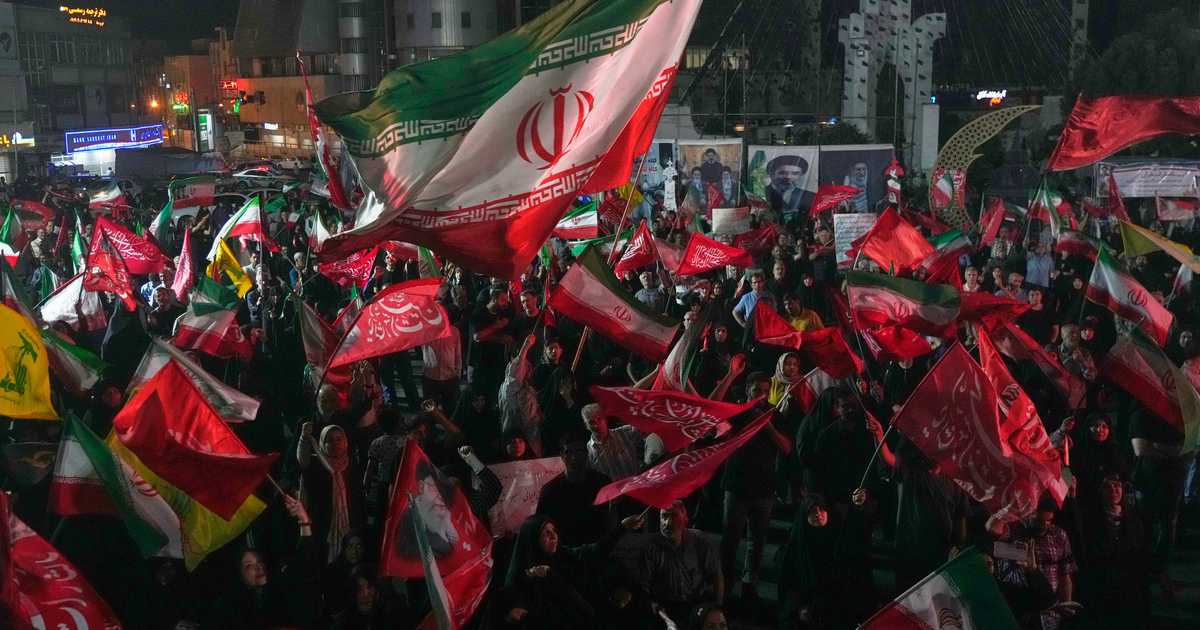
The United States launched strikes on Iranian targets late in the evening after a series of attacks on American forces in the region, with military leaders and the White House signaling a firm response while naval moves redirected commercial traffic and interdicted vessels tied to Iran.
The Department of Defense and U.S. Central Command reported that strikes began at about 8 PM in response to repeated Iranian attacks on U.S. troops operating across the Middle East. Officials framed the action as a calibrated response intended to stop further assaults on servicemembers and American interests. The move marks a sharp escalation after weeks of probing strikes and growing hostility from Tehran.
On Tuesday, several Iranian missiles were intercepted over Jordan as tensions flared and commanders assessed the threat to allied locations in the region. President Donald Trump told Fox News that the U.S. will “beat the f****** s***“ out of Iran because of those attacks, a blunt declaration that underlined the administration’s posture. The language reflects a hardline approach favored by many on the right: decisive force when American troops are under attack.
Alongside kinetic strikes, the U.S. reimposed strict measures at sea, enforcing a renewed blockade on Iranian ports and shipping lanes. As of July 29, CENTCOM reported it had redirected 20 commercial vessels, disabled two, and boarded two, actions aimed at choking off supplies and curtailing Iran’s ability to project military power. These maritime moves are meant to be both punitive and preventive, cutting routes Iran has used to arm proxies and move fuel for weapons systems.
https://x.com/CENTCOM/status/2082623345682518024?ref_src=twsrc%5Etfw
The pattern behind the response is straightforward: repeated Iranian strikes on American forces crossed a threshold that, in the view of officials, required retaliation. That pattern has included drone and missile launches in areas where U.S. troops and allied partners operate, raising the risk of a wider conflagration if left unchecked. For Republicans and many military planners, demonstrating consequences is a key tool for deterrence.
The strikes and the blockade together send a message that U.S. forces will not accept a persistent campaign of harassment. Military planners emphasize precision and selectivity, noting that operations are designed to degrade capabilities rather than to provoke a full-scale war. Still, any offensive action carries the risk of escalation, and commanders are watching Tehran’s response for signs of a broader Iranian counterattack.
On the diplomatic front, the U.S. has stressed that its moves are defensive and targeted, but allies in the region are bracing for fallout. Commercial shipping companies are already adjusting routes, insurers are reassessing risk, and regional partners are calling for clear communication to avoid miscalculation. The disruption to ordinary maritime traffic is exactly why the naval interdictions aim to be visible and decisive without broadly crippling commerce.
Back home, the political response has split largely along partisan lines, with conservatives applauding a forceful stance that prioritizes troop protection and Iranian accountability. For many Republicans, assertive action sends a necessary signal to foes who have tested American resolve for years. Critics will warn of unintended consequences, but the prevailing message from the right is that deterrence requires credible willingness to use force.
CENTCOM remains the primary source of operational updates, and military officials say they will continue to brief the public as events evolve. The Pentagon is emphasizing that these actions are reversible and narrowly tailored, focusing on preventing further strikes rather than on regime change. Still, commanders and diplomats alike acknowledge that the situation will require careful management to avoid a spiral that draws more actors into conflict.
Washington’s posture now combines strikes, maritime pressure, and stepped-up intelligence efforts to limit Iran’s options. That mix is clearly intended to raise the costs to Tehran while keeping pathways open for de-escalation if Iran chooses to step back. For the moment, the region is on edge and U.S. forces are positioned to respond to any new threats that might emerge.